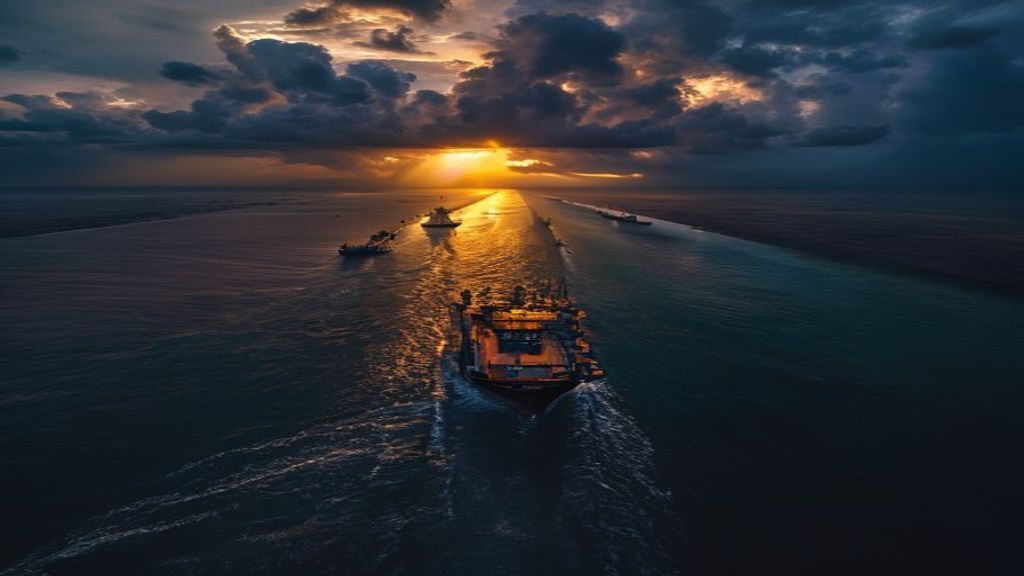

WASHINGTON — The International Monetary Fund on Monday slashed its 2026 global growth forecast from 3.4% to 3.1%, warning that the escalating US-Iran conflict and the ongoing blockade of the Strait of Hormuz risk tipping the world economy toward recession as oil prices surge past $100 per barrel.
The downgrade, published in the IMF’s April 2026 World Economic Outlook, marks one of the sharpest mid-year revisions in recent memory and reflects the rapid deterioration of geopolitical conditions in the Persian Gulf. The US naval blockade of Iranian ports took effect on April 13 after marathon peace talks hosted by Pakistan in Islamabad collapsed over the weekend without a deal. With Brent crude now trading above $102 and West Texas Intermediate hovering around $93, the energy shock is rippling through every corner of the global economy — from European manufacturing floors to South Asian import docks. The revised forecast lands at a moment when central banks in major economies were just beginning to contemplate easing monetary policy, a prospect now complicated by the spectre of stagflation.
| Parameter | Details |
|---|---|
| Previous Growth Forecast | 3.4% (January 2026 estimate) |
| Revised Growth Forecast | 3.1% (April 2026 baseline) |
| Severe Scenario Growth | 2.0% — near-recession territory |
| Brent Crude Price | $102/barrel (as of April 14) |
| WTI Crude Price | $93/barrel (as of April 14) |
| US Naval Blockade Start | April 13, 2026 |
| Key Mediator | Pakistan (Islamabad peace talks) |
Situational Breakdown
The IMF’s revised outlook hinges on three carefully modelled scenarios, each painting a progressively darker picture of the global economy’s trajectory. The baseline assumes the US-Iran conflict resolves in the near term and oil averages $82 per barrel for the remainder of 2026 — a scenario that already represents a significant downgrade from January projections. The adverse scenario, which IMF chief economist Pierre-Olivier Gourinchas indicated now appears increasingly likely, assumes oil remains anchored around $100 and drags global growth down to 2.5%. The severe scenario — oil sustained well above $100 with prolonged Hormuz disruptions — would slash growth to just 2.0%, a level the Fund considers near-recession territory for the global economy. — IMF World Economic Outlook April 2026
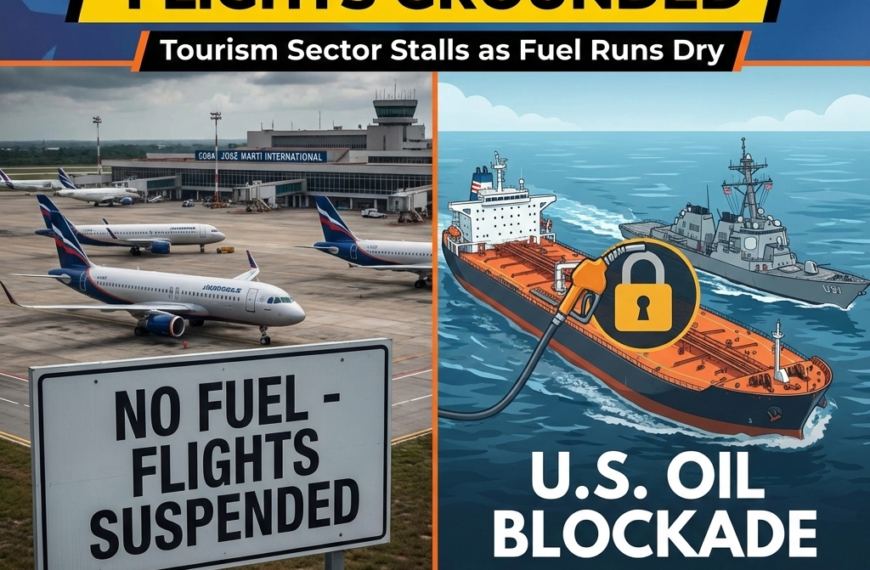
The immediate trigger for the downgrade was the collapse of US-Iran peace negotiations in Islamabad. Pakistan had positioned itself as a neutral broker, leveraging its geographic proximity and diplomatic relationships with both Washington and Tehran. But after several days of talks that sources described as increasingly acrimonious, the delegations departed without agreement, and the US proceeded with its announced naval blockade of Iranian ports within hours. The blockade’s enforcement across key shipping lanes has already disrupted tanker traffic through the Strait of Hormuz, through which roughly 20% of the world’s oil supply passes daily. — CBS News, CNN
Energy markets responded with ferocity. Brent crude breached $100 for the first time since 2022, settling at $102 on Monday, while WTI climbed to $93. Traders and analysts warned that prices could climb further if the blockade persists, particularly as strategic petroleum reserves in major consuming nations remain depleted from drawdowns during previous supply crises. The energy shock is compounding existing inflationary pressures across emerging markets and threatening to unravel months of progress on price stability in developed economies. — Yahoo Finance
The IMF’s Warning: From Baseline to Breaking Point
The Fund’s three-scenario framework is not merely an academic exercise — it is a signal to policymakers that the window for avoiding serious economic damage is narrowing rapidly. At 3.1%, the baseline scenario already represents the weakest projected growth since the pandemic recovery period, and it rests on the optimistic assumption that hostilities wind down before summer.
“The world is already drifting toward a more adverse scenario with much weaker growth as Strait of Hormuz shipping disruptions continue.” — IMF World Economic Outlook
Gourinchas’s characterisation of the adverse scenario as “increasingly likely” is a notable departure from the Fund’s typically cautious language. It suggests internal models at the IMF are now weighting prolonged conflict as the central case, not the tail risk. For central bankers in Frankfurt, London, and Washington who had been telegraphing rate cuts for the second half of 2026, the calculus has changed overnight. Cutting rates into an oil-driven inflation spike would risk credibility; holding rates steady while growth deteriorates risks recession. It is a policy trap with no clean exit.
The Hormuz Chokepoint: Anatomy of a Supply Crisis
The Strait of Hormuz has long been recognised as the world’s most critical oil transit chokepoint, and the current crisis is a stark reminder of just how fragile global energy security remains. Approximately 21 million barrels of oil pass through the strait daily, supplying markets from Tokyo to Berlin. The US naval blockade, while technically directed at Iranian ports, has created a de facto exclusion zone that is disrupting all commercial shipping in the region.
Insurance premiums for tankers transiting the Persian Gulf have skyrocketed according to industry reports, with several major shipping firms rerouting vessels around the Cape of Good Hope — adding weeks and significant cost to deliveries. The disruption extends beyond crude oil; liquefied natural gas shipments from Qatar, which also pass through Hormuz, are being delayed, threatening energy supplies to Asian markets already grappling with seasonal demand pressures. The longer the blockade persists, the deeper these disruptions will embed themselves in global supply chains.
Diplomatic Collapse: What Went Wrong in Islamabad
The failure of the Islamabad talks represents a significant setback for multilateral diplomacy. Pakistan had invested considerable political capital in hosting the negotiations, and the collapse has left Islamabad scrambling to revive dialogue before the economic fallout deepens further.
“Pakistan is trying to get both sides back into the negotiation room after marathon talks over the weekend failed to secure a peace deal.” — Former Pakistani national security adviser via CBS News
Multiple reports suggest the talks broke down over fundamental disagreements about the scope of sanctions relief and the timeline for any de-escalation of military postures. Washington reportedly insisted on verifiable Iranian concessions as a precondition for easing the blockade, while Tehran demanded an immediate withdrawal of US naval assets from its territorial waters. With neither side willing to make the first concession, the diplomatic track has effectively stalled, and attention is now turning to whether back-channel negotiations or third-party interventions — possibly through Gulf Cooperation Council members — can restart the process before the economic damage becomes irreversible.
Global Markets Under Pressure
Beyond oil, the crisis is sending shockwaves through global financial markets. Equity indices across Asia and Europe opened sharply lower on Monday following the IMF’s announcement, with energy-importing economies bearing the brunt of the sell-off. The Japanese yen weakened against the dollar as traders priced in higher energy import costs, while emerging market currencies from Turkey to India came under renewed pressure.
Bond markets are flashing contradictory signals — yields on US Treasuries initially fell on safe-haven demand before reversing as inflation expectations climbed. The volatility in bond markets underscores the fundamental uncertainty facing investors: is this a growth shock, an inflation shock, or both? The answer depends entirely on how long the Hormuz disruption persists, and on that question, no one has a reliable forecast.
🇵🇰 Pakistan Connection
Pakistan finds itself at the intersection of this crisis in multiple dimensions. As the host of the now-collapsed peace talks, Islamabad’s diplomatic credibility is on the line, and Pakistani officials are reportedly working to convene a second round of negotiations. But the economic stakes are equally acute. Pakistan, which imports the vast majority of its oil, is acutely vulnerable to sustained price increases. Reports indicate that Iranian authorities had initially granted Pakistan-flagged vessels passage through the Strait of Hormuz, but Pakistani oil tankers have since turned back amid the escalating military standoff, further straining supply.
The timing could hardly be worse for an economy already navigating a fragile recovery. Higher energy import bills threaten to widen Pakistan’s trade deficit and reignite inflation that the State Bank had only recently begun to bring under control. The cascading costs of expensive energy — from transport to electricity to fertiliser — risk undermining growth at a moment when Pakistan is attempting to attract foreign investment and modernise its infrastructure, including through ambitious initiatives like its recently announced $1 billion AI infrastructure investment plan. The economic headwinds from this crisis could complicate those plans significantly if oil prices remain elevated through the second half of 2026.
BOLOTOSAI Assessment
The IMF’s downgrade is not a prediction of recession — it is a warning that the world is one diplomatic failure away from one. Three outcomes now define the horizon. First, if back-channel diplomacy succeeds in restarting talks within the next two to three weeks and produces at least a partial de-escalation, oil prices could retreat toward the $85–$90 range, and the baseline 3.1% growth scenario holds. Markets would rally on relief, but the underlying fragility of Hormuz-dependent energy architecture would remain unaddressed.
Second, if the blockade persists through May without meaningful diplomatic progress, the adverse scenario becomes the operating reality. At 2.5% global growth with oil above $100, central banks face impossible trade-offs, emerging markets face balance-of-payments crises, and the political pressure on all parties to either escalate or capitulate intensifies dangerously. This is the scenario the IMF is now signalling as most probable.
Third, and most ominously, any military incident in the strait — accidental or deliberate — could trigger the severe scenario overnight. At 2.0% growth, the distinction between slowdown and recession becomes semantic. The world has not priced in this tail risk adequately, and the absence of functioning diplomatic channels makes miscalculation far more likely. Watch for three signals in the coming days: any resumption of diplomatic contact, OPEC’s emergency production response, and whether major Asian importers begin drawing down strategic reserves. Those three indicators will tell you whether this crisis is weeks from resolution or months from deepening.

 By
By

 By
By