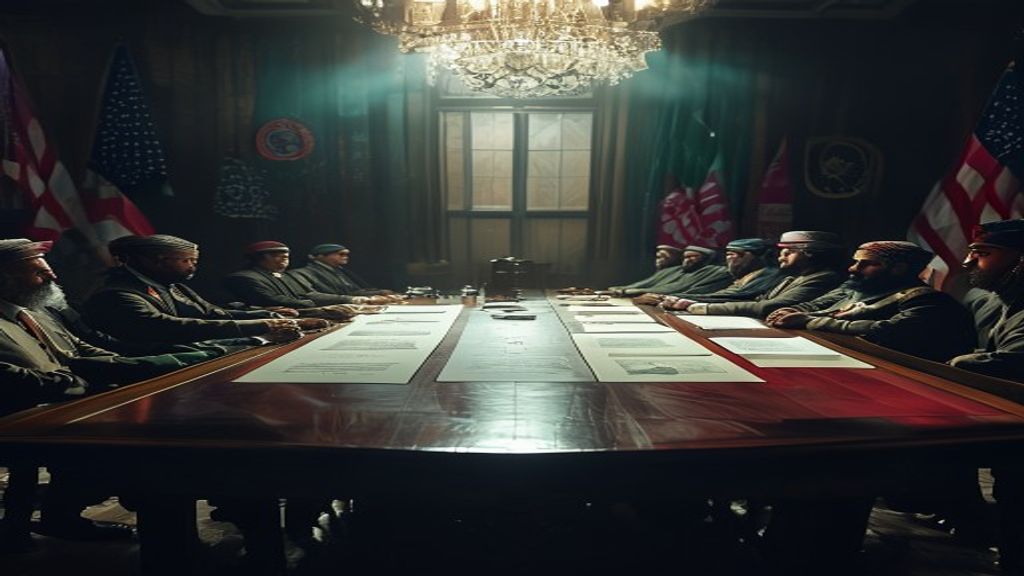

WASHINGTON — The United States and Iran appear to be edging closer to a landmark agreement that could end months of open hostilities between the two nations, with Tehran currently reviewing a one-page memorandum of understanding proposed by Washington that would declare a formal cessation of hostilities and launch a structured 30-day negotiation period.
The proposed framework, brokered through Pakistani intermediaries, represents the most significant diplomatic breakthrough since hostilities escalated between the two powers. The memorandum addresses three critical pillars: Iran’s nuclear enrichment program, the unfreezing of billions of dollars in Iranian assets, and the restoration of freedom of navigation through the strategically vital Strait of Hormuz. The stakes could not be higher — a successful deal would reshape the geopolitical balance of the entire Middle East, while failure risks an even deeper military escalation that could engulf the region. The US-Iran Strait of Hormuz Tensions Escalate as UAE Attacked in recent weeks, underscoring just how volatile the situation remains even as diplomats seek a path to peace.
| Parameter | Details |
|---|---|
| Key Figure | President Donald Trump — described talks as ‘very good’ |
| Mediator | Pakistan — serving as primary intermediary |
| Proposal Format | One-page memorandum of understanding (MOU) |
| Negotiation Window | 30-day structured negotiation period upon agreement |
| Key Issues | Nuclear enrichment, frozen assets, Strait of Hormuz navigation |
| Military Status | US naval blockade active — 50+ commercial vessels turned away |
| Current Phase | Tehran reviewing the proposed memorandum |
Situational Breakdown
The diplomatic push comes at a critical juncture in the conflict. The US military has maintained an aggressive naval blockade of Iranian ports, with more than 50 commercial vessels turned away from Iranian waters in what represents one of the most extensive maritime enforcement operations in the region since the so-called Tanker War of the 1980s. The blockade has choked Iran’s ability to export oil and receive vital imports, creating enormous economic pressure on Tehran’s leadership to come to the negotiating table. — CNN
President Trump has adopted a characteristic dual-track approach, publicly praising the progress of negotiations while simultaneously threatening an escalation if Iran refuses to cooperate. In remarks to reporters, Trump stated that the war would be “over quickly” and that communications with Iran over the preceding 24 hours had been “very good.” However, he coupled these optimistic remarks with a clear warning that the United States would intensify its military strikes should Tehran reject the proposed terms. — Al Jazeera
Pakistan’s role as intermediary has been described by multiple diplomatic sources as instrumental. Islamabad maintains working relationships with both Washington and Tehran, and its geographic proximity to Iran gives it a unique understanding of the regional dynamics at play. Pakistani officials have reportedly been shuttling between the two capitals, carrying messages and refining the language of the proposed memorandum. — NPR
The One-Page Memo: Simplicity as Strategy
Perhaps the most striking aspect of the proposed deal is its deliberate brevity. According to reports from regional analysts, the decision to condense the initial agreement into a single page is a calculated diplomatic strategy designed to avoid the negotiation paralysis that has plagued previous US-Iran diplomatic efforts, most notably the protracted talks that produced the 2015 Joint Comprehensive Plan of Action (JCPOA).
A source familiar with the negotiations said both sides were working on a one-page memo to end the war and set a framework for nuclear talks.
The memo is understood to serve as a statement of intent rather than a binding treaty, establishing the broad parameters within which detailed negotiations would take place over the subsequent 30 days. This approach allows both sides to claim a cessation of hostilities — a political win for leaders in both capitals — while deferring the thorny details of nuclear enrichment caps, asset timelines, and maritime protocols to structured talks with clearer deadlines.
The Nuclear Dimension
Iran’s nuclear program remains the most contentious element of any prospective deal. Tehran has significantly advanced its enrichment capabilities since the US withdrew from the JCPOA in 2018, and Western intelligence assessments suggest Iran now possesses enough enriched uranium to produce multiple nuclear weapons if it chose to do so, though there is no confirmed evidence it has taken that step. The proposed 30-day window would need to address enrichment levels, centrifuge operations, and the scope of international inspections.
For the United States, any agreement that does not verifiably roll back Iran’s nuclear capabilities would face fierce opposition in Congress and among regional allies, particularly Israel and the Gulf states. For Iran, surrendering enrichment capacity without guaranteed economic relief and security assurances would be politically untenable for its leadership. The 30-day timeline is widely seen as ambitious given the complexity of these issues, but proponents argue that the pressure of active conflict creates a unique urgency that previous peacetime negotiations lacked.
The Strait of Hormuz: Global Economic Lifeline
The inclusion of freedom of navigation in the Strait of Hormuz as a core pillar of the memorandum reflects the global economic stakes of this conflict. Approximately 20 percent of the world’s oil supply passes through the narrow waterway, and any prolonged disruption has the potential to trigger a global energy crisis. The US naval blockade of Iranian ports, while effective as a pressure tool, has itself contributed to shipping disruptions and insurance cost spikes that have rippled through international markets.
Iran has historically used the Strait as leverage, threatening to close the waterway in response to economic sanctions or military threats. A deal that codifies freedom of navigation would represent a significant concession by Tehran, but one that could be offset by the economic benefits of ending the blockade and unfreezing assets. Maritime security analysts have noted that restoring normal shipping operations through the Strait would take weeks even after a deal is signed, given the need to de-mine certain areas and re-establish insurance coverage for commercial vessels.
Pakistan’s Pivotal Role
Islamabad’s emergence as the key intermediary in these negotiations marks a significant diplomatic achievement for Pakistan. The country shares a long and often troubled border with Iran, but the two nations have maintained functional diplomatic relations even during periods of tension. Pakistan’s military and intelligence establishment has longstanding channels of communication with both American and Iranian counterparts, making it a natural conduit for sensitive backchannel negotiations.
Trump said the war would be ‘over quickly’ and that talks with Iran over the past day had been ‘very good.’
For Pakistan, a successful mediation would enhance its standing on the global diplomatic stage at a time when the country is seeking to position itself as a constructive regional power rather than a source of instability. However, the risks are equally significant — a failed mediation could damage relationships with both parties and draw Pakistan deeper into a conflict it has sought to avoid.
BolotoSAI Assessment
The coming 48 to 72 hours will likely determine whether this diplomatic opening produces a genuine ceasefire or collapses into renewed escalation. Three scenarios are most plausible.
Scenario one: Tehran accepts the memorandum with minor modifications, triggering the 30-day negotiation window. This is the most optimistic outcome and would produce an immediate de-escalation, likely including a partial lifting of the naval blockade as a confidence-building measure. Markets would rally, oil prices would drop, and both leaders would claim victory — though the hardest negotiations on nuclear enrichment would still lie ahead.
Scenario two: Iran demands substantive changes to the memorandum — particularly on the sequencing of sanctions relief and military de-escalation — leading to an extended period of back-and-forth negotiation through Pakistani channels. The conflict would continue at a lower intensity, with both sides signaling willingness to talk while maintaining military pressure. This is arguably the most likely outcome given the complexity of the issues involved.
Scenario three: Negotiations break down entirely, prompting the intensified US strikes that Trump has threatened. This would represent a catastrophic failure with potentially devastating consequences for the region and the global economy. It remains the least likely outcome given the apparent momentum toward a deal, but Trump’s warning should not be dismissed as mere rhetoric.
What to watch: the tone of Iranian state media in the coming hours, any changes in US naval deployment patterns near the Strait of Hormuz, and whether Pakistan’s foreign ministry issues a formal statement on the progress of mediation efforts. The world is watching a diplomatic tightrope walk with consequences that extend far beyond Washington and Tehran.

 By
By


 By
By