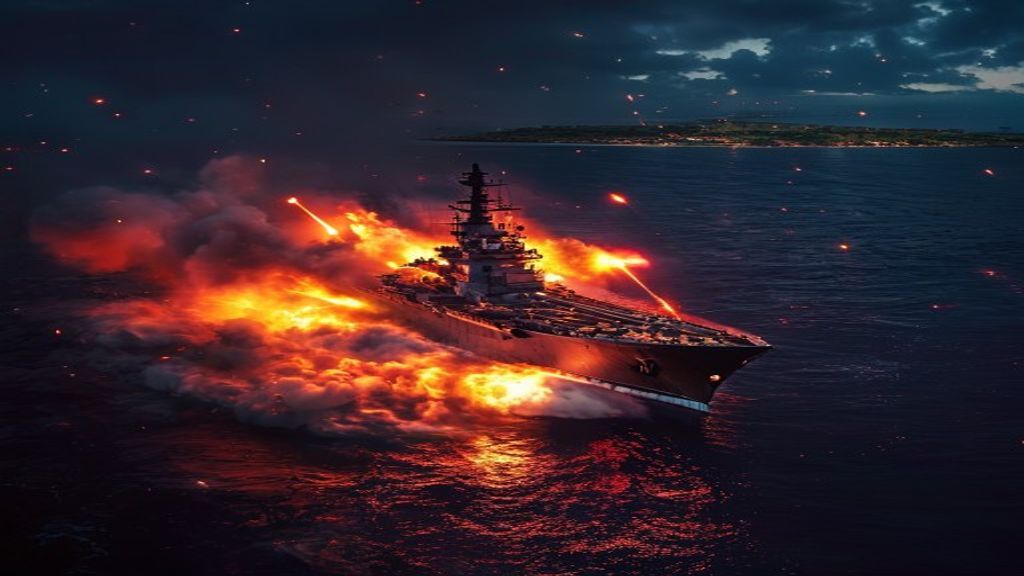

WASHINGTON — The United States launched a series of targeted military strikes against Iranian missile and drone launch sites, command centers, and surveillance facilities on Wednesday after Iran carried out what the Pentagon described as unprovoked attacks on three US Navy destroyers transiting the Strait of Hormuz, marking a dramatic escalation in the simmering conflict between the two nations.
The strikes, which targeted locations in the strategically vital port city of Bandar Abbas and nearby Qeshm Island, came after Iranian forces fired upon the USS Truxtun, USS Rafael Peralta, and USS Mason as they navigated the narrow waterway that serves as the world’s most critical chokepoint for global oil shipments. No American vessels were struck during the initial Iranian attack, but the incident has sent shockwaves through energy markets and diplomatic channels worldwide. The exchange represents the most significant direct military confrontation between Washington and Tehran in decades, raising urgent questions about whether the region is sliding toward a broader armed conflict.
| Parameter | Details |
|---|---|
| Date of Incident | May 7, 2026 |
| US Vessels Targeted | USS Truxtun, USS Rafael Peralta, USS Mason |
| Strike Locations | Bandar Abbas and Qeshm Island, Iran |
| Targets Hit | Missile/drone launch sites, command centers, surveillance facilities |
| US Casualties | None reported; no vessels hit |
| US Gas Price Impact | National average $4.56/gallon (up from $2.98 pre-conflict) |
| Key Flashpoint | Iran’s Persian Gulf Strait Authority and shipping toll demands |
Situational Breakdown
The confrontation unfolded in one of the world’s most strategically sensitive waterways. The Strait of Hormuz, barely 21 miles wide at its narrowest point, handles roughly one-fifth of the world’s daily oil consumption. The three American destroyers were conducting what the US Navy characterized as a routine transit when Iranian forces opened fire using a combination of coastal missile batteries and drone platforms. American defensive systems successfully intercepted the incoming threats, and the warships suffered no damage or casualties. Tensions in the strait have been building for months as Iran has increasingly sought to assert control over shipping lanes it considers within its sovereign jurisdiction. — CNN
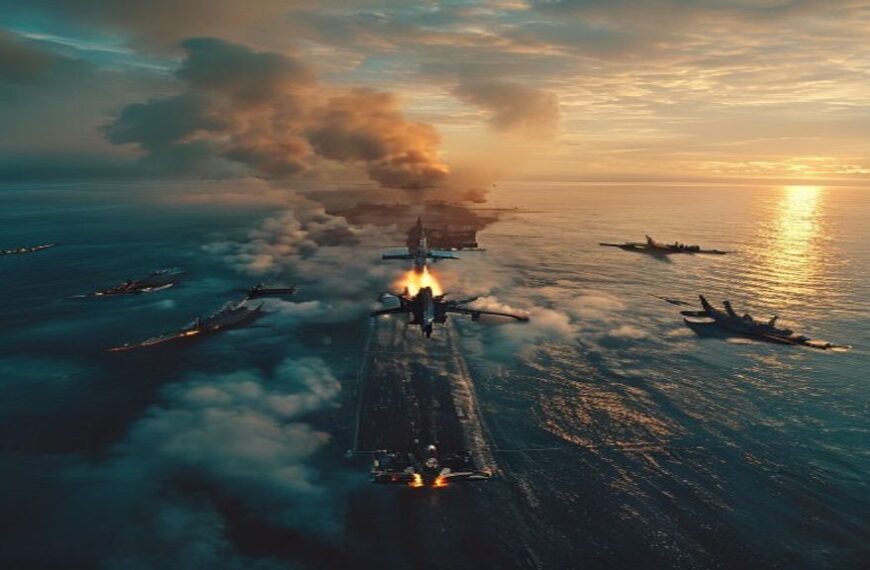
Within hours of the attack, US Central Command authorized retaliatory strikes against the Iranian military infrastructure responsible for the assault. Precision munitions struck missile and drone launch sites along the Iranian coastline, as well as command-and-control centers and surveillance installations that had been used to track and target the American vessels. The Pentagon emphasized that the strikes were proportional and specifically aimed at degrading Iran’s ability to threaten international shipping and naval assets in the strait. Iran’s military, however, offered a starkly different account of the events. — Washington Post
Tehran’s military spokesperson claimed that American airstrikes had struck civilian coastal areas along Qeshm Island and the port town of Bandar Khamir, characterizing the assault as a flagrant violation of an existing ceasefire between the two nations. The Iranian government has called for an emergency session of the United Nations Security Council, while state media broadcast images purporting to show damage to non-military structures. Independent verification of these claims has not yet been possible due to restricted media access in the affected areas. — Al Jazeera
Trump Issues Warning as Diplomacy Stalls
President Trump addressed the strikes in remarks that left little ambiguity about Washington’s posture. His language suggested that the military response was deliberately restrained, with the implicit threat of far greater force held in reserve.
“This was just a warning. If Iran does not sign a deal soon, the response will be much harder.”
The statement reflects the administration’s broader strategy of leveraging military pressure to force Tehran back to the negotiating table over its nuclear program, regional proxy networks, and now the contentious Persian Gulf Strait Authority. Diplomatic channels between the two countries have been effectively frozen for weeks, with back-channel communications through Gulf intermediaries producing no tangible progress. The president’s framing of the strikes as a “warning” rather than a punitive operation suggests the White House is keeping the door open for a negotiated resolution, even as it demonstrates willingness to use overwhelming force.
Iran’s Strait Authority at the Heart of the Crisis
At the core of the escalating confrontation lies Iran’s newly established Persian Gulf Strait Authority, a unilateral body created by Tehran to impose tolls and regulatory oversight on international shipping passing through the Strait of Hormuz. The authority, which Iran argues is a legitimate exercise of sovereignty over its territorial waters, has been rejected by the United States, the European Union, and virtually every major maritime nation as a violation of international law governing freedom of navigation.
The toll scheme, if enforced, would effectively give Tehran a chokehold over global energy supplies and trade flows worth trillions of dollars annually. Oil tankers, liquefied natural gas carriers, and commercial vessels transiting the strait would face levies that analysts estimate could add billions in annual costs to global shipping. Washington has made clear that it will not permit any nation to restrict freedom of navigation in international waterways, a principle the US Navy has enforced globally for decades.
Economic Fallout: Gas Prices and Global Markets
The military confrontation has already exacted a significant toll on American consumers and global energy markets. US gasoline prices have surged to a national average of $4.56 per gallon, a staggering increase from the $2.98 average that prevailed before the Middle East conflict escalated. The 53 percent price spike has become a potent political issue domestically, with opposition lawmakers citing the pain at the pump as evidence of a failed foreign policy approach.
Global crude oil futures spiked immediately following news of the strikes, with Brent crude briefly touching levels not seen since the 2022 energy crisis. While markets have seen entertainment sectors remain buoyant — Devil Wears Prada 2 Shatters Records With $233M Global Opening — the economic anxiety surrounding energy prices is casting a long shadow over consumer confidence and broader economic growth. Shipping insurance rates for vessels transiting the Strait of Hormuz have tripled in recent weeks, further compounding costs throughout global supply chains.
Iran’s Counter-Narrative and Regional Dynamics
Tehran has mounted an aggressive counter-narrative to Washington’s account of events, with its military spokesperson directly challenging the characterization of the strikes as targeted and proportional.
“US airstrikes struck civilian areas along the coasts of Qeshm Island and Bandar Khamir. This is a ceasefire violation.”
Iran’s framing of the events as a ceasefire breach is significant, as it attempts to cast the United States as the aggressor and position Tehran as the aggrieved party on the international stage. The claim of civilian casualties, if substantiated, would complicate Washington’s diplomatic position and potentially erode support among European allies who have thus far backed the American stance on freedom of navigation. Regional powers including Saudi Arabia and the UAE have called for restraint from both sides while quietly reinforcing their own naval defenses in the Persian Gulf.
Russia and China have both issued statements expressing concern over the escalation, with Beijing calling for respect for Iranian sovereignty and Moscow offering to mediate. Neither has explicitly condemned the initial Iranian attack on US warships, a diplomatic positioning that underscores the broader geopolitical fault lines shaping the crisis.
Bolotosai Assessment
The Strait of Hormuz confrontation has pushed the US-Iran relationship to its most dangerous inflection point in years, and the trajectory from here will likely follow one of three paths. The most optimistic scenario sees the military exchange serving as a sobering catalyst that drives both sides back to negotiations, with Tehran calculating that further provocation risks a devastating American military campaign it cannot survive. The second, and perhaps most probable, outcome is a prolonged period of tit-for-tat provocations — Iranian harassment of commercial shipping, US naval reinforcements, proxy attacks on American interests in Iraq and Syria — that keeps the region on a perpetual knife’s edge without tipping into full-scale war.
The third and most alarming possibility is a genuine escalation spiral in which miscalculation by either side triggers a broader conflict drawing in regional actors, disrupting global energy supplies catastrophically, and sending oil prices into triple-digit territory. The fate of Iran’s Strait Authority will be the decisive indicator: if Tehran doubles down on enforcement, military confrontation becomes not a question of if but when.
What to watch in the coming days: the UN Security Council emergency session, any movement on back-channel diplomacy through Oman or Qatar, Iranian naval deployments near Hormuz, and the trajectory of global oil prices. American consumers filling their tanks at $4.56 a gallon are already paying the price of this standoff. The question now is how much higher that cost will climb.

 By
By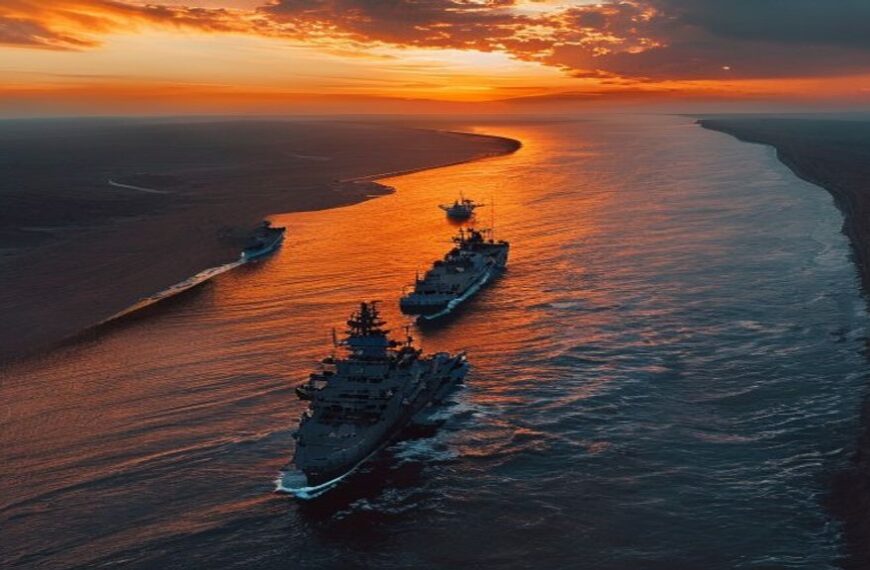


 By
By