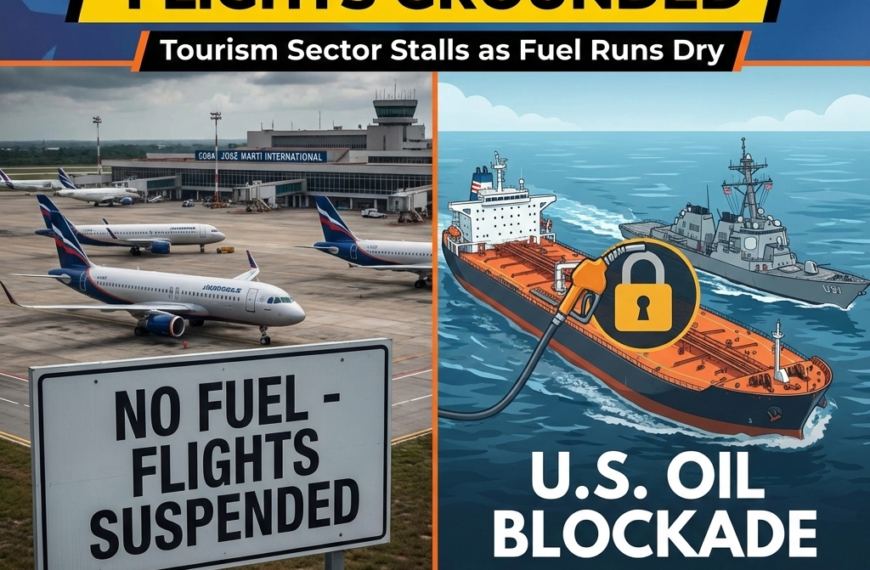
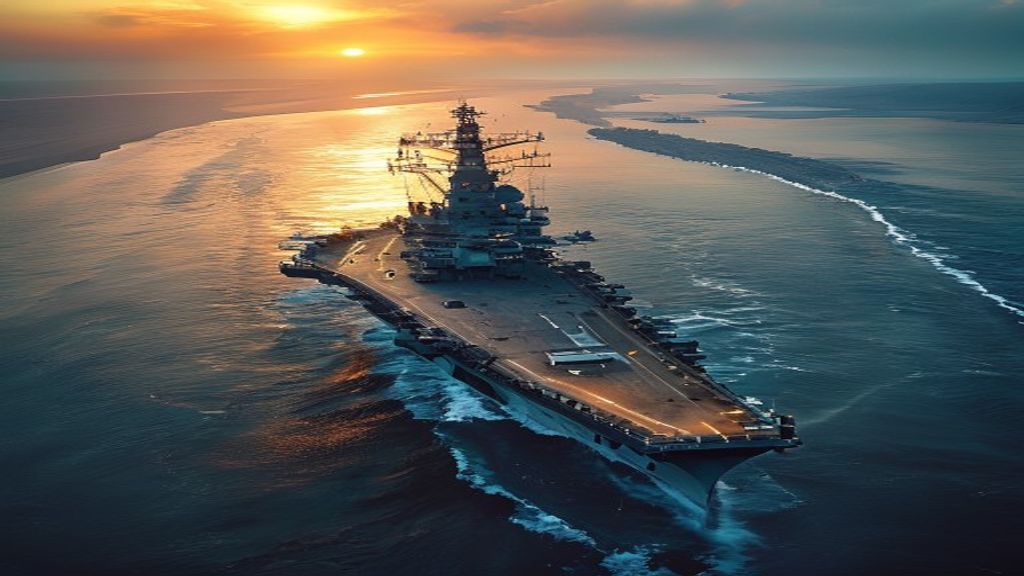

ISLAMABAD — The United States Navy has begun enforcing a full naval blockade of the Strait of Hormuz, one of the world’s most critical energy chokepoints, after 21-hour peace talks between Washington and Tehran collapsed in Pakistan’s capital without a deal.
The breakdown marks the most significant escalation in the US-Iran conflict since American and Israeli forces launched strikes against Iranian targets on February 28. Vice President JD Vance, who led the American delegation in Islamabad, departed empty-handed after Iranian negotiators refused to provide what Washington called an “affirmative commitment” to abandon their nuclear weapons programme. Within hours, President Donald Trump took to Truth Social to announce the blockade, ordering the Navy to intercept all maritime traffic entering or leaving the strait. The move sent global oil markets into immediate turmoil, with Brent crude surging past $100 per barrel for the first time since the conflict began.
| Parameter | Details |
|---|---|
| US Lead Negotiator | Vice President JD Vance |
| Talks Duration | 21 hours across multiple sessions in Islamabad |
| Blockade Effective | April 13, 2026 — immediate enforcement ordered |
| Oil Price Impact | Brent crude past $100/barrel (+7%) |
| Conflict Casualties | Over 2,000 Iranians killed since February 28 |
| Iranian Response | IRGC warns of “harsh response” to approaching military vessels |
| Strait Traffic | ~21 million barrels of oil transit daily (approx. 21% of global supply) |
Situational Breakdown
The Islamabad talks had been viewed as the last viable diplomatic off-ramp before a wider regional confrontation. Pakistan, positioning itself as a neutral broker, had spent weeks facilitating back-channel communications between Washington and Tehran to bring both sides to the table. The negotiations reportedly stalled on a single, non-negotiable American demand: that Iran make a verifiable, written commitment to permanently dismantle its nuclear weapons programme. Iranian diplomats characterised the demand as a precondition designed to fail, arguing that Tehran’s nuclear activities remain within the bounds of civilian energy development. — CNN
The speed with which the blockade was announced — reportedly within three hours of Vance’s departure from Islamabad — suggests the Pentagon had operational plans ready for immediate execution. The US Fifth Fleet, already reinforced with two carrier strike groups in the Arabian Sea, has begun establishing interdiction zones at both the eastern and western approaches to the strait. Commercial shipping operators have been issued urgent navigational warnings, and Lloyd’s of London has raised war-risk insurance premiums on vessels transiting the Persian Gulf to their highest levels in decades. — Time
On the ground, the humanitarian toll continues to mount. Since the February 28 strikes, over 2,000 Iranians have been killed and millions displaced from cities targeted by coalition air campaigns. International aid organisations have struggled to access affected areas, with the UN describing the situation as a rapidly deteriorating humanitarian crisis that now risks being compounded by the economic isolation a blockade would impose on Iran’s 88 million citizens. — Al Jazeera
The Nuclear Sticking Point
At the heart of the diplomatic failure is a fundamental disagreement that has defined US-Iran relations for more than two decades. Washington views Iran’s enrichment activities — now believed to have reached weapons-grade levels of 90% purity — as an existential threat to regional stability and a direct violation of non-proliferation norms. Vice President Vance framed the collapse in stark terms after landing back in Washington.
“We need to see an affirmative commitment that they will not seek a nuclear weapon, and they refused to give us that.”
Tehran, for its part, has consistently maintained that its nuclear programme serves peaceful energy purposes, a claim that has been met with growing scepticism from the International Atomic Energy Agency. Iranian Foreign Minister Hossein Amir-Abdollahian reportedly offered to resume IAEA inspections and cap enrichment at 60%, but the American side rejected the proposal as insufficient. Analysts say the gap between the two positions was simply too wide for Pakistan’s mediation to bridge in a single marathon session.
A Blockade Without Precedent
The Strait of Hormuz is the narrow waterway between Iran and Oman through which approximately 21 million barrels of oil pass every day — roughly one-fifth of global petroleum consumption. A full naval blockade of this passage has no modern precedent and represents an act that many international law scholars consider tantamount to a declaration of war.
President Trump’s announcement was characteristically blunt in its scope.
“The US Navy will blockade any and all ships trying to enter or leave the Strait of Hormuz, effective immediately.”
The language — “any and all ships” — has alarmed neutral nations whose economies depend on Persian Gulf trade routes. Japan, South Korea, and India, which collectively import millions of barrels daily through the strait, have called for urgent consultations. China, Iran’s largest oil customer, has described the blockade as “a flagrant violation of international maritime law” and has not ruled out deploying its own naval escorts for Chinese-flagged tankers — a scenario that could dramatically escalate the confrontation beyond a bilateral US-Iran affair.
Iran’s IRGC Draws a Red Line
Iran’s Islamic Revolutionary Guard Corps, which controls a significant coastal missile and fast-attack boat capability along the strait’s northern shoreline, responded within hours. In a statement carried by Iranian state media, the IRGC warned that any foreign military vessels approaching the strait would face a “harsh and decisive response.” The Guard Corps has previously demonstrated its ability to seize commercial tankers and has invested heavily in anti-ship missile batteries, sea mines, and drone swarms designed to overwhelm naval defences.
Military analysts say the IRGC’s asymmetric capabilities make the strait one of the most dangerous maritime environments on earth for conventional naval forces. While the US Navy possesses overwhelming superiority in open water, the strait’s narrow geography — just 33 kilometres at its tightest point — favours Iran’s strategy of saturation attacks from concealed coastal positions. The risk of a miscalculation triggering a full-scale naval engagement is, according to BBC defence correspondents, higher than at any point since the 1988 Operation Praying Mantis.
Global Energy Markets in Shock
The immediate economic consequences have been severe. Brent crude surged more than 7% in overnight trading, breaching $100 per barrel and triggering emergency sessions at OPEC headquarters in Vienna. Natural gas futures in Europe spiked in sympathy, as traders priced in the possibility that Qatari LNG shipments — which also transit the strait — could be disrupted for weeks or months.
For energy-importing nations already grappling with inflationary pressures, the blockade represents a supply shock of potentially historic proportions. The International Energy Agency has urged member states to prepare coordinated releases from strategic petroleum reserves, but analysts warn that stockpiles alone cannot compensate for the prolonged loss of Hormuz transit capacity. The global economy, still recovering from years of pandemic-era disruption, faces a genuine risk of oil-driven recession if the blockade persists beyond the short term.
🇵🇰 Pakistan Connection
Pakistan’s role in this crisis extends far beyond hosting the failed talks. By brokering the Islamabad negotiations, Prime Minister Shehbaz Sharif had positioned Pakistan as a credible global peace mediator — a diplomatic achievement now overshadowed by the collapse. More pressingly, the blockade poses a direct and immediate threat to Pakistan’s energy security. The country imports a significant portion of its fuel through sea routes that pass near or through the Strait of Hormuz, and the suspension of Qatari LNG shipments has already pushed petrol prices to a record PKR 458 per litre, squeezing households and businesses across the country. As the economic fallout deepens, Pakistan’s government faces difficult choices about rationing, subsidies, and alternative energy sourcing at a time when the nation’s infrastructure for processing pilgrimage and travel logistics — as seen in recent initiatives like Bookme’s digital Umrah visa deal with Saudi Arabia — depends on stable fuel supplies and regional connectivity.
Islamabad is now engaged in urgent backchannel diplomacy with both Tehran and Gulf Arab states to secure alternative energy supply arrangements and to offer its services for a second round of talks, should both parties agree to return to the table. Pakistan’s geographic proximity to the conflict zone — sharing a border with Iran and maintaining close ties with Gulf monarchies — makes it both uniquely vulnerable and uniquely positioned to mediate.
BOLOTOSAI Assessment
The Hormuz blockade marks a point of no return in the US-Iran confrontation. What began as targeted strikes in February has now evolved into an economic siege with global ramifications. Three scenarios demand close attention in the days ahead.
First, the risk of direct military confrontation in the strait itself. The IRGC’s threat is not hollow — Iran has the capability to inflict significant casualties on naval forces operating in confined waters. A single incident, whether a missile strike on a warship or a mine detonation beneath a tanker, could escalate into full-scale war within hours. Second, the economic cascade. If the blockade holds for more than two weeks, oil prices could reach $120–$140 per barrel, triggering fuel crises across South Asia, East Africa, and Southeast Asia — regions with minimal strategic reserves. Pakistan, Sri Lanka, and Bangladesh are particularly exposed. Third, the diplomatic dimension. China’s threat to escort its own tankers introduces a great-power variable that transforms a regional conflict into a potential global standoff.
Watch for emergency UN Security Council sessions this week, OPEC’s response on production quotas, and whether Pakistan can revive negotiations before the military logic of escalation overtakes diplomacy entirely. The next 72 hours will determine whether the world faces a contained crisis or the most dangerous maritime confrontation since the Second World War.

 By
By



 By
By