
LAHORE — Pakistani travel tech startup Bookme has signed a landmark partnership with Saudi Arabia’s Ministry of Hajj and Umrah and Elm Company to deliver fully digital, instant Umrah visa processing for Pakistani pilgrims, eliminating the need for physical paperwork or in-person visits entirely.
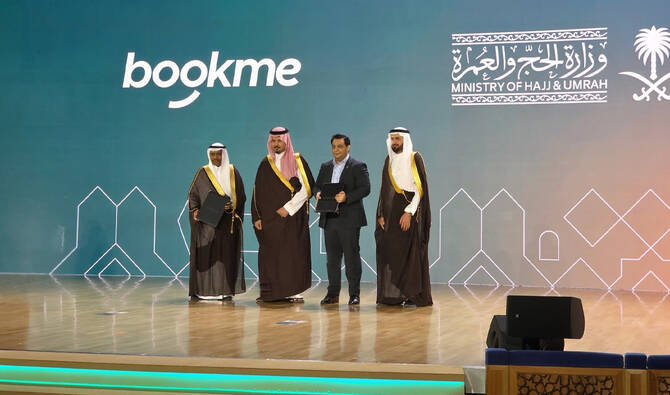
The agreement, formalized on April 7, 2026, during the Umrah and Ziyarah Forum in Madinah, positions the Lahore-based company as the first Pakistani platform to offer direct, government-backed digital Umrah visas. For a country that sends millions of pilgrims to Saudi Arabia each year, the deal represents a seismic shift in how one of the most important religious journeys is accessed. Bookme CEO Faizan Aslam was personally invited on stage by the Saudi Minister during the forum’s opening ceremony — a gesture that underscored the diplomatic and commercial weight of the collaboration. The move also signals Saudi Arabia’s accelerating push to digitize its pilgrimage infrastructure under its Vision 2030 modernization agenda.
| Parameter | Details |
|---|---|
| Key Figure | Faizan Aslam, CEO & Founder of Bookme |
| Saudi Partners | Ministry of Hajj and Umrah; Elm Company |
| Agreement Signed | April 7, 2026 — Madinah, Saudi Arabia |
| Forum | Umrah and Ziyarah Forum 2026 |
| Visa Process | Fully digital, one-click, no physical paperwork |
| Platform Integration | Bookme app and partner banking platforms |
| Headquarters | Lahore, Pakistan |
How the Deal Came Together
The partnership was announced at the Umrah and Ziyarah Forum, an annual gathering in Madinah where Saudi officials and international stakeholders discuss the future of pilgrimage logistics. Bookme, which built its reputation as Pakistan’s leading online ticketing platform for buses, flights, and events, had been quietly expanding into the religious travel vertical for over a year. The company’s existing digital infrastructure — already processing millions of transactions — made it a natural candidate for the Saudi ministry’s push toward frictionless pilgrim processing. — TechJuice
Elm Company, a Saudi digital services provider owned by the Public Investment Fund, serves as the technical backbone for the initiative. The firm specializes in government-to-citizen digital solutions across the Kingdom, handling everything from national identity systems to border management. Its involvement ensures the visa platform meets Saudi regulatory and security standards while delivering the instant processing speed that Bookme has promised its users. — Arab News
The timing is significant. Saudi Arabia has been steadily expanding Umrah capacity and streamlining entry procedures as part of its goal to welcome 30 million Umrah pilgrims annually by 2030. Pakistan, as one of the largest source countries for Umrah travelers, represents a critical market for that ambition. — Startup Pakistan
The One-Click Visa Experience
At the core of the partnership is a deceptively simple promise: a pilgrim opens the Bookme app, selects an Umrah package, and receives a visa instantly — no photocopies, no embassy queues, no travel agent intermediaries. The system processes applications digitally from end to end, connecting directly with Saudi government databases for verification and approval.
“The system enables a fully digital, one-click Umrah visa experience with no human intervention or physical paperwork required.”
This represents a radical departure from the traditional Umrah visa process, which has historically required pilgrims to submit physical passports, photographs, and medical certificates through licensed travel agents. Wait times could stretch from days to weeks, with limited transparency about application status. The new system collapses that timeline to minutes — or, in the ideal scenario, seconds. The integration with partner banking platforms also suggests that payment processing, travel insurance, and potentially even flight and accommodation booking could eventually be bundled into a single transaction.
Why Saudi Arabia Chose a Pakistani Startup
The optics of the signing ceremony told the story before any press release could. Faizan Aslam standing on stage beside the Saudi Minister was not merely a photo opportunity — it was a deliberate signal from Riyadh that Pakistan’s tech ecosystem has earned a seat at a table traditionally reserved for Western enterprise software companies and Gulf-state incumbents.
“Faizan Aslam was personally invited on stage by Saudi Minister during the opening ceremony, highlighting the significance of this Pakistan-Saudi tech collaboration.”
Pakistan sends an estimated three to four million Umrah pilgrims annually, making it among the top three source countries globally. Any platform that can digitize and streamline that flow immediately becomes commercially significant. Bookme’s advantage was straightforward: it already had the user base, the payment rails, and the mobile-first architecture needed to serve a population where smartphone penetration is surging but desktop internet usage remains limited. The company didn’t need to build a pilgrim tech platform from scratch — it needed to extend the one it already had.
Implications for Pakistan’s Travel Tech Industry
The deal positions Bookme in a category that barely existed for Pakistani startups five years ago: cross-border government-integrated digital services. While Pakistan’s tech sector has produced notable successes in freelancing platforms, fintech, and e-commerce, direct integration with a foreign government’s visa infrastructure represents a new frontier entirely. It suggests that Pakistani companies can compete not just on cost arbitrage but on technical capability and institutional trust.
The ripple effects could extend well beyond Umrah visas. If the system performs as promised, it establishes a template for similar integrations — tourist visas, business visas, or even Hajj processing could follow. Other Pakistani travel platforms will be watching closely, and the competitive pressure to offer comparable digital visa services will intensify rapidly. In a broader sense, while the tech world’s attention has been elsewhere — on everything from Coachella 2026 Kicks Off With Bieber Headlining Saturday Night to AI product launches — this quiet signing in Madinah may prove to be one of the more consequential tech deals to come out of South Asia this year.
🇵🇰 Pakistan Connection
This is a distinctly Pakistani story at every level. Bookme, born in Lahore and built on solving Pakistan-specific infrastructure problems — unreliable bus ticketing, fragmented travel bookings — has now parlayed that domestic expertise into an international partnership with one of the most important governments in the Muslim world. For millions of Pakistani families, the Umrah journey is both a spiritual obligation and a logistical ordeal. The prospect of reducing that ordeal to a few taps on a phone screen is not an incremental improvement — it is transformational.
The deal also carries symbolic weight for Pakistan’s broader startup ecosystem. At a time when the country’s founders frequently cite regulatory uncertainty and limited international market access as growth barriers, Bookme’s partnership with the Saudi Ministry demonstrates that Pakistani startups can punch above their weight when they solve real problems at scale. Faizan Aslam’s presence on that stage in Madinah was not just a win for Bookme — it was a proof point for an entire generation of Pakistani founders building for markets that extend far beyond their borders.
BOLOTOSAI Assessment
The Bookme-Saudi partnership is one of those deals that looks modest on the surface but could reshape an entire category. Three outcomes are worth watching closely in the months ahead.
First, execution speed will be the ultimate test. The promise of instant, one-click visas is compelling — but scaling that promise across millions of applicants during peak Umrah seasons will stress-test both the technology and the institutional coordination between Bookme, Elm, and the Saudi ministry. Any friction, downtime, or processing delays during high-demand periods could undermine the entire value proposition before it has time to mature.
Second, the competitive response will be swift. Pakistani travel agents — an industry that employs tens of thousands of people — will face existential pressure if digital visa processing gains mainstream adoption. Expect lobbying, regulatory pushback, and possibly parallel digital initiatives from incumbent operators who recognize the threat. How Bookme navigates that political landscape will matter as much as how well its technology performs.
Third, the template question looms large. If this model works for Pakistani Umrah pilgrims, there is no technical reason it cannot be extended to other nationalities, other visa types, and other Saudi government services. Bookme could evolve from a Pakistani travel app into a regional government-tech integrator — a far larger and more defensible business than ticketing alone. The signing in Madinah was the beginning. What happens next will determine whether it was a milestone or a footnote.


 By
By



 By
By