
ISLAMABAD — Efforts to broker a 45-day ceasefire between the United States and Iran hit another wall on Sunday as President Donald Trump extended his ultimatum to Tehran by 20 hours, pushing the new deadline to Tuesday at 8pm ET — a move that underscores the fragility of negotiations that have yet to produce even a framework agreement.
The talks, mediated through an intricate web of intermediaries including Pakistan, Egypt, and Turkey, represent the most sustained diplomatic push to de-escalate the US-Iran confrontation since hostilities intensified earlier this year. US envoy Steve Witkoff and Iran’s Foreign Minister Abbas Araghchi have been communicating indirectly through these mediating nations, but fundamental disagreements over preconditions continue to prevent direct engagement. At stake is not merely a temporary pause in hostilities but the future of maritime security in the Persian Gulf, global energy markets, and the broader architecture of Middle Eastern geopolitics.
| Parameter | Details |
|---|---|
| US Envoy | Steve Witkoff, leading indirect negotiations |
| Iran’s Lead Negotiator | Foreign Minister Abbas Araghchi |
| Mediating Nations | Pakistan, Egypt, Turkey |
| Proposed Ceasefire Duration | 45 days |
| New Deadline | Tuesday, April 8, 2026 at 8pm ET |
| Key Sticking Points | Strait of Hormuz reopening, enriched uranium stockpile |
| Negotiation Status | Indirect talks ongoing; Iran denies active negotiations |
Situational Breakdown
The 20-hour extension announced Sunday is the latest in a pattern of deadline diplomacy that has characterized Washington’s approach to the crisis. Rather than signaling progress, the repeated extensions suggest that mediators are struggling to bridge a fundamental disconnect: the US seeks a phased, confidence-building truce beginning with tangible Iranian concessions, while Tehran insists that any agreement must address the totality of the conflict. Sources close to the talks told Axios that the chances of reaching even a partial agreement within the next 48 hours remain very slim, reflecting the depth of mistrust on both sides. — Axios
Iran’s public posture has hardened in recent days. In an interview with Al Jazeera, Foreign Minister Araghchi stated that Tehran is not seeking a ceasefire but rather a comprehensive end to the war, and flatly denied that active negotiations are underway. This framing is significant — by rejecting the label of “negotiations,” Iran preserves domestic political cover while keeping diplomatic channels technically open through intermediaries. The distinction between “talks” and “negotiations” may seem semantic, but in the context of Iranian domestic politics, it carries enormous weight. — Al Jazeera
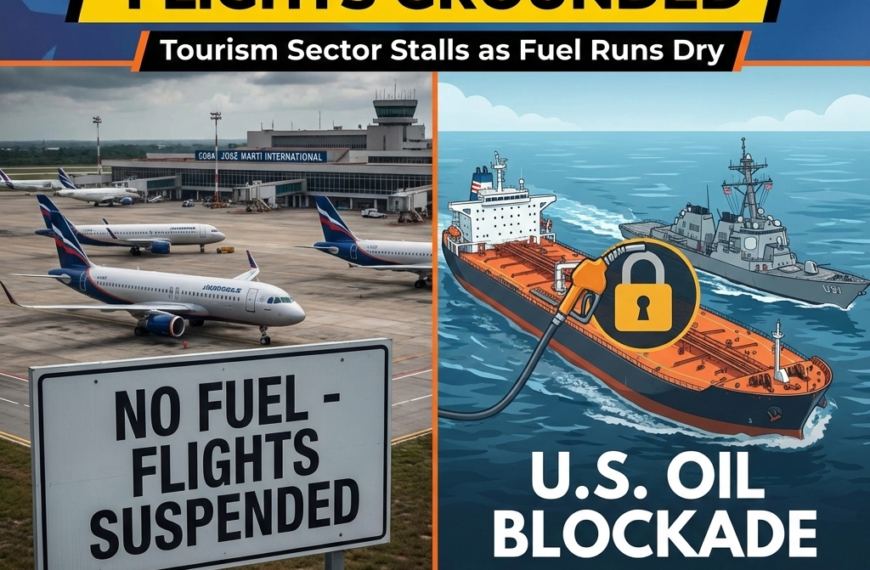
Meanwhile, the practical consequences of the standoff continue to ripple across global markets. The partial closure of the Strait of Hormuz — through which roughly 20 percent of the world’s oil passes — has already sent energy prices surging, with Brent crude hovering near multi-year highs. The economic pressure cuts both ways, giving Iran leverage but also intensifying the urgency felt by mediating nations whose own economies depend on stable Gulf shipping lanes. — CNBC
The Deadline Trap: Why Extensions Signal Weakness
Trump’s repeated deadline extensions reveal a strategic dilemma that the administration has yet to resolve. Each extension is meant to demonstrate patience and good faith, but from Tehran’s perspective, every pushed deadline confirms that Washington lacks the appetite for escalation. The original ultimatum carried implicit military threat; each deferral dilutes that threat further.
This dynamic creates what analysts call a “credibility spiral” — the more deadlines are extended, the less seriously future deadlines are taken. Iran’s negotiating team is acutely aware of this pattern and appears to be calibrating its responses accordingly, offering just enough diplomatic engagement to justify another extension without conceding any substantive ground.
“The chances of reaching even a partial agreement within the next 48 hours remain very slim.” — Sources close to the talks, as reported by Axios
The Strait of Hormuz: Leverage or Liability?
At the heart of the stalemate lies the Strait of Hormuz, one of the world’s most critical maritime chokepoints. Iran views its ability to influence traffic through the strait as its most potent bargaining chip — a card it will not play for a mere 45-day truce. From Tehran’s calculus, reopening the strait without securing a permanent resolution would surrender leverage without gaining lasting security guarantees.
Washington, conversely, considers the reopening of the strait a prerequisite for any serious talks, framing it as a humanitarian and economic necessity. This chicken-and-egg impasse — Iran wants a deal before reopening, the US wants reopening before a deal — represents the core structural obstacle that no amount of deadline extension can resolve without a fundamental shift in one side’s position. Reuters reported that maritime insurance rates for Gulf-bound vessels have tripled since the standoff began, adding billions in costs to global trade.
The Uranium Question
Equally contentious is the matter of Iran’s enriched uranium stockpile. Tehran has steadily expanded its enrichment activities since the collapse of the JCPOA, and now possesses enough enriched material to be a persistent point of international concern. Iran views this stockpile as both a deterrent and a negotiating asset — one it will not diminish in exchange for a temporary ceasefire that could unravel in 46 days.
The US position, backed by its European allies, demands verifiable reductions as part of any agreement. But verification mechanisms take months to establish, making their inclusion in a 45-day framework inherently problematic. This technical mismatch between the timeline of the proposed truce and the timeline required for meaningful nuclear concessions has been a consistent obstacle that mediators have struggled to address.
“Tehran is not seeking a ceasefire but rather an end to the war entirely, and there are no active negotiations at this moment.” — Abbas Araghchi, Iran’s Foreign Minister, via Al Jazeera
The Role of Intermediaries
The tripartite mediation effort by Pakistan, Egypt, and Turkey represents an unusual coalition. Each nation brings distinct relationships and interests to the table. Turkey, a NATO member with historically complex ties to both Washington and Tehran, provides a bridge between Western and Middle Eastern diplomatic frameworks. Egypt, with its close security relationship with the United States and growing diplomatic engagement with Iran, offers credibility on both sides. Pakistan, sharing a border with Iran and maintaining deep strategic ties with both China and the Gulf states, brings a unique regional perspective.
The involvement of three mediators rather than one reflects the complexity of the situation but also introduces coordination challenges. Each intermediary must manage its own bilateral relationships while presenting a unified mediation front — a balancing act that, as the current stalemate demonstrates, has proven extraordinarily difficult. While the entertainment world buzzes over the Super Mario Galaxy Movie Shatters 2026 Box Office Records, the real-world drama unfolding across diplomatic back channels carries consequences that no screen can capture.
🇵🇰 Pakistan Connection
Pakistan’s role in the mediation effort extends well beyond symbolic participation. Prime Minister Shehbaz Sharif personally spoke with Iranian President Masoud Pezeshkian on March 28 to discuss trust-building measures, and Islamabad has since hosted foreign ministers from Egypt, Saudi Arabia, and Turkey for coordination sessions. Foreign Minister Ishaq Dar travelled to Beijing, where Pakistan and China issued a joint five-point peace plan — signalling that Islamabad is leveraging its relationships across multiple power centres to advance the diplomatic process.
The stakes for Pakistan are painfully direct. The disruption of Gulf oil flows triggered by the Strait of Hormuz standoff has exacerbated an already severe energy crisis in the country, driving fuel costs higher and straining an economy that can ill afford additional shocks. In response, the Pakistan Navy launched Operation Muhafiz-ul-Bahr to protect merchant shipping near the strait — a tangible military commitment that underscores how directly Pakistan’s national security is intertwined with the outcome of these negotiations.
BOLOTOSAI Assessment
The trajectory of these talks points toward three plausible outcomes in the near term. First, the most likely scenario: another deadline extension accompanied by vague statements of progress, buying mediators additional time while neither side makes substantive concessions. This path preserves the status quo but erodes American credibility with each passing day. Second, a narrow procedural agreement — perhaps a mutual commitment to continue indirect talks through a designated framework — that falls far short of a ceasefire but provides diplomatic cover for both sides. Third, and most dangerously, a collapse of the mediation effort that triggers renewed escalation, potentially including expanded military operations near the Strait of Hormuz.
What observers should watch most closely is not the words of the principals but the actions of the mediators. If Pakistan, Egypt, and Turkey begin scaling back their engagement or issuing pessimistic public statements, it will signal that the diplomatic track has exhausted its potential. Conversely, any movement on the uranium verification timeline — even a technical working group — would indicate genuine progress beneath the surface rhetoric. The Tuesday deadline will come and go; the real question is whether it will be the last extension before a breakthrough or the last extension before a breakdown.

 By
By


 By
By