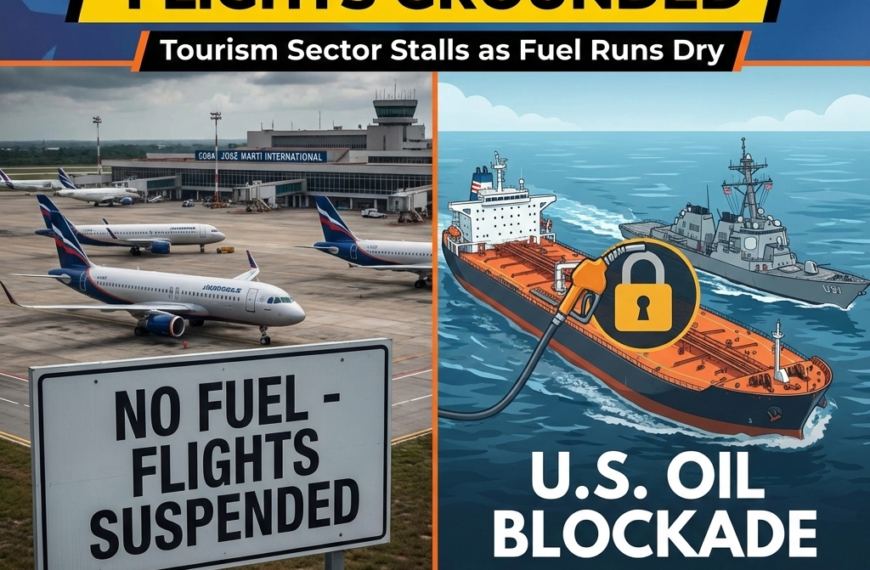

ISLAMABAD — The United States on Sunday began enforcing a full naval blockade of the Strait of Hormuz targeting Iranian ports, hours after more than 21 hours of marathon peace talks in Pakistan’s capital ended without agreement, plunging the wider Middle East into its most dangerous standoff in decades.
The blockade, ordered by President Donald Trump late Saturday and operationalised by US Central Command at 10:00 AM ET on April 13, marks a dramatic escalation in a conflict that has raged since February 28 and claimed over 2,000 lives in Iran alone. Vice President JD Vance, who personally led the American delegation in Islamabad, said Iran’s refusal to abandon its nuclear programme left Washington with no choice. Tehran fired back, accusing the US of negotiating in bad faith. Oil markets responded with panic — West Texas Intermediate crude surging more than 9 percent past $105 per barrel — while diplomats across the region scrambled to prevent a full-scale war.
| Parameter | Details |
|---|---|
| US Delegation Lead | Vice President JD Vance |
| Talks Duration | Over 21 hours in Islamabad, collapsed April 12 |
| Blockade Start | April 13, 10:00 AM ET — enforced by CENTCOM |
| Core US Demand | Iran must commit to abandoning nuclear weapons programme |
| Oil Price Impact | WTI crude up 9%+, past $105/barrel |
| Conflict Toll (Since Feb 28) | 2,000+ killed in Iran; dozens across the region |
| Ceasefire Status | Pakistan-brokered April 9 ceasefire still holding |
Situational Breakdown
The Islamabad talks represented the most significant diplomatic opening since hostilities erupted on February 28. Pakistan, which brokered the two-week ceasefire on April 9 that paused active military operations, hosted the negotiations at a heavily secured venue in the capital. Delegations arrived Thursday evening, and talks began in earnest Friday morning with Pakistani officials serving as intermediaries. By Saturday night, it was over. The central impasse was clear: Washington insisted that any deal must include an explicit, verifiable Iranian commitment to dismantle its nuclear weapons programme. Tehran called the demand excessive and unrealistic. — NPR
Within hours of the breakdown, President Trump addressed the nation from the White House, announcing the naval blockade and characterising it as a containment measure rather than an act of war. CENTCOM confirmed that US naval assets — including carrier strike groups already positioned in the Arabian Sea — would intercept all commercial vessels heading to Iranian ports while allowing unimpeded transit to other Gulf destinations. Pentagon officials emphasised the blockade’s targeted nature, drawing a distinction from a full maritime embargo. — CNN
The immediate market reaction was severe. Oil futures, already elevated from weeks of regional instability, spiked on Sunday trading as the blockade went into effect. The Strait of Hormuz handles roughly 20 percent of the world’s petroleum supply, and traders fear any disruption — even one limited to Iranian-bound vessels — could cascade through global energy markets. European natural gas futures also climbed sharply. — CNBC
The Diplomatic Collapse: What Went Wrong
The failure in Islamabad was not for lack of effort. Pakistan invested enormous political capital in bringing both sides to the table, and international observers had expressed cautious optimism after the ceasefire held for three days without incident. But the fundamental gap between American and Iranian negotiating positions proved unbridgeable in a single round of talks.
Vice President Vance, speaking to reporters at Islamabad’s Nur Khan Airbase before departing, was blunt about where blame lay:
“We did not reach an agreement, and that is worse news for Iran than for us. We need a clear commitment they will not pursue nuclear weapons.”
Iran’s Foreign Ministry spokesperson offered a sharply different reading, telling state media that the talks were doomed by maximalist American demands:
“Diplomatic success requires good faith from the other side and not making excessive demands.”
The rhetorical gap mirrors a strategic one. The US views Iran’s nuclear ambitions as an existential threat to regional stability and a non-negotiable red line. Iran frames its programme as a sovereign right and a defensive necessity, pointing to decades of Western intervention in the Middle East as justification.
The Blockade: Mechanics and Risks
The Strait of Hormuz, a narrow waterway between Iran and Oman measuring just 33 kilometres at its narrowest point, is the most strategically significant chokepoint in global energy infrastructure. Roughly a fifth of all oil consumed worldwide passes through it daily. A US naval blockade of this corridor — even one limited to Iranian-bound traffic — is an operation of extraordinary complexity and risk.
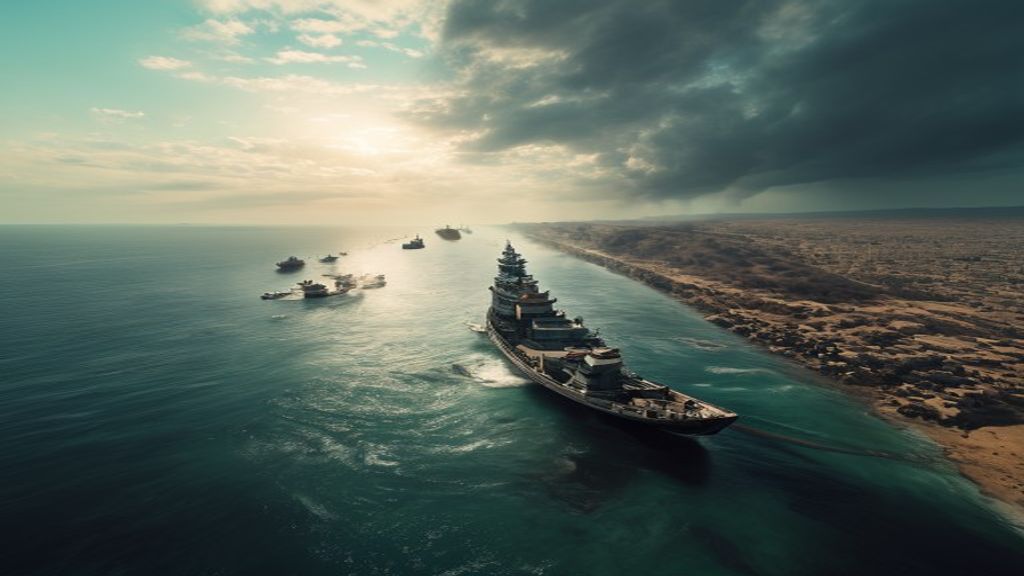
CENTCOM has deployed assets including guided-missile destroyers, patrol craft, and maritime surveillance aircraft to enforce the interdiction zone. Officials told Reuters that rules of engagement allow for boarding and diversion of non-compliant vessels but stress that the blockade is not designed to provoke a military confrontation. Iran, however, has previously threatened to close the strait entirely if its own shipping is targeted — a move that would constitute an escalation of historic proportions.
The broader conflict, now in its seventh week, has already reshaped the region’s security architecture. Over 2,000 Iranians have been killed since February 28, along with dozens of casualties across neighbouring countries from missile exchanges and proxy engagements. The BBC’s coverage of the crisis notes that humanitarian conditions inside Iran are deteriorating rapidly, with medical supply chains disrupted and civilian infrastructure damaged in multiple provinces.
Oil Markets and the Global Economic Fallout
The energy market response to the blockade has been immediate and punishing. WTI crude’s leap past $105 per barrel represents the highest price since the early days of the Russia-Ukraine conflict in 2022, and analysts warn the ceiling may be significantly higher if the blockade persists beyond days.
The impact radiates far beyond commodity trading floors. Developing economies that depend on imported petroleum face the most acute pain. Shipping insurance premiums for Gulf-bound tankers have tripled in the past week, and several major carriers have already begun rerouting vessels. Supply chain disruptions that took months to materialise during the Houthi Red Sea crisis could unfold in days given the Strait of Hormuz’s centrality to global trade.
For energy-importing nations across South Asia, Southeast Asia, and Africa, the timing is particularly cruel. Many were already grappling with inflationary pressures and currency depreciation. A sustained blockade threatens to push food and fuel prices beyond the reach of hundreds of millions of people. In a related development highlighting the region’s economic interconnectedness, Bookme Signs Deal for Instant Digital Umrah Visas With Saudi Arabia, underscoring that commercial and people-to-people links across the Gulf remain vital even as military tensions surge.
The Ceasefire’s Fragile Survival
Perhaps the most remarkable element of the current situation is that the Pakistan-brokered ceasefire, announced on April 9, continues to hold despite the complete collapse of the diplomatic process it was meant to support. No major military operations have been reported since the truce took effect, and both sides appear to be observing its terms even as political rhetoric escalates.
This creates a paradoxical landscape: a naval blockade coexisting with a ceasefire. Military analysts describe the blockade as occupying a grey zone — an economic pressure tool that stops short of kinetic action but could easily trigger one. A single miscalculation at sea, a boarding that turns violent, or an Iranian attempt to run the blockade could shatter the ceasefire overnight. As The Guardian reported, regional powers including Saudi Arabia, the UAE, and Turkey have all called for restraint, but none has publicly offered a concrete path back to negotiations.
🇵🇰 Pakistan Connection
Pakistan emerges from the Islamabad talks with its diplomatic reputation enhanced but its economy deeply exposed. Islamabad’s role as mediator — architect of the April 9 ceasefire and host of the most serious US-Iran negotiations in years — has earned international recognition, with both Dawn and Geo TV reporting that foreign diplomats praised Pakistan’s even-handedness. But the economic consequences of a prolonged Strait of Hormuz blockade could be devastating for a country where energy imports account for more than 22 percent of the total import bill.
The pain is already visible at the pump. Petrol prices have surged to Rs458.41 per litre, and economists warn that sustained oil prices above $100 could push inflation past 12 percent, eroding fragile gains from months of fiscal tightening. Pakistan’s current account deficit, which had been narrowing, faces renewed pressure from ballooning energy costs. For ordinary Pakistanis, the geopolitical crisis playing out in their capital translates directly into higher transport costs, more expensive food, and diminished purchasing power. Islamabad now faces the delicate task of maintaining its mediator credibility while shielding its economy from the fallout of a conflict it worked so hard to prevent.
BolotosAI Assessment
The coming days will determine whether the Strait of Hormuz blockade becomes a pressure tool that forces Iran back to the table or a tripwire that drags the region into a wider war. Three scenarios demand attention.
First, a return to talks. The ceasefire’s survival suggests neither side wants full-scale escalation. If the economic pain of the blockade mounts quickly enough — and if a credible intermediary like Pakistan or Oman can propose a face-saving formula — negotiations could resume within weeks. The key variable is whether Washington is willing to accept a phased approach to the nuclear question rather than an all-or-nothing commitment.
Second, a prolonged standoff. If neither side blinks, the blockade could settle into a new status quo — painful for Iran, expensive for the global economy, and dangerous for everyone in the Persian Gulf. Oil prices would likely stabilise between $100 and $115, high enough to strain developing economies but not catastrophic enough to force great-power intervention. This is the most probable near-term outcome.
Third, escalation. A maritime incident — an Iranian fast-boat provocation, a boarding gone wrong, or a miscalculated proxy strike — could collapse the ceasefire and trigger direct military engagement. This remains a low-probability but high-consequence scenario that every capital in the region is now gaming out.
What to watch: Iran’s response in the next 48 hours, OPEC’s emergency posture, and whether Pakistan can leverage its mediator role into a second round of talks before the ceasefire expires. The world cannot afford to look away.

 By
By


 By
By