
WASHINGTON — US President Donald Trump has issued a stark ultimatum to Iran, warning that devastating military strikes on the country’s power plants and bridges will follow if the Strait of Hormuz is not reopened to all marine traffic by Tuesday, April 7, even as mediators from Pakistan, Turkey, and Egypt scramble to pull both sides back to the negotiating table before the deadline expires.
The warning marks a dramatic escalation in a crisis that has rattled global energy markets and brought two of the world’s most powerful militaries to the brink of direct confrontation. The tensions surged after an American F-15E Strike Eagle was shot down over Iranian airspace on April 3, triggering a frantic search-and-rescue operation that concluded on April 5 when the second crew member was recovered injured but alive. With envoys Steve Witkoff and Jared Kushner reportedly leading back-channel contacts through multiple intermediaries, the next 48 hours represent the narrowest diplomatic window the world has seen since the crisis began.
The stakes extend far beyond the two nations. The Strait of Hormuz remains the single most critical chokepoint in global energy supply chains, with roughly one-fifth of the world’s oil passing through its narrow waters daily. A sustained closure — or worse, a military escalation that damages port infrastructure on either side — could send crude prices spiraling and tip fragile economies into recession. While audiences worldwide have been Super Mario Galaxy Movie Shatters 2026 Box Office Records distracted by lighter headlines, the geopolitical reality unfolding in the Persian Gulf demands urgent attention.
| Parameter | Details |
|---|---|
| Key Figure | US President Donald Trump |
| Deadline | Tuesday, April 7, 2026 — Strait of Hormuz must reopen |
| US Envoys | Steve Witkoff and Jared Kushner leading multi-channel contacts |
| Mediating Nations | Pakistan, Turkey, Egypt, and China |
| Trigger Incident | US F-15E shot down over Iran on April 3; both crew rescued by April 5 |
| Threatened Targets | Iranian power plants and bridges |
| Strategic Chokepoint | Strait of Hormuz — ~20% of global oil transit |
Situational Breakdown
The crisis entered its most dangerous phase on April 3, when Iranian air defenses brought down an American F-15E Strike Eagle conducting what the Pentagon described as a routine freedom-of-navigation patrol near the strait. The shootdown prompted immediate calls for retaliation from congressional hawks, but the White House initially held fire, prioritizing the recovery of both crew members. The second aviator was pulled from Iranian-controlled territory on April 5, injured but alive, in what US officials called a complex extraction operation conducted with the quiet cooperation of intermediary states. — Al Jazeera
With the crew safely recovered, Trump’s posture shifted sharply from restraint to ultimatum. In an interview with Israeli Channel 12 broadcast on Saturday, the president confirmed that the United States is engaged in what he called “deep negotiations” with Tehran, with Witkoff and Kushner managing contacts through Omani, Turkish, and Pakistani channels simultaneously. Yet the diplomatic language was paired with threats of extraordinary violence: Trump warned that Iran’s civilian infrastructure, including power generation facilities and transportation bridges, would be targeted if the strait remains closed past Tuesday. — CNBC
The dual-track approach — threats layered over active diplomacy — has left analysts divided on whether the deadline is a genuine red line or a negotiating tactic designed to extract maximum concessions from Tehran before a deal is struck. Iran’s foreign ministry has not publicly responded to the Tuesday ultimatum, though regional reporting from Al Jazeera indicates that back-channel communications between the two sides have not broken down. — South China Morning Post
The Ultimatum and Its Implications
Trump’s language in the Israeli Channel 12 interview left little room for ambiguity. The president framed the deadline not as a diplomatic preference but as an absolute condition, with catastrophic consequences for non-compliance.
“They will be living in hell if the strait deadline is missed. These are crazy bastards — and they need to understand that we are not playing games.” — Donald Trump, as reported by CNBC
The threat to target power plants and bridges represents a significant escalation in rhetoric. Striking civilian energy infrastructure would affect tens of millions of Iranian citizens and could constitute a violation of international humanitarian law, which prohibits attacks on objects indispensable to the survival of civilian populations. Legal scholars have already begun debating whether such strikes, even if preceded by warnings, would cross thresholds established under the Geneva Conventions. The humanitarian dimension adds another layer of complexity to an already fraught diplomatic picture.
Diplomatic Channels Under Pressure
Behind the public brinkmanship, a dense web of diplomatic activity is underway. Witkoff and Kushner are reportedly working through at least three separate channels: direct contacts via Oman, Turkish-mediated discussions, and a Pakistani relay that has become increasingly central to the process. The involvement of multiple mediators reflects both the urgency of the situation and the deep mutual distrust between Washington and Tehran, which prevents direct bilateral engagement.
Turkey’s role has been particularly notable. President Recep Tayyip Erdogan, who has cultivated relationships with both Washington and Tehran over the past decade, has positioned Ankara as a neutral facilitator capable of translating between the two sides’ maximalist positions. Egyptian intelligence services, meanwhile, have leveraged their longstanding back-channel relationships with Iranian counterparts to keep communication lines open even as public rhetoric has escalated. According to Reuters reporting on Middle East diplomacy, all parties recognize that the Tuesday deadline creates a hard clock that could either force a breakthrough or trigger an irreversible escalation.
The Rescued Aviators and the Political Calculus
The successful recovery of both F-15E crew members has subtly reshaped the political dynamics of the crisis. Had either aviator been killed or captured, domestic pressure for immediate retaliation would likely have overwhelmed diplomatic considerations. Instead, the rescue has given the White House a narrow window to pursue negotiations without appearing weak — the crew is safe, and the president can frame the Tuesday deadline as strength rather than desperation.
Military analysts note that the rescue operation itself required at least tacit cooperation from intermediary states, suggesting that behind-the-scenes channels are functioning more effectively than public posturing would indicate. The injured aviator is reportedly receiving treatment at a US military facility in the Gulf region, and the Pentagon has declined to provide further details on the extraction methodology, citing operational security concerns.
Global Energy Markets on Edge
The Strait of Hormuz crisis has already sent shockwaves through global energy markets. Brent crude prices have surged past $105 per barrel, their highest level since early 2023, and shipping insurers have imposed war-risk premiums on vessels transiting the Persian Gulf. The longer the strait remains effectively closed to normal traffic, the greater the pressure on strategic petroleum reserves in the United States, Europe, and Asia.
For energy-importing nations across South and Southeast Asia, the crisis poses an acute economic threat. Any sustained disruption to Gulf oil flows would accelerate inflationary pressures that many developing economies are already struggling to contain. As reported by BBC News, the International Energy Agency has convened emergency consultations with member states to coordinate potential reserve releases if the situation deteriorates further.
🇵🇰 Pakistan Connection
Pakistan has emerged as a central mediator in the crisis, leveraging its unique position as a nation that maintains working relationships with both Washington and Tehran while sharing a border with Iran. Pakistani Foreign Minister Ishaq Dar recently launched a joint five-point peace initiative with China calling for an immediate ceasefire, protection of civilian infrastructure, and the reopening of the Strait of Hormuz. The initiative represents Islamabad’s most ambitious diplomatic intervention in a Middle Eastern conflict in decades.
“Our mediation efforts to broker a ceasefire are right on track. We have proposed that peace talks take place on Pakistani soil, and both sides have shown willingness to engage.” — Pakistan’s Foreign Ministry, as reported by PBS News
Pakistan’s mediation role carries both opportunity and risk. A successful brokering of talks would dramatically elevate Islamabad’s standing as a credible international mediator and strengthen its relationship with both superpowers. However, failure — or the perception of favoritism toward either side — could strain Pakistan’s delicate balancing act between its strategic partnership with the United States and its economic and security ties with Iran and China. The proposal to host talks on Pakistani soil is particularly significant, as it would place Islamabad at the physical center of what could become the most consequential diplomatic negotiation of 2026.
BOLOTOSAI Assessment
The next 48 hours will determine whether the Persian Gulf crisis becomes a cautionary tale of coercive diplomacy that worked or the opening chapter of a devastating regional conflict. Three scenarios are now plausible. First, Iran makes a partial concession — reopening the strait to commercial traffic while maintaining a military posture — giving Trump enough to claim victory and pull back from the brink. This is the most likely outcome, as both sides have signaled through intermediaries that they prefer negotiation over escalation. Second, the deadline passes without compliance and the United States launches limited strikes on Iranian infrastructure, triggering a cycle of retaliation that could draw in regional powers and disrupt global energy supplies for months. Third, mediators secure a last-minute agreement to convene formal talks — potentially in Pakistan — effectively extending the diplomatic clock and deferring the military question.
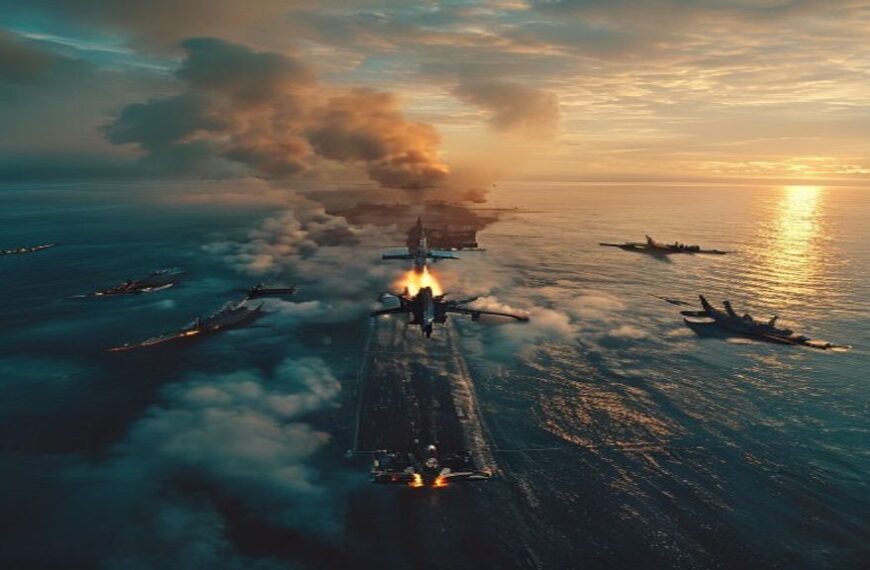
What to watch: Iran’s public response to the Tuesday deadline in the next 24 hours will be the clearest signal of which path this crisis takes. Silence from Tehran may indicate back-channel progress. Defiant rhetoric will suggest the opposite. Meanwhile, any movement of US carrier strike groups or bomber assets to forward positions in the Gulf will serve as the Pentagon’s own signal that the deadline is not a bluff. The world is watching the narrowest diplomatic corridor since the 2015 nuclear deal — and this time, the clock is set by a president who has shown no reluctance to let it run out.

 By
By

 By
By