

WASHINGTON — The United States-Iran conflict entered its 37th day on Saturday as the destruction of a critical bridge between Tehran and Karaj killed eight civilians, the Strait of Hormuz remained effectively closed to international shipping, and Brent crude surged past $120 per barrel in what energy analysts are calling the worst oil supply crisis since 1973.
What began on February 28 with coordinated US-Israeli strikes on Iranian military installations has metastasized into a sprawling regional conflagration engulfing Lebanon, the Gulf states, and global energy markets. Iran has responded with sustained retaliatory strikes on Israel and Gulf state targets, with explosions reported in Dubai and air raid sirens sounding across Bahrain. A coalition of over 40 nations is now scrambling to devise a strategy for reopening the strait, even as France publicly opposes the use of military force to do so. At least 2,937 civilians — 1,606 Iranian, 1,318 Lebanese, and 13 US service members — have been killed since hostilities began, and over 100 international law experts have warned that certain US strikes may constitute violations of the Geneva Conventions.
| Parameter | Details |
|---|---|
| Conflict Duration | 37 days (began February 28, 2026) |
| Civilian Casualties | 1,606 Iranian, 1,318 Lebanese, 13 US service members killed |
| Brent Crude Price | Surpassed $120/barrel |
| Strait of Hormuz Status | Effectively closed to commercial shipping |
| International Coalition | 40+ nations discussing reopening the strait |
| Key Mediator | Pakistan (five-point ceasefire initiative from Islamabad) |
| Legal Warnings | 100+ international law experts cite possible Geneva Convention violations |
Situational Breakdown
The US strike on the Tehran-Karaj bridge marks a significant escalation in targeting strategy. The bridge, a vital artery connecting the Iranian capital to its western suburbs and beyond, served millions of daily commuters and commercial vehicles. Its destruction, which killed eight civilians including at least two children according to Iranian state media, has drawn sharp condemnation from humanitarian organizations and fueled accusations that Washington is deliberately targeting civilian infrastructure — a charge the Pentagon has denied, insisting the bridge was used for military resupply operations. — CNN
On the retaliatory front, Iran’s Islamic Revolutionary Guard Corps has continued launching ballistic missiles and drone swarms toward Israeli military installations, with several projectiles reportedly intercepted over the Negev desert. More alarming for regional stability, however, are the confirmed explosions in Dubai — a city that has largely remained insulated from Middle Eastern military conflicts — and the activation of civil defense sirens across Bahrain, suggesting Iran’s strike envelope is widening beyond its traditional adversaries. Gulf Cooperation Council states have called emergency sessions, with the UAE reportedly moving critical government functions to hardened facilities. — Al Jazeera
The human toll continues to mount at a pace that has overwhelmed regional medical infrastructure. Field hospitals across southern Lebanon are operating at triple capacity, while Iranian hospitals in Tehran, Isfahan, and Shiraz report critical shortages of surgical supplies and blood reserves. The World Health Organization has called for immediate humanitarian corridors, a request that neither side has formally acknowledged. — Washington Post
The Hormuz Chokepoint: A Global Economic Emergency
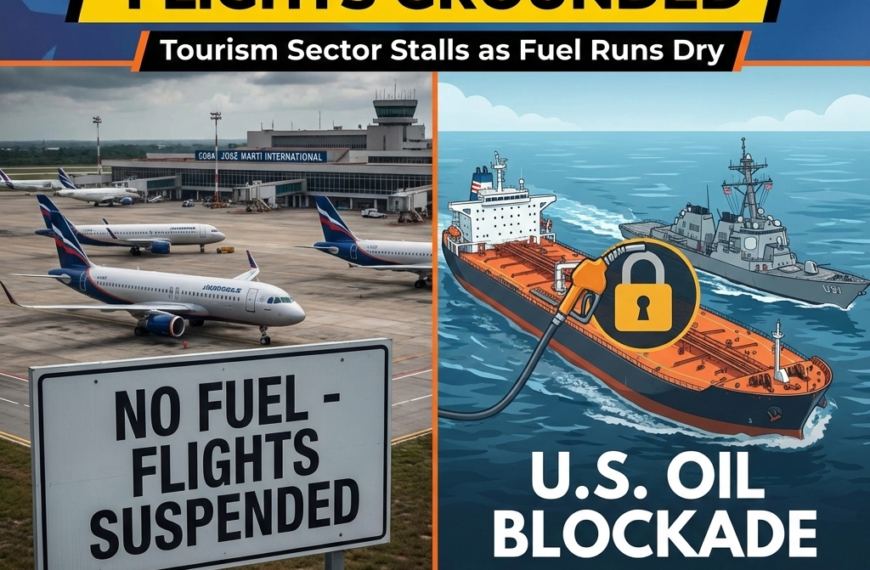
Roughly 20 percent of the world’s petroleum passes through the Strait of Hormuz on any given day. Its effective closure has triggered the most severe energy supply disruption in half a century, sending shockwaves through every major economy on Earth. Brent crude’s breach of the $120 threshold is not merely a number — it represents cascading consequences for transportation, manufacturing, agriculture, and consumer prices from Buenos Aires to Bangkok.
The coalition of over 40 nations now deliberating the strait’s reopening faces a labyrinth of competing interests. The United States and its allies favor a naval escort system to guarantee commercial passage, but France’s President Emmanuel Macron has publicly rejected the use of military force, warning that such action risks further escalation. “We cannot bomb our way to open shipping lanes,” Macron told reporters in Paris, advocating instead for a diplomatic resolution that addresses Iran’s core security grievances.
Energy markets remain extraordinarily volatile. Trading desks across London, New York, and Singapore are pricing in the possibility that the strait could remain restricted for weeks or even months. Several major shipping insurers have suspended coverage for Hormuz transit, effectively making commercial passage financially impossible even where it might be physically feasible. As the crisis deepens, while entertainment headlines still draw public attention, the economic fallout of this conflict is reshaping daily life for billions.
The Legal and Humanitarian Reckoning
The letter signed by over 100 international law experts — including former judges of the International Court of Justice and prominent scholars from Harvard, Oxford, and The Hague Academy — represents the most significant legal challenge to US military operations since the 2003 invasion of Iraq. The experts specifically cite the targeting of dual-use infrastructure, including bridges, power stations, and communication networks, as potentially violating the principle of proportionality enshrined in the Fourth Geneva Convention.
The Pentagon has maintained that all strikes undergo rigorous legal review and that targeted infrastructure serves demonstrable military purposes. However, the destruction of the Tehran-Karaj bridge — a commuter corridor with no visible military installations — has provided critics with a visceral example that is difficult to explain away through procedural assurances. The International Criminal Court has announced it is monitoring the situation, though any formal investigation would likely take years to initiate.
Ceasefire Negotiations: Progress and Paralysis
Iran has confirmed it is reviewing a US ceasefire proposal but has attached a condition that could prove to be a dealbreaker: the inclusion of Lebanon in any comprehensive agreement. Tehran’s insistence on linking the two theaters reflects both its strategic alliance with Hezbollah and its calculation that a Lebanon-inclusive deal would strengthen its regional bargaining position.
“We are deeply grateful to Pakistan for its efforts and have never refused to go to Islamabad.” — Iran FM Abbas Araghchi via Al Jazeera
The diplomatic track remains fragile. Washington has shown willingness to discuss a phased ceasefire but has resisted bundling Lebanon into the framework, arguing that Hezbollah’s involvement constitutes a separate conflict requiring separate terms. This fundamental disagreement over the architecture of peace — unified versus compartmentalized — threatens to stall negotiations even as the death toll climbs daily. — NPR
European Fractures and Alliance Strains
Macron’s opposition to military reopening of the Hormuz strait has exposed deep fissures within the Western alliance. While the United Kingdom and several Eastern European nations have signaled readiness to contribute naval assets to an escort operation, France’s refusal — backed quietly by Germany and Italy — effectively prevents any NATO-branded mission. The result is a patchwork of ad hoc coalitions, bilateral security arrangements, and unilateral naval deployments that lack the coherence of a unified strategy.
This disunity has not gone unnoticed in Tehran. Iranian officials have publicly noted European divisions as evidence that the international community lacks the consensus necessary to challenge Iran’s strategic position in the Gulf. Whether this reading is accurate or simply hopeful, it has emboldened hardliners within the Iranian establishment who argue against making concessions in ceasefire talks.
Pakistan Connection
Pakistan has emerged as the unlikely but indispensable mediator in this crisis. A joint ministerial meeting held in Islamabad produced a five-point ceasefire initiative that both sides have at least acknowledged, if not yet accepted. Pakistan’s unique position — maintaining functional relationships with both Washington and Tehran, sharing a border with Iran, and possessing legitimate security equities in Gulf stability — has given Islamabad a diplomatic opening that no other nation currently enjoys.
“Despite challenges and obstacles, Pakistan will continue its efforts to promote facilitation and dialogue.” — Pakistan Foreign Ministry Spokesperson
But Pakistan’s mediation comes at enormous domestic cost. The Hormuz closure has directly triggered a catastrophic fuel price hike, with petrol surging Rs137 to Rs458 per litre — an increase that threatens to ignite public unrest in a country already grappling with inflation and economic fragility. Iran’s decision to permit 20 Pakistani-flagged vessels to transit the strait offers modest relief and signals Tehran’s appreciation for Islamabad’s diplomatic role, but it is far from sufficient to insulate Pakistan’s economy from the broader energy shock. The question now is whether Pakistan can sustain its mediator role while its own citizens bear an outsized share of the conflict’s economic pain.
BolotoSAI Assessment
Day 37 of the US-Iran conflict presents a picture of deepening entrenchment on all fronts — military, economic, and diplomatic. Three scenarios deserve close attention in the days ahead.
First, the Pakistan track may be the only viable off-ramp. With European allies divided, the UN Security Council paralyzed by vetoes, and direct US-Iran communication effectively severed, Pakistan’s five-point initiative represents the closest thing to a structured diplomatic framework. If Islamabad can bridge the gap between Washington’s compartmentalized approach and Tehran’s insistence on a comprehensive deal including Lebanon, a ceasefire becomes conceivable — though far from certain.
Second, the oil crisis will force the hand of reluctant actors. At $120 per barrel and climbing, every week of continued Hormuz closure inflicts compounding damage on the global economy. Developing nations face the most acute pressure, but even wealthy economies cannot absorb these costs indefinitely. Expect economic pain to generate political pressure for resolution — or, alternatively, for more aggressive unilateral action to reopen the strait by force.
Third, the legal dimension is a slow-burning fuse. The letter from 100+ international law experts will not stop the bombing tomorrow, but it establishes a documentary record that may shape accountability proceedings for years to come. Both sides should be aware that the world is watching and recording. The arc of international humanitarian law is long, but it bends — eventually — toward accountability.
What to watch: Iran’s formal response to the US ceasefire proposal, the next round of Islamabad talks, and whether the 40-nation coalition can agree on any concrete mechanism — military or diplomatic — for restoring Hormuz transit. The clock is ticking, and the cost of every additional day is measured not only in dollars, but in lives.

 By
By

 By
By