
WASHINGTON — President Donald Trump issued a 48-hour ultimatum to Iran on Friday demanding the immediate reopening of the Strait of Hormuz, dramatically escalating a six-week military conflict that has claimed over 2,000 lives, sent global oil prices spiralling, and brought the world’s most critical energy chokepoint to a near-standstill.
The ultimatum comes after one of the most volatile weeks of the conflict, during which two American F-15E Strike Eagle fighter jets were shot down — one over Iranian territory and another near the strait itself. Iran has effectively blockaded the waterway, reducing vessel traffic from approximately 150 ships per day to fewer than 20, strangling a corridor through which roughly 20 percent of the world’s oil supply flows. Iranian drone strikes on targets in Dubai and Kuwait have further widened the theatre of war, while US gas prices have surged 37 percent since hostilities began.
The conflict, which entered its sixth week with no diplomatic resolution in sight, has reshaped global energy markets, disrupted international aviation, and triggered economic shockwaves from Islamabad to London. With Trump’s deadline now ticking, the world faces one of the most consequential 48-hour windows in modern geopolitical history.
| Parameter | Details |
|---|---|
| Ultimatum Deadline | 48 hours from Trump’s address (approx. April 6, 2026) |
| Strait Traffic Collapse | From ~150 ships/day to under 20 ships/day |
| Oil Supply at Risk | ~20% of global oil transits the Strait of Hormuz |
| US Aircraft Lost | Two F-15E Strike Eagles shot down |
| Casualties | 2,000+ Iranian civilians, 13 US service members killed |
| US Gas Price Increase | 37% rise since war began; oil futures up another 5% |
| Iranian Drone Strikes | Targets hit in Dubai (UAE) and Kuwait |
Situational Breakdown
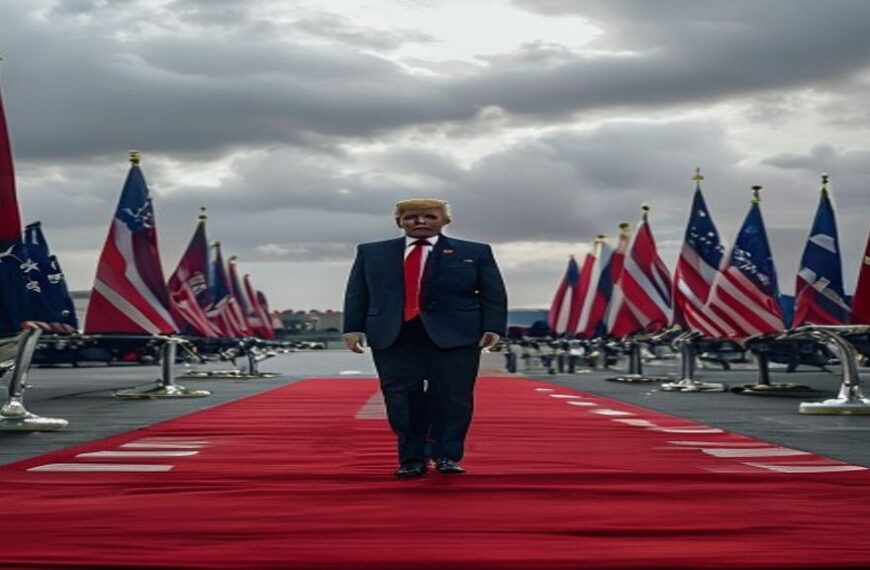
Trump’s address, delivered from the White House on Friday evening, was his most aggressive public statement since the conflict began. Speaking in stark, uncompromising terms, the president framed the ultimatum as a final warning before a significant escalation of military operations. “Time is running out,” Trump warned, adding that “all hell will rain down” if Iran does not comply within the 48-hour window. The language marked a departure from even the administration’s previous rhetoric, which had left room for back-channel negotiations. — NPR
Yet in an apparent contradiction that analysts were quick to seize upon, Trump also suggested that the broader campaign against Iran could conclude relatively soon. According to CBS News reporting, the president claimed that “core strategic objectives are nearing completion” and that the military campaign “could wrap up in two to three weeks.” The juxtaposition of an apocalyptic ultimatum with optimistic timeline projections left foreign policy observers struggling to parse the administration’s actual strategic calculus. — CBS News
On the ground, the situation remains dire. The near-total closure of the Strait of Hormuz has created a bottleneck that reverberates across every sector of the global economy. Tanker companies have pulled vessels from the region, insurance premiums for Gulf transit have skyrocketed, and several major shipping firms have suspended operations entirely. The few ships still making the passage are running under heightened military escort, with the US Fifth Fleet stretched thin across a rapidly expanding operational area. — CNN
The Energy Crisis Deepens
The economic fallout from the strait’s effective closure has been nothing short of catastrophic for global energy markets. Oil futures surged another 5 percent immediately following Trump’s speech, compounding a price rally that has seen crude benchmarks climb relentlessly since the conflict’s opening days. American consumers are bearing the brunt at the pump, with gasoline prices up 37 percent — a spike that threatens to become a defining political liability for the administration heading into midterm positioning.
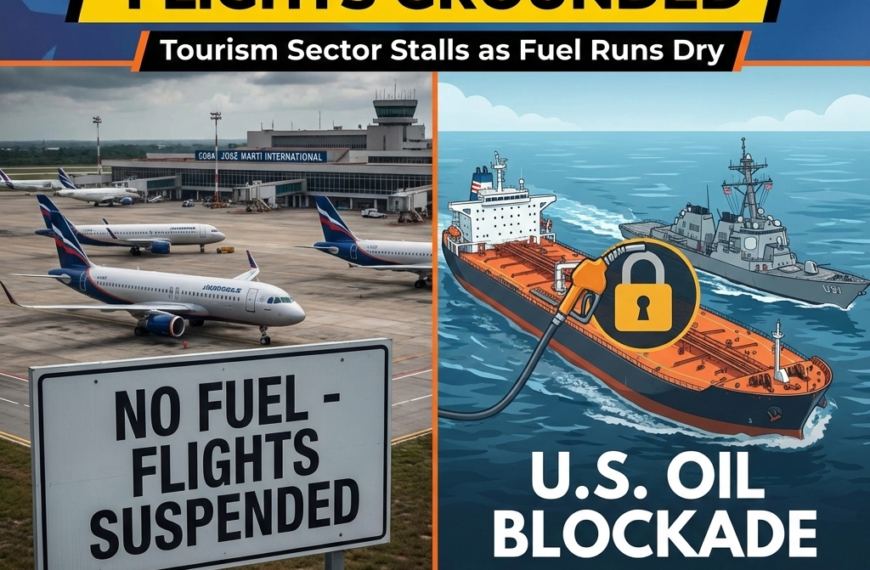
The aviation industry has been equally devastated. With jet fuel costs more than doubling, airlines worldwide are slashing flight schedules, cancelling routes, and in some cases grounding entire fleets. Budget carriers in Asia and Europe have been hit hardest, with several reporting that continued operations at current fuel prices are financially unsustainable. The International Air Transport Association has called for emergency government intervention to prevent a cascade of airline failures.
“Time is running out and all hell will rain down if Iran does not comply within 48 hours.” — President Donald Trump, as reported by NPR
Military Escalation and the F-15 Losses
The downing of two American F-15E Strike Eagles represents the most significant US air losses in combat since the early stages of the Iraq War. One aircraft was shot down over Iranian territory, while the second was lost near the Strait of Hormuz itself — suggesting that Iran’s air defence network remains far more capable than pre-war assessments indicated. The Pentagon has not disclosed the fate of the aircrew, though the losses have intensified domestic debate about the conflict’s trajectory.
Iran’s use of drone warfare has added another dimension to the conflict. Strikes on targets in Dubai and Kuwait — both key US allies and economic partners — have demonstrated Tehran’s willingness to expand the war beyond its own borders. The attacks on Gulf state territory have raised urgent questions about regional air defence preparedness and the potential for a wider conflagration that draws in additional combatants.
The Civilian Toll
Perhaps the most sobering dimension of the conflict is its human cost. More than 2,000 Iranian civilians have been killed in six weeks of fighting, a toll that has drawn sharp condemnation from international humanitarian organisations and strained US alliances in Europe and the developing world. Thirteen American service members have also lost their lives, a figure that, while comparatively small, carries enormous political weight domestically.
The civilian death toll has become a central point of leverage for Iran’s diplomatic messaging, with Tehran framing the conflict as an act of American aggression against a sovereign nation. At the United Nations, calls for an immediate ceasefire have grown louder, though the Security Council remains deadlocked, with Russia and China blocking Western-backed resolutions while the US vetoes any language that would constrain its military operations.
What the Ultimatum Actually Means
Military analysts are divided on whether Trump’s 48-hour deadline represents a genuine inflection point or a rhetorical escalation designed to pressure Tehran without committing to a specific course of action. The Washington Post reported that Pentagon officials were not consulted on the specific timeline before the president’s address, suggesting the ultimatum may have been driven more by political calculation than military planning.
“Core strategic objectives are nearing completion and the campaign could wrap up in two to three weeks.” — President Trump, as reported by CBS News
If Iran refuses to reopen the strait — which appears all but certain given Tehran’s public posture — the US faces a menu of options ranging from intensified airstrikes to a naval operation to forcibly clear the waterway. Each carries significant risk: a minesweeping operation in the strait’s narrow confines would be extraordinarily dangerous, while further strikes on Iranian territory risk deeper entanglement in a war with no clearly defined end state.
🇵🇰 Pakistan Connection
Pakistan finds itself caught in the crossfire of a conflict it did not seek but cannot escape. The Strait of Hormuz disruption has directly triggered what officials in Islamabad are calling historic fuel price increases, compounding an already fragile economic situation. Pakistan imports a significant share of its energy through Gulf shipping routes, and the near-closure of the strait has sent procurement costs spiralling — costs that are being passed directly to consumers and industry. The economic pain has been felt in every sector, from transportation to manufacturing, at a time when the country can least afford it. While Pakistan’s entertainment industry celebrates record-breaking moments, the broader economy faces its most severe energy-driven stress test in years.
Diplomatically, Islamabad is attempting to carve out a role as mediator. Pakistan has reportedly hosted preliminary talks and is coordinating with both China and Turkey on a potential framework for de-escalation. The effort is high-risk — Pakistan maintains complex relationships with both Washington and Tehran — but the potential reward of brokering even a partial ceasefire would be enormous for the country’s regional standing. Whether Pakistan’s diplomatic infrastructure is robust enough to navigate between two belligerents this entrenched remains an open question.
BolotoSai Assessment
The next 48 hours will determine whether this conflict escalates into something far larger or begins the slow, painful process of de-escalation. Three scenarios demand attention.
First, if Iran calls Trump’s bluff and the strait remains closed, the US will face immense pressure to act militarily to reopen it — an operation that would be the largest naval engagement since the Second World War and could result in significant American casualties. Second, a back-channel deal remains possible, particularly if Gulf states like Qatar or Oman can broker a face-saving arrangement that allows both sides to claim partial victory. Third, and most dangerously, the conflict could metastasise: Iranian drone strikes on Dubai and Kuwait have already demonstrated that this war will not stay contained, and any further attacks on Gulf infrastructure could draw additional nations into active hostilities.
What is certain is that the global economic damage is already done. Even if the strait reopens tomorrow, the disruption to shipping schedules, insurance markets, and energy contracts will take months to unwind. For energy-importing nations like Pakistan, the price shock will linger long after the last missile falls. The world is watching a 48-hour clock — and the consequences of what happens when it hits zero will be felt for years.

 By
By


 By
By