

VIENNA — A US-Israeli projectile struck an auxiliary building near Iran’s Bushehr nuclear power plant on Friday, killing a security guard and triggering the most dangerous nuclear scare since the conflict’s escalation, as President Donald Trump issued a 48-hour ultimatum threatening to cripple Iran’s civilian infrastructure if the Strait of Hormuz remains closed to international shipping.
The strike, which hit a non-reactor support structure at the Bushehr complex along Iran’s southern coastline, did not cause a radiation leak according to initial readings from the International Atomic Energy Agency’s monitoring stations. However, the proximity of a live military projectile to an operational nuclear reactor has sent shockwaves through diplomatic circles and energy markets worldwide. Russia immediately evacuated 198 Rosatom personnel who had been stationed at the facility under a longstanding technical cooperation agreement, completing the withdrawal within minutes of the impact.
The incident comes amid a rapidly deteriorating military situation across the Persian Gulf region. An American F-15E Strike Eagle was shot down over Iranian territory earlier Friday, while a second US aircraft crashed near the Strait of Hormuz under circumstances still being investigated. One crew member from the downed aircraft remains missing. Iran responded with retaliatory strikes against Kuwait’s largest oil refinery and multiple targets across Gulf states, dramatically widening the theater of conflict. As tensions spiral, even unrelated stories like Ramsha Khan Khushhal Khan Secret Wedding Rumors Go Viral have been pushed from Pakistan’s trending pages by wall-to-wall war coverage.
| Parameter | Details |
|---|---|
| Target | Auxiliary building near Bushehr Nuclear Power Plant, southern Iran |
| Casualties | 1 security guard killed; no radiation detected |
| Russian Evacuation | 198 Rosatom staff evacuated within minutes |
| US Losses | 1 F-15E shot down over Iran; 1 aircraft crashed near Strait of Hormuz; 1 crew missing |
| Trump Ultimatum | 48-hour deadline threatening strikes on bridges, power plants, desalination facilities |
| Oil Price Impact | Brent crude surged ~8% to $109/barrel |
| Strait of Hormuz Traffic | Collapsed from 150 vessels/day to under 20 |
Situational Breakdown
The Bushehr nuclear power plant, Iran’s only operational civilian reactor, has been a focal point of international concern since the conflict intensified. Built with Russian technical assistance and operational since 2011, the facility generates roughly 1,000 megawatts of electricity for Iran’s southern grid. While the projectile struck an auxiliary structure rather than the reactor building itself, nuclear safety experts warn that any military activity near an active reactor carries catastrophic risk. The IAEA confirmed its monitoring equipment at Bushehr remained operational and detected no abnormal radiation readings in the hours following the strike. — Al Jazeera
The loss of two American aircraft in a single day marks the most significant US aerial casualties since the conflict began and raises serious questions about Iran’s evolving air defense capabilities. The F-15E, a twin-seat strike fighter considered one of the most survivable platforms in the US inventory, was reportedly engaged by an Iranian surface-to-air missile system while conducting operations over western Iran. The second aircraft, whose type has not been officially confirmed, went down near the strategically vital Strait of Hormuz. Search and rescue operations for the missing crew member are ongoing under what the Pentagon described as “extremely challenging conditions.” — CNN
Iran’s retaliatory strikes against Kuwait’s Al-Ahmadi refinery complex and facilities across multiple Gulf states represent a dramatic escalation in Tehran’s willingness to target the economic infrastructure of nations it perceives as enabling American military operations. Kuwait, Bahrain, and Qatar all host significant US military installations, and Iran’s decision to strike civilian energy infrastructure suggests a strategy of imposing economic costs on Washington’s regional partners. — CNBC
The Nuclear Red Line
The strike near Bushehr has reignited a fierce international debate about the boundaries of military action in zones containing nuclear facilities. The 1977 Additional Protocol I to the Geneva Conventions explicitly prohibits attacks on installations containing “dangerous forces,” including nuclear power stations, even when they constitute military objectives. The IAEA’s chief, Rafael Grossi, wasted no time in issuing a stark warning.
“Nuclear sites must never be attacked. I urge maximum military restraint to prevent a nuclear accident.” — IAEA chief Rafael Grossi, via Al Jazeera
Grossi’s intervention echoes the agency’s repeated warnings during the Russia-Ukraine conflict over the Zaporizhzhia nuclear plant but carries even greater urgency given that Bushehr is a fully operational facility with an active reactor core. A direct hit on the reactor containment structure could release radioactive material across a wide area of southern Iran and potentially into the Persian Gulf, with devastating consequences for water desalination systems that millions in the region depend upon for drinking water.
Trump’s 48-Hour Ultimatum
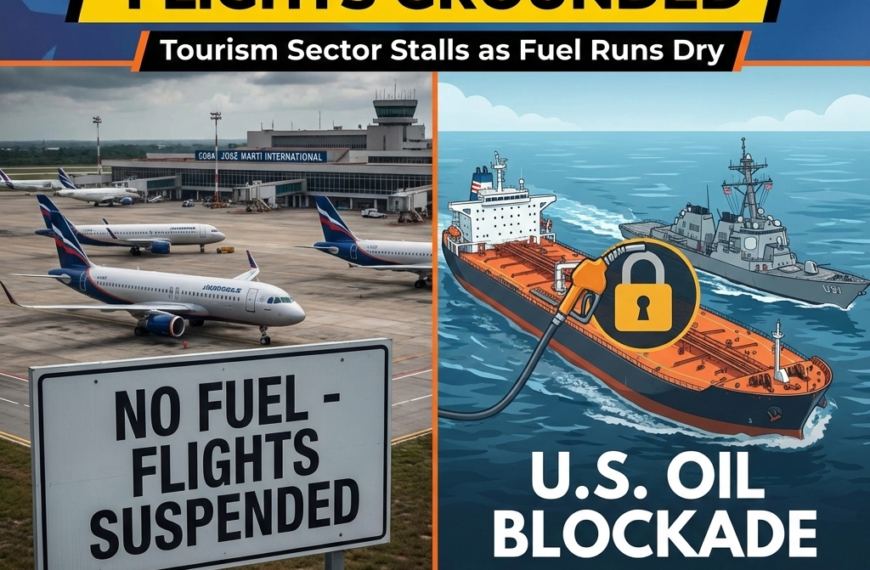
President Trump’s ultimatum — threatening strikes against Iranian bridges, power plants, and desalination facilities if the Strait of Hormuz is not reopened within 48 hours — represents the most explicit threat of infrastructure warfare by a US president in decades. The Strait of Hormuz, through which approximately 20 percent of the world’s daily oil consumption passes, has seen vessel traffic plummet from roughly 150 ships per day to fewer than 20 since Iran began enforcing its blockade.
The threat to target desalination facilities is particularly provocative. Iran’s southern coastal population relies heavily on desalinated water, and the destruction of such infrastructure would constitute what many legal scholars would classify as collective punishment of a civilian population. Iran’s foreign minister was unequivocal in his response.
“Bombing civilian infrastructure will not compel Iranians to surrender.” — Iranian Foreign Minister Hossein Amir-Abdollahian Araghchi, via NPR
Oil Markets in Crisis
The near-total closure of the Strait of Hormuz has triggered the most severe oil supply disruption since the 1973 embargo. Brent crude surged approximately eight percent on Friday to $109 per barrel, with traders warning that sustained closure could push prices well beyond $130 within days. The strait normally handles roughly 17 million barrels of oil per day, and the collapse of transit traffic from 150 to under 20 vessels daily has exposed the fragility of global energy supply chains.
Insurance premiums for tankers transiting the Persian Gulf have become effectively prohibitive, with Lloyd’s of London syndicates quoting war-risk premiums that double the cost of a typical voyage. Several major shipping companies have already rerouted their fleets around the Cape of Good Hope, adding two to three weeks to delivery times for Asian-bound crude. Japan, South Korea, and India — all heavily dependent on Gulf oil — have begun drawing down strategic petroleum reserves, while the US Strategic Petroleum Reserve, already depleted to its lowest levels since the 1980s, offers limited cushion. Reuters reported that several OPEC members are exploring emergency overland pipeline options to bypass the strait entirely.
The Air War’s Mounting Toll
The loss of the F-15E over Iranian airspace and the crash of a second US aircraft near the strait mark a turning point in the aerial dimension of the conflict. For weeks, American air superiority had gone largely unchallenged, with Iranian air defenses proving ineffective against advanced stealth and electronic warfare platforms. The downing of a fourth-generation fighter suggests either an improvement in Iran’s air defense coordination or the possible deployment of more advanced Russian-supplied systems that Western intelligence agencies had warned about.
The missing crew member from the second crash adds a deeply human dimension to the escalating military campaign. Pentagon officials confirmed that search and rescue assets, including MV-22 Ospreys and Navy helicopters, have been deployed to the area, but acknowledged that Iranian naval activity near the crash site complicates recovery efforts. The fate of the missing aviator may become a significant domestic political factor as American casualties mount.
🇵🇰 Pakistan Connection
Pakistan has emerged as the most active diplomatic intermediary in the crisis, leading a four-nation ministerial group alongside Saudi Arabia, Turkey, and Egypt that is attempting to broker a ceasefire framework. Islamabad’s geographic proximity to Iran, its historical balancing act between Tehran and Washington, and its relationships across the Gulf have positioned it uniquely among potential mediators. In a tangible diplomatic achievement, Pakistan secured Iran’s agreement to allow 20 Pakistani-flagged commercial vessels safe passage through the Strait of Hormuz — one of the few exceptions to Tehran’s near-total blockade.
Pakistan has also offered to host direct US-Iran talks, a proposal that both sides have reportedly received without rejection. Foreign Policy magazine characterized Pakistan’s shuttle diplomacy as a strategic setback for India, which has found itself sidelined from the Gulf crisis despite its massive energy dependence on the region. For Islamabad, the mediation effort serves dual purposes: demonstrating its relevance as a regional power broker and protecting its own economic interests, given that Pakistan imports a significant share of its energy supplies through Gulf shipping lanes now under threat.
BolotoSAI Assessment
The next 48 hours will determine whether this conflict escalates into a full-scale infrastructure war or whether diplomatic channels can produce a de-escalation framework. Three scenarios demand attention. First, if Iran does not reopen the Strait of Hormuz before Trump’s deadline expires, the United States appears prepared to follow through on strikes against Iranian civilian infrastructure — a move that would likely trigger further Iranian retaliation against Gulf state energy facilities and potentially draw in additional regional actors. Oil prices in this scenario could breach $130 within a week.
Second, Pakistan’s four-nation mediation group represents the most credible diplomatic off-ramp currently available. If Islamabad can secure even a partial reopening of the strait — perhaps a humanitarian or energy corridor — it could provide both sides with enough face-saving room to pause military operations and enter negotiations. The 20-vessel exemption for Pakistani-flagged ships may serve as the template for a broader arrangement.
Third, and most critically, the Bushehr strike has introduced a nuclear dimension that neither side can afford to ignore. Any subsequent strike that causes a radiation release would transform this from a regional military conflict into a global environmental catastrophe. Watch for the IAEA’s formal assessment in the coming days — if Grossi invokes the agency’s authority to demand a military exclusion zone around nuclear facilities, it could create a framework for constraining the most dangerous dimension of this war. The world has not been this close to a nuclear incident in a military conflict since Zaporizhzhia. The margin for miscalculation is vanishingly thin.

 By
By


 By
By