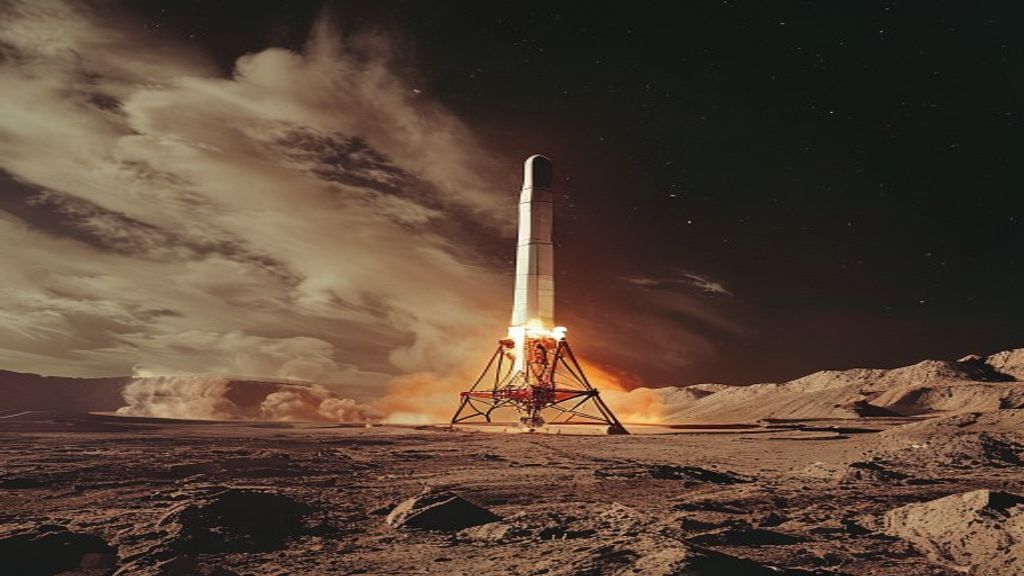

CAPE CANAVERAL, Florida — NASA successfully launched the Artemis II mission on April 1, 2026, sending four astronauts on a historic trajectory around the Moon aboard the Space Launch System (SLS) rocket — marking the first crewed lunar flyby in more than half a century and reigniting humanity’s ambitions beyond low Earth orbit.
The launch from Kennedy Space Center’s Pad 39B represents a watershed moment for the American space programme, which has not sent astronauts beyond Earth’s immediate neighbourhood since the Apollo 17 mission returned from the lunar surface in December 1972. Commander Reid Wiseman, Pilot Victor Glover, Mission Specialist Christina Koch, and Canadian Space Agency astronaut Jeremy Hansen are now aboard the Orion spacecraft on a 10-day journey that will take them around the far side of the Moon before returning to Earth. The mission does not include a lunar landing but serves as a critical dress rehearsal for future Artemis missions designed to establish a permanent human presence on and around the Moon.
The stakes could not be higher. With China accelerating its own crewed lunar programme and international competition intensifying, Artemis II is both a technological validation and a geopolitical statement — proof that the United States and its partners retain the capability and will to lead humanity’s expansion into deep space.
| Parameter | Details |
|---|---|
| Mission | Artemis II — Crewed Lunar Flyby |
| Launch Date | April 1, 2026 |
| Crew | Reid Wiseman (Commander), Victor Glover (Pilot), Christina Koch (Mission Specialist), Jeremy Hansen (CSA) |
| Vehicle | Orion spacecraft atop Space Launch System (SLS) rocket |
| Duration | Approximately 10 days |
| Launch Site | Kennedy Space Center, Pad 39B, Florida |
| Last Crewed Lunar Mission | Apollo 17 — December 1972 (over 53 years ago) |
SITUATIONAL BREAKDOWN
The Artemis II mission profile calls for the Orion spacecraft to perform a free-return trajectory, swinging behind the Moon at an altitude that will carry the crew farther from Earth than any human beings since the Apollo era. During the flyby, the astronauts will test critical life-support systems, navigation protocols, and communication capabilities that must function flawlessly before NASA commits to landing humans on the lunar surface in subsequent Artemis missions. The crew will also conduct visual surveys of potential landing sites near the lunar south pole, where water ice deposits could one day sustain a permanent outpost. — NASA
The launch itself proceeded with remarkable precision after years of delays and cost overruns that plagued the SLS programme. The uncrewed Artemis I mission in late 2022 had validated the rocket and spacecraft’s basic performance, but Artemis II represents an exponentially greater challenge — keeping four human beings alive and functional in deep space while managing the thermal, radiation, and communication demands of a translunar journey. Ground controllers at Johnson Space Center in Houston are monitoring every system in real time as Orion accelerates toward its lunar encounter. — CNN
International participation has been a defining feature of the Artemis programme from the outset. Jeremy Hansen’s presence on the crew makes Canada the second nation to send an astronaut beyond low Earth orbit, a milestone secured through the Canadian Space Agency’s contribution of the Canadarm3 robotic system to the planned Lunar Gateway station. The European Space Agency, the Japan Aerospace Exploration Agency, and other international partners are also deeply embedded in Artemis’s long-term architecture. — NBC News
A CREW BUILT FOR HISTORY
The four astronauts selected for Artemis II each bring distinct credentials that reflect the mission’s dual purpose as both a technical validation and a symbolic milestone. Commander Reid Wiseman, a Navy test pilot and former International Space Station commander, leads a crew whose composition itself tells a story about how far the space programme has evolved since the Apollo years.
Victor Glover, a decorated naval aviator who previously served as pilot on the first operational SpaceX Crew Dragon mission, becomes the first Black astronaut to travel beyond low Earth orbit. Christina Koch, who holds the record for the longest single spaceflight by a woman at 328 days, brings unparalleled experience in long-duration space operations. Their selection signals that the Artemis programme is deliberately building a more representative vision of humanity’s future in space.
“You look beautiful. And from up here, you also look like one thing. Homo sapiens is all of us, no matter where you’re from or what you look like. We’re all one people.” — NASA astronaut Victor Glover
THE ROAD FROM APOLLO TO ARTEMIS
More than five decades separate Artemis II from the last time human beings ventured beyond Earth’s gravitational neighbourhood. The Apollo programme, born of Cold War competition, placed twelve men on the lunar surface between 1969 and 1972 before political will and funding evaporated. In the intervening years, NASA focused on the Space Shuttle, the International Space Station, and robotic exploration — achievements of immense scientific value but ones that kept human spaceflight confined to low Earth orbit.
The Artemis programme, formally established in 2017 and named after Apollo’s twin sister in Greek mythology, represents a fundamentally different approach. Rather than planting flags and footprints, NASA’s stated objective is to build sustainable infrastructure — the Lunar Gateway orbital station, surface habitats, and in-situ resource utilisation systems that could eventually support permanent human activity on and around the Moon. Artemis II is the indispensable stepping stone in that architecture, proving that humans and machine can work together reliably in the deep-space environment before the programme commits to landing missions.
GEOPOLITICAL DIMENSIONS OF THE NEW SPACE RACE
Artemis II does not exist in a vacuum — figuratively speaking. China’s Chang’e programme has achieved a series of impressive robotic milestones on the lunar surface, including the first landing on the far side of the Moon, and Beijing has publicly declared its intention to land Chinese astronauts on the Moon before 2030. Russia and China have announced plans for a joint International Lunar Research Station, positioning an alternative framework to the US-led Artemis Accords that now include more than 40 signatory nations.
NASA Administrator Jared Isaacman, himself a former commercial astronaut who flew aboard SpaceX missions before his appointment, framed the launch in explicitly forward-looking terms that acknowledge this competitive landscape while emphasising Artemis’s broader ambitions.
“Artemis II is the start of something bigger than any one mission. It marks our return to the Moon, not just to visit, but to eventually stay on our Moon Base, and lays the foundation for the next giant leaps ahead.” — NASA Administrator Jared Isaacman
For a deeper look at the crew profiles, mission timeline, and what the astronauts experienced during launch day, see our earlier coverage: NASA Launches Artemis II Crew on Historic Moon Mission.
TECHNOLOGICAL VALIDATION AND WHAT COMES NEXT
Beyond the symbolism, Artemis II is fundamentally a systems-integration test of extraordinary complexity. The Orion spacecraft’s heat shield must withstand re-entry temperatures exceeding 2,700 degrees Celsius upon return — a capability demonstrated during Artemis I but never with human lives at stake. The European Service Module, built by Airbus for the European Space Agency, must provide reliable propulsion, power, and life support throughout the 10-day mission. And the communication systems must maintain contact with Earth even as the spacecraft passes behind the Moon, temporarily severing direct line-of-sight links.
If all goes according to plan, the data gathered during Artemis II will directly inform the design and execution of Artemis III, the mission intended to land the first woman and next man on the lunar surface using a modified SpaceX Starship as a lunar lander. That mission, currently targeted for no earlier than 2027, would mark humanity’s first lunar landing in over half a century and open the door to sustained surface operations.
🇵🇰 WHAT THIS MEANS FOR PAKISTAN
Pakistan’s space ambitions, while modest compared to those of the major spacefaring nations, stand to benefit significantly from the momentum generated by Artemis II and the broader lunar economy it is designed to catalyse. The Pakistan Space and Upper Atmosphere Research Commission (SUPARCO) has been working to modernise the country’s satellite capabilities, and the growing international emphasis on space cooperation creates pathways that did not exist during the Apollo era. The Artemis Accords, which Pakistan has not yet signed, offer a framework for smaller nations to participate in lunar exploration through contributions to science, technology, or logistics.
More immediately, the expanding commercial space ecosystem surrounding Artemis — from satellite communications to Earth observation to STEM workforce development — presents opportunities for Pakistan’s growing technology sector. Pakistani engineers and scientists are already contributing to space-adjacent industries globally, and a strengthened domestic space programme could channel that expertise toward national priorities in climate monitoring, agricultural planning, and telecommunications infrastructure.
The inspirational dimension should not be underestimated either. In a nation where more than 60 percent of the population is under 30, the renewed global excitement around lunar exploration has the potential to energise a generation of Pakistani students toward careers in science, technology, engineering, and mathematics — precisely the fields that will drive economic competitiveness in the decades ahead.
BOLOTOSAI ASSESSMENT
Artemis II, assuming a successful completion of all mission objectives, will have achieved something that no amount of robotic exploration could replicate: proof that humans can once again operate reliably beyond Earth orbit. That proof is the prerequisite for everything that follows — Artemis III’s lunar landing, the construction of the Lunar Gateway, the establishment of a permanent base near the south pole, and ultimately, the extension of human presence to Mars.
Three outcomes bear watching in the months ahead. First, the mission’s data will determine the timeline and feasibility of Artemis III; any significant anomalies could push the first crewed landing further into the late 2020s. Second, China’s response will shape the geopolitical narrative — Beijing is unlikely to slow its own lunar ambitions, and the parallel tracks of Artemis and Chang’e will define international space dynamics for a generation. Third, the commercial sector’s integration into Artemis’s architecture, particularly SpaceX’s Starship lunar lander, remains a critical variable — delays or failures in that programme would ripple across NASA’s entire deep-space strategy.
What is beyond doubt is that the era of human beings as exclusively low-Earth-orbit inhabitants is ending. Artemis II has reopened a door that was closed for 53 years. The question now is not whether we will return to the Moon to stay, but how quickly, how sustainably, and with whom. The next few years will provide the answer — and the world will be watching every step of the way.


 By
By



 By
By