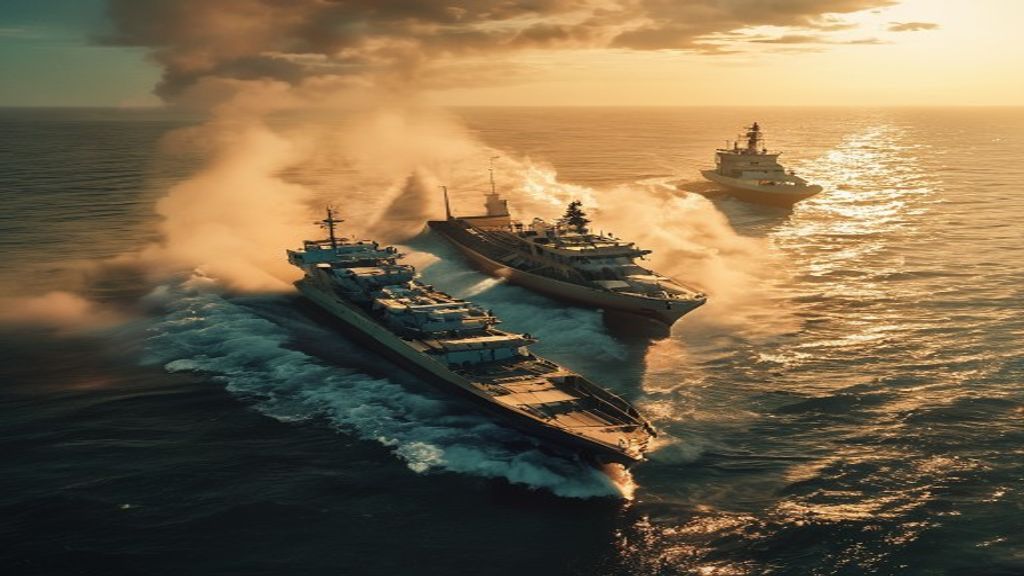

DUBAI — Iran’s Islamic Revolutionary Guard Corps seized two commercial vessels in the Strait of Hormuz on Tuesday, launching brazen attacks with gunfire and rocket-propelled grenades just hours after President Donald Trump announced an indefinite extension of the US-Iran ceasefire.
The seizures — targeting the Italian-owned MSC Francesca and the Greek-owned Epaminondas — represent a dramatic escalation in tensions along the world’s most critical oil transit chokepoint. A third vessel, the Euphoria, also came under fire during the incident. The attacks sent shockwaves through global energy markets and raised urgent questions about the viability of a ceasefire that Tehran has dismissed as hollow while a US naval blockade remains in effect. The original two-week truce had been brokered in early April through the mediation of Pakistan’s army chief General Asim Munir, alongside US Vice President JD Vance and Iranian Foreign Minister Abbas Araghchi.
| Parameter | Details |
|---|---|
| Vessels Seized | MSC Francesca (Italian-owned), Epaminondas (Greek-owned); Euphoria fired upon |
| Date of Incident | April 22, 2026 |
| Aggressor | Islamic Revolutionary Guard Corps (IRGC) |
| Weapons Used | Gunfire and rocket-propelled grenades (RPGs) |
| Ceasefire Broker | Pakistan Army Chief Gen. Asim Munir, VP JD Vance, FM Abbas Araghchi |
| Iran’s Justification | Alleged maritime violations; demands lifting of US naval blockade |
| Ceasefire Status | Extended indefinitely by Trump on April 22 |
Situational Breakdown
The IRGC’s fast-attack boats intercepted the two commercial vessels during daylight hours as they transited the narrow strait, through which approximately one-fifth of the world’s oil supply passes daily. Crew members aboard the MSC Francesca reported significant structural damage from RPG impacts, while the Epaminondas sustained gunfire damage to its bridge and superstructure. Both vessels were forcibly escorted to Iranian waters. Iran’s maritime authorities later claimed the ships had committed unspecified navigational violations within Iranian territorial waters — a justification that Western maritime analysts have called pretextual. — NPR
The timing proved especially provocative. Only hours before the seizures, President Trump had announced from the White House that the ceasefire — originally set to expire at the end of April — would be extended indefinitely. Trump stated he had made the decision at Pakistan’s request, specifically to give Tehran additional time to formulate what he called “a unified proposal” for broader negotiations. The announcement had been received cautiously but positively in diplomatic circles, making the IRGC’s subsequent aggression all the more jarring. — CNBC
The third vessel, the Euphoria, managed to avoid seizure despite sustaining fire, accelerating out of the engagement zone with the assistance of a nearby coalition warship. The incident has prompted the US Fifth Fleet to raise its maritime threat level across the Persian Gulf to the highest tier since the initial escalation in March. — Washington Post
The Ceasefire Paradox: Extension Without Compliance
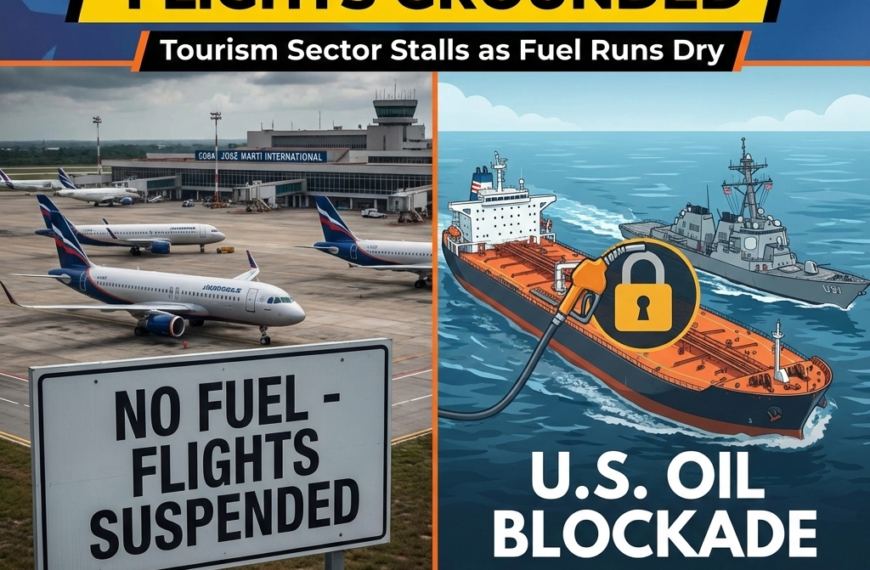
The fundamental contradiction at the heart of the US-Iran ceasefire is now impossible to ignore. Washington presents the truce as a framework for de-escalation; Tehran views it as a one-sided arrangement that leaves what it considers the core provocation — the American naval blockade — entirely intact.
“The ceasefire means nothing unless the US blockade of the Strait of Hormuz is lifted. The blockade itself is an act of war.” — Iranian senior adviser, as reported by Time
This statement captures Iran’s strategic calculus with striking clarity. From Tehran’s perspective, agreeing to a ceasefire while American warships continue to restrict maritime commerce through the strait amounts to capitulation, not compromise. The IRGC’s seizure of commercial vessels — particularly those flagged to NATO allies — serves as both a demonstration of Iranian capability and a political message: Iran will not accept a peace that leaves it strangled.
Trump’s Diplomatic Gamble
President Trump’s decision to extend the ceasefire indefinitely, announced with characteristic confidence, now appears significantly more precarious. The extension was framed as a gesture of good faith, but the IRGC’s actions within hours of the announcement suggest either a profound disconnect between Iran’s diplomatic and military establishments, or — more likely — a deliberate strategy of applying pressure while maintaining plausible negotiating space.
“I extended the ceasefire at Pakistan’s request to give Tehran time to present a unified proposal.” — President Donald Trump, as reported by CNBC
The reference to Pakistan’s role is significant. By attributing the extension to Islamabad’s request, Trump simultaneously shares credit for the diplomatic effort and distributes responsibility should it collapse. It is a move that places Pakistan in an extraordinarily delicate position — celebrated for brokering peace while potentially bearing reputational costs if the ceasefire unravels entirely.
Global Energy Markets on Edge
The immediate economic fallout has been substantial. Brent crude futures surged past $97 per barrel in Asian trading on Wednesday morning, the highest level in over eighteen months. Maritime insurance premiums for vessels transiting the strait have spiked by an estimated 40 percent since the incident, according to Reuters reporting on energy markets. Several major shipping companies have already announced temporary suspensions of Hormuz transits pending security reassessments.
The seizure of European-flagged vessels adds a transatlantic dimension to the crisis. Italy and Greece have both summoned Iranian ambassadors, and the European Union is expected to discuss coordinated maritime security measures at an emergency foreign ministers’ meeting. The targeting of NATO-allied commercial shipping — rather than vessels from regional rivals — suggests Iran is deliberately internationalizing the confrontation to increase pressure on Washington.
The IRGC’s Strategic Logic
Understanding the Revolutionary Guard’s actions requires looking beyond the immediate provocation. The IRGC has long operated with significant autonomy from Iran’s diplomatic apparatus, and its commanders view the strait not merely as a geographic chokepoint but as Iran’s most potent strategic asset. By demonstrating willingness to use force even during a nominal ceasefire, the Guard sends a message to both domestic and international audiences: Iran’s military deterrent remains active regardless of what diplomats agree to in parlour rooms.
The use of RPGs against commercial vessels — a notably aggressive escalation from the warning shots and boarding operations Iran has employed in past confrontations — indicates a calculated decision to raise the stakes. The IRGC appears to be testing the limits of American restraint, probing whether Washington will respond militarily or absorb the provocation in service of preserving the diplomatic track.
🇵🇰 Pakistan Connection
Pakistan finds itself at the epicentre of this crisis through no fault of its own. Army Chief General Asim Munir’s role in brokering the original ceasefire in early April — working alongside Vice President Vance and Foreign Minister Araghchi — elevated Islamabad’s diplomatic profile to heights rarely seen in recent decades. Trump’s explicit citation of Pakistan’s request as his reason for extending the truce further cements the country’s position as a pivotal mediator between two nuclear-capable adversaries.
The stakes for Pakistan are enormous. A successful mediation would represent a historic diplomatic achievement, potentially reshaping how the international community views Islamabad’s strategic role — a nation increasingly positioning itself as a bridge between competing powers, even as it pursues ambitious domestic initiatives like its recently announced $1 billion AI infrastructure investment plan. But the IRGC’s provocations now threaten to undermine the very framework Pakistan helped construct. General Munir faces the unenviable task of maintaining credibility with both sides while the ground shifts beneath his diplomatic efforts.
BOLOTOSAI Assessment
The seizure of two commercial vessels in the Strait of Hormuz marks a dangerous inflection point. The ceasefire, already fragile, now exists in name only — a diplomatic fiction that both sides may choose to maintain for different reasons even as military realities diverge sharply from its terms.
Three outcomes demand close attention in the coming days. First, Washington must decide whether to respond with force or absorb the provocation. A military response risks full-scale escalation; inaction risks emboldening the IRGC to repeat and intensify such operations. Second, Pakistan’s mediating role will be tested severely. General Munir may attempt emergency shuttle diplomacy, but his leverage depends on both parties viewing continued negotiation as preferable to confrontation — a calculus the IRGC’s actions have fundamentally altered. Third, European involvement could reshape the conflict’s dynamics. The targeting of Italian and Greek vessels transforms this from a bilateral US-Iran standoff into a broader international maritime security crisis, potentially unlocking NATO responses that Iran has worked to avoid.
What to watch: any direct communication between General Munir and IRGC leadership in the next 48 hours, the US Fifth Fleet’s operational posture in the Persian Gulf, and whether Tehran’s foreign ministry distances itself from the Guard’s actions — a split that would signal internal Iranian tension but also potential diplomatic space. The ceasefire is not yet dead, but it is on life support, and the next move belongs to forces that have shown little interest in restraint.

 By
By


 By
By