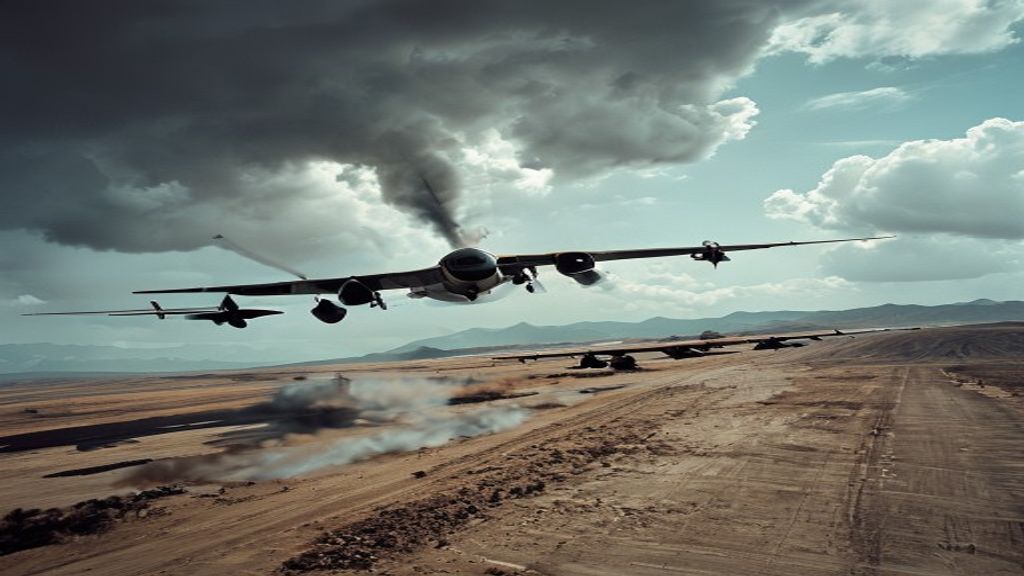

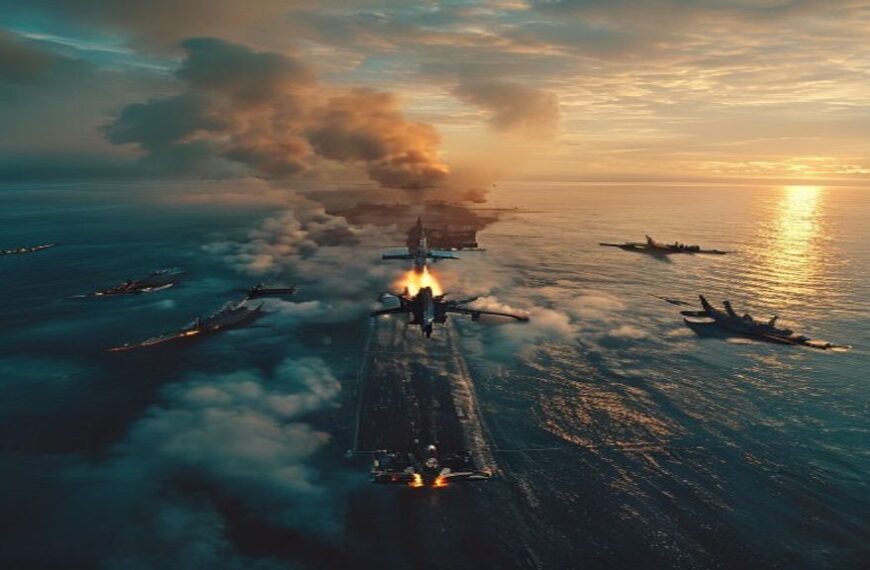
WASHINGTON — Iranian air defenses shot down two American military aircraft in a dramatic escalation of the six-week-old conflict, leaving one US crew member missing and triggering a massive search-and-rescue operation that itself came under fire, the Pentagon confirmed on Thursday.
The downing of an F-15E Strike Eagle and an A-10 Warthog within hours of each other marks the most significant US aerial losses since the war began in late February. The incidents underscore the growing lethality of Iran’s integrated air defense network and raise urgent questions about the trajectory of a conflict that has already disrupted global energy markets and destabilised the Persian Gulf region. President Donald Trump responded with characteristically bellicose rhetoric, warning that the United States “hasn’t even started destroying what’s left in Iran” — a statement that analysts say signals a potential widening of the air campaign to include civilian infrastructure.
| Parameter | Details |
|---|---|
| Aircraft Downed | F-15E Strike Eagle, A-10 Warthog |
| Crew Status | One weapons systems officer missing; pilot and A-10 pilot recovered |
| Additional Damage | Two Black Hawk helicopters struck by small arms fire during rescue |
| Conflict Duration | Six weeks (began late February 2026) |
| Iranian Targets Hit | Kuwaiti power and desalination plant, Gulf oil refineries |
| Key Figure | President Donald Trump — threatened escalation against Iranian bridges and power plants |
| Mediation Efforts | Pakistan actively mediating; Oman and Iraq also involved in back-channel diplomacy |
SITUATIONAL BREAKDOWN
The F-15E Strike Eagle was brought down over Iranian territory on April 3 during what US Central Command described as a strike mission against Iranian military targets. The two-seat aircraft crashed in a remote area, and while the pilot was recovered by a combat search-and-rescue team within hours, the weapons systems officer remains unaccounted for. A massive search operation involving special operations forces is underway, with Pentagon officials acknowledging that the terrain and hostile environment are complicating recovery efforts. — NBC News
During the rescue operation for the F-15E crew, an A-10 Warthog providing close air support was also shot down, though its pilot ejected safely and was recovered. Two Black Hawk helicopters participating in the rescue were struck by small arms fire but managed to return to base. The rapid sequence of losses suggests that Iranian forces had established a coordinated ambush, exploiting the predictable patterns of American combat search-and-rescue operations — a tactic reminiscent of the 1993 Mogadishu battle that shaped a generation of US military doctrine. — CNN
Iran’s state media was quick to claim credit, broadcasting footage purportedly showing the wreckage of both aircraft. Tehran has invested heavily in its air defense capabilities over the past two decades, integrating Russian-supplied S-300 systems with domestically developed radars and missile batteries. The successful engagement of two US aircraft in a single day represents a significant propaganda victory for the Islamic Republic, even as its own military infrastructure continues to sustain devastating American strikes. — Al Jazeera
Escalatory Rhetoric and the Infrastructure Question
President Trump’s response to the shootdowns has alarmed diplomats and analysts alike. Speaking from the White House on Thursday evening, Trump issued a stark warning that appeared to foreshadow attacks on Iranian civilian infrastructure — a category of targeting that would represent a significant escalation and potential violation of international humanitarian law.
“The United States hasn’t even started destroying what’s left in Iran. If they don’t come to the table, we will take out every bridge and every power plant. They will be living in the dark ages.” — President Donald Trump, as reported by NPR
The explicit threat against bridges and power plants marks a departure from the Pentagon’s stated policy of targeting only military and dual-use facilities. International law experts have warned that deliberately attacking civilian infrastructure — particularly water treatment and electrical systems — could constitute a war crime under the Geneva Conventions. The International Committee of the Red Cross issued a statement urging all parties to respect the distinction between military and civilian objects.
Iran’s Gulf Energy Campaign
While the aerial losses dominate headlines, the broader strategic picture reveals Iran’s asymmetric counter-strategy in full effect. Over the past six weeks, Iranian forces and their proxies have struck Gulf energy infrastructure with increasing precision, targeting oil refineries across the region and — in a particularly provocative attack — destroying a Kuwaiti power and desalination plant that serves hundreds of thousands of civilians.
The attacks on energy infrastructure have sent oil prices soaring past $130 per barrel, with Reuters reporting that shipping through the Strait of Hormuz has slowed to a fraction of its normal volume. Approximately 20 percent of the world’s oil passes through the narrow waterway, and insurance premiums for tankers transiting the strait have increased by over 400 percent since the conflict began. The economic ripple effects are being felt from Tokyo to London, with several countries activating strategic petroleum reserves.
The Missing Crew Member
The fate of the missing weapons systems officer has become the conflict’s most emotionally charged storyline. Pentagon spokesperson Brigadier General Patrick Ryder confirmed that US forces are conducting round-the-clock operations to locate and recover the service member, whose identity has not been publicly released pending family notification.
“Iran claimed it downed two US jets as a massive search operation continues for one missing crew member.” — Al Jazeera
The situation carries echoes of past conflicts where downed American aircrew became focal points of national attention and political pressure. Iranian state television has broadcast claims that the missing officer is in Iranian custody, though the Pentagon has not confirmed these reports. If true, the capture of an American service member would add an extraordinarily volatile dimension to an already dangerous conflict — as entertainment and culture continue their own parallel dramas, with figures like Sharon Stone reflecting on her career ahead of Euphoria Season 3’s premiere, the contrast between Hollywood’s peacetime rhythms and the brutal realities unfolding in the Persian Gulf could not be starker.
Diplomatic Off-Ramps Narrowing
The shootdowns have complicated already fragile diplomatic efforts to find an off-ramp to the conflict. Oman, which has historically served as a back-channel between Washington and Tehran, has reportedly been hosting quiet talks, but progress has been minimal. The UN Security Council remains deadlocked, with the BBC reporting that Russia and China continue to block resolutions that would authorise enforcement mechanisms against Iran while simultaneously opposing the US military campaign.
European allies have grown increasingly vocal in their discomfort with the trajectory of the conflict. French President Emmanuel Macron called for an immediate ceasefire, while British Prime Minister Keir Starmer — who initially offered cautious support for the US operation — faces growing parliamentary pressure to distance London from Washington’s maximalist approach.
🇵🇰 WHAT THIS MEANS FOR PAKISTAN
Pakistan finds itself in an acutely precarious position as the conflict intensifies on its western doorstep. The Foreign Ministry in Islamabad confirmed on Thursday that Pakistan will continue its mediation efforts between Washington and Tehran, a diplomatic tightrope that reflects both Pakistan’s geographic vulnerability and its strategic relationships with both parties. Pakistan shares a 959-kilometre border with Iran and maintains complex but functional diplomatic ties with both Tehran and Washington — a balancing act that gives it unique credibility but also unique exposure.
The most immediate threat to Pakistan is economic. The disruption of shipping through the Strait of Hormuz directly imperils Pakistan’s energy imports, with the country already facing chronic electricity shortages and a fragile balance-of-payments position. Pakistan imports a significant portion of its crude oil and LNG through Gulf shipping routes, and the dramatic increase in insurance and freight costs is being passed directly to Pakistani consumers. The Iran-Pakistan gas pipeline, long delayed by geopolitical complications, now faces an even more uncertain future.
Islamabad’s mediation role, while diplomatically commendable, carries significant risks. Any perception that Pakistan is tilting toward one side could jeopardise its relationships with the other, and the intensifying rhetoric from Washington makes neutrality increasingly difficult to maintain. Pakistani officials are reportedly in close contact with both American and Iranian counterparts, but the shootdown of US aircraft and the potential capture of an American service member have narrowed the diplomatic space considerably.
BOLOTOSAI ASSESSMENT
The downing of two US aircraft in a single day represents a strategic inflection point in this conflict. Three scenarios now dominate the analytical landscape. First, and most concerning, is a significant escalation of the US air campaign to include civilian infrastructure — bridges, power plants, water systems — as Trump has explicitly threatened. This would deepen the humanitarian catastrophe and almost certainly harden Iranian resolve rather than compelling negotiation. Second, the potential capture of an American service member could create irresistible domestic political pressure for an even more aggressive military posture, potentially including ground operations that military planners have so far resisted. Third, the economic pain from disrupted Gulf energy flows may finally create sufficient incentive for both sides to accept mediated talks — with Pakistan, Oman, and potentially China serving as intermediaries.
What to watch in the coming days: the fate of the missing weapons systems officer will likely determine the near-term political trajectory. If confirmed captured, expect dramatic escalation. If recovered, a narrow window for diplomacy may open. Meanwhile, oil markets will serve as the conflict’s real-time barometer — any further attacks on Gulf energy infrastructure could push prices past $150 per barrel, creating a global economic crisis that even the most hawkish voices in Washington cannot ignore. The war is entering its most dangerous phase.

 By
By


 By
By