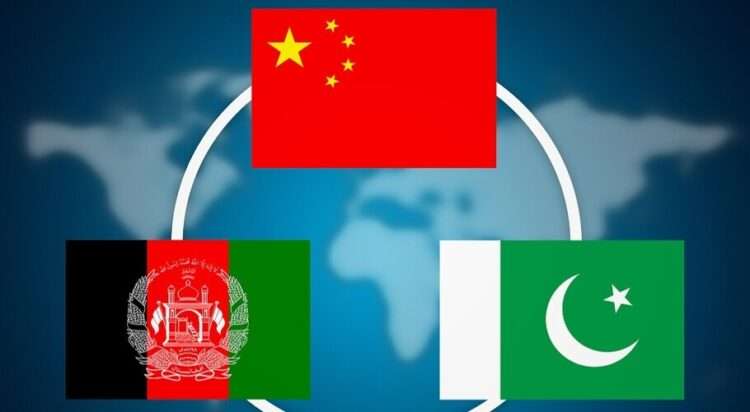

URUMQI, CHINA — China declared that peace talks between Pakistan and Afghanistan’s Taliban government are “being steadily implemented and advanced,” as the two sides met in the western Chinese city of Urumqi on April 2-3 in a high-stakes bid to end weeks of deadly cross-border fighting that has killed hundreds and destabilized one of Asia’s most volatile frontiers.
The latest round of China-brokered negotiations comes at a critical juncture. Since late February, when Pakistan launched airstrikes in Kabul and other Afghan cities — shattering a ceasefire agreed upon during earlier rounds held in Qatar and Turkey — the conflict has spiraled into its worst escalation in years. Hundreds have been killed on both sides, trade corridors have ground to a halt, and millions of civilians living along the Durand Line face an uncertain future. Beijing, which shares a narrow border with Afghanistan through the Wakhan Corridor and has significant economic interests across both nations, has positioned itself as the indispensable mediator in a conflict that neither Washington nor the United Nations has been able to contain.
| Parameter | Details |
|---|---|
| Location | Urumqi, Xinjiang, China |
| Dates of Talks | April 2–3, 2026 |
| Key Mediator | China’s Foreign Ministry (Spokesperson: Mao Ning) |
| Pakistan’s Core Demand | Written assurances Afghan soil will not be used for attacks against Pakistan |
| Escalation Trigger | Pakistan strikes in Kabul and elsewhere, late February 2026 |
| Reported Afghan Casualties (During Talks) | 2 killed, 25 wounded — mostly children |
| Previous Mediation Venues | Qatar, Turkey |
SITUATIONAL BREAKDOWN
The Urumqi talks represent China’s most assertive diplomatic intervention in the Pakistan-Afghanistan conflict to date. After previous rounds of negotiations in Doha and Ankara failed to produce durable results — the ceasefire agreed upon in those forums lasted only weeks before Pakistan’s February strikes obliterated it — Beijing stepped in with the weight of its Belt and Road investments and its unique leverage over both parties. China is Afghanistan’s largest regional investor and Pakistan’s most important strategic partner, giving it a rare dual credibility that neither Washington nor Middle Eastern mediators can replicate. — The Washington Post
Yet even as delegations sat across the table in Urumqi, the violence continued. Afghanistan’s deputy government spokesperson told reporters that Pakistan had been carrying out mortar, missile, and drone attacks on eastern Afghan provinces throughout the negotiating period, killing two people and wounding 25 others — most of them children. The accusation undercuts Islamabad’s stated commitment to peace and raises serious questions about whether Pakistan’s military establishment and its diplomatic corps are operating on the same page. — NPR
For the Taliban government in Kabul, the talks present a paradox: they must simultaneously project strength to their domestic base while demonstrating enough flexibility to secure the economic lifelines that China’s continued engagement promises. The Taliban have governed Afghanistan since their 2021 takeover, but international recognition remains elusive, and China’s willingness to broker these talks represents one of their most significant diplomatic openings. — ABC News
BEIJING’S STRATEGIC GAMBLE
China’s choice of Urumqi — the capital of Xinjiang province — as the venue for these talks is loaded with symbolism and strategic calculation. The city sits at the western edge of China’s Belt and Road corridor, a physical reminder that instability along the Pakistan-Afghanistan border directly threatens Beijing’s most ambitious global infrastructure project. The China-Pakistan Economic Corridor (CPEC), worth tens of billions of dollars, runs through some of the most conflict-affected regions, and any sustained fighting risks derailing projects that are central to Xi Jinping’s foreign policy legacy.
“The consultation process is being steadily implemented and advanced.” — Mao Ning, China’s Foreign Ministry spokesperson
Mao Ning’s carefully measured language reflects Beijing’s preferred approach: project progress without overpromising. China has learned from previous diplomatic efforts in the region that announcing breakthroughs prematurely can backfire spectacularly. The real question is whether China’s economic leverage — it is the largest trading partner for both nations — can translate into enforceable security commitments that previous mediators failed to extract.
THE TRUST DEFICIT ON BOTH SIDES
Pakistan’s central demand — written assurances that Afghan soil will not be used as a staging ground for attacks on Pakistani territory — reflects years of frustration with what Islamabad views as Kabul’s inability or unwillingness to rein in groups like Tehrik-i-Taliban Pakistan (TTP). The TTP, which has waged a brutal insurgency inside Pakistan, operates from Afghan sanctuaries that the Taliban government has been either unwilling or unable to dismantle. For Pakistan’s military leadership, verbal commitments are no longer sufficient; they want binding, verifiable guarantees.
On the Afghan side, trust has been shattered by Pakistan’s February strikes. Bombing the capital city of a neighboring country — regardless of the security justification — represents a dramatic escalation that the Taliban government views as a violation of sovereignty. The continued drone and missile attacks during the Urumqi talks themselves only deepen Kabul’s conviction that Pakistan negotiates in bad faith.
“Pakistan had been continuously carrying out mortar, missile and drone attacks on eastern Afghan provinces, with two people killed and 25 people, mostly children, wounded.” — Afghanistan’s deputy government spokesperson
The targeting of areas where children make up the majority of casualties has generated significant anger within Afghanistan and complicates any Taliban leader’s ability to sell concessions to their base. In a conflict defined by mutual grievance, every civilian death becomes ammunition against compromise.
THE LIMITS OF MEDIATION
While international efforts are focused on this regional crisis, the broader geopolitical landscape continues to shift rapidly. Just as nations grapple with terrestrial conflicts, humanity’s ambitions extend beyond Earth — as evidenced by NASA’s launch of the Artemis II crew on a historic Moon mission, a reminder that global cooperation remains possible even in an era of deepening rivalries.
The history of Pakistan-Afghanistan mediation efforts is littered with failed agreements. The Qatar talks produced a ceasefire that held for mere weeks. The Turkey round generated optimistic communiqués that were overtaken by events on the ground. China’s effort in Urumqi follows this same fragile pattern, with one crucial difference: Beijing has more economic leverage over both parties than any previous mediator. Whether that leverage can be converted into lasting security arrangements remains the defining question.
The fundamental challenge is structural. Pakistan wants security guarantees that the Taliban government may not have the capacity to deliver, given its incomplete control over Afghan territory. The Taliban want sovereignty guarantees that Pakistan’s military may not be willing to respect, given its operational doctrine of preemptive strikes. China can bring them to the table, but it cannot resolve the underlying asymmetry of demands.
REGIONAL RIPPLE EFFECTS
The conflict’s impact extends well beyond the two countries’ borders. Trade disruption along the Torkham and Chaman crossings has sent prices soaring for basic commodities in both nations. Tens of thousands of Afghans who depend on cross-border commerce for their livelihoods have been cut off. Regional powers including Iran, the Central Asian republics, and India are watching closely — each with their own calculations about how the outcome will reshape the balance of power in South and Central Asia.
For the international community, the Urumqi talks also represent a test case for China’s expanding role as a global mediator. Beijing brokered the Saudi-Iran rapprochement in 2023 and has since sought to position itself as an alternative to Western-led diplomacy. Success in Urumqi would significantly bolster that narrative; failure would expose the limits of economic diplomacy in the face of deeply entrenched security rivalries.
🇵🇰 WHAT THIS MEANS FOR PAKISTAN
For Pakistan, the Urumqi talks represent both opportunity and peril. Islamabad desperately needs a resolution to the border conflict — the economic costs of sustained military operations, trade disruption, and diplomatic isolation are mounting at a time when the country’s economy can least afford them. Pakistan’s ongoing IMF program and its fragile fiscal recovery are threatened by every week of continued fighting.
Yet Pakistan’s insistence on written assurances reveals a deeper strategic anxiety. The TTP threat is existential for Pakistan’s internal security, and the military establishment will not accept any agreement that does not include verifiable mechanisms to prevent Afghan-based militants from striking Pakistani targets. This is a non-negotiable red line, and Pakistan’s willingness to continue strikes even during active negotiations signals that the military retains operational independence from the diplomatic track.
The civilian casualties in eastern Afghanistan — particularly the wounding of children — also carry a significant reputational cost for Pakistan. In an era of global media scrutiny, images of injured children undermine Pakistan’s narrative of justified self-defense and provide ammunition to critics who argue that Islamabad’s approach is disproportionate. Pakistan must calibrate its military posture with its diplomatic messaging, or risk losing the very international support it needs to achieve a favorable settlement.
BOLOTOSAI ASSESSMENT
The Urumqi talks are unlikely to produce a comprehensive peace agreement in the near term, but they may yield a framework for de-escalation that prevents the conflict from spiraling further. Three outcomes are most probable in the coming weeks:
First, a limited ceasefire agreement focused on specific border sectors — likely the eastern provinces where the worst fighting has occurred — with China serving as a guarantor and monitor. This would fall short of the comprehensive deal both sides claim to want but would reduce civilian casualties and allow trade corridors to partially reopen. Second, continued diplomatic engagement through a formalized process, with Urumqi potentially becoming a regular venue for talks — giving China an institutionalized role in the region’s security architecture. Third, and most concerning, is the possibility that talks collapse entirely if Pakistan’s military operations continue during negotiations, prompting the Taliban to walk away and triggering a fresh cycle of escalation.
What to watch: whether China announces a follow-up round of talks with specific dates, whether Pakistan pauses its drone operations as a confidence-building measure, and whether the Taliban government makes any public commitment to addressing Pakistan’s TTP concerns. The gap between diplomatic language and battlefield reality will determine whether Urumqi becomes a turning point or another footnote in the long, tragic history of Pakistan-Afghanistan conflict.

 By
By


 By
By