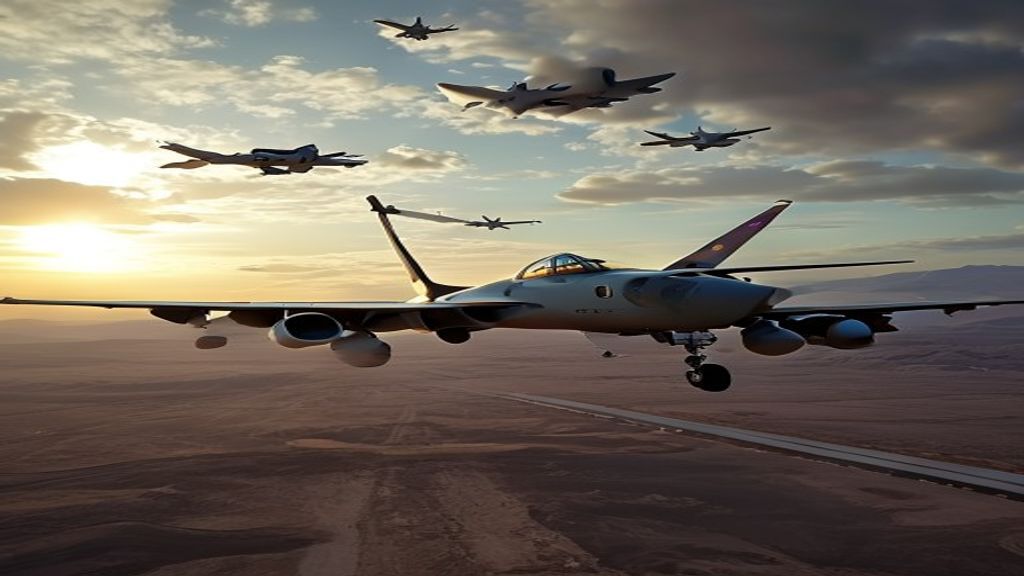

WASHINGTON — Iran shot down a US F-15E Strike Eagle fighter jet over Iranian territory on Friday and a second American combat aircraft crashed near the Strait of Hormuz, marking the deadliest aerial engagement of the six-week-old US-Iran conflict as Brent crude oil surged roughly eight percent to around $109 per barrel.
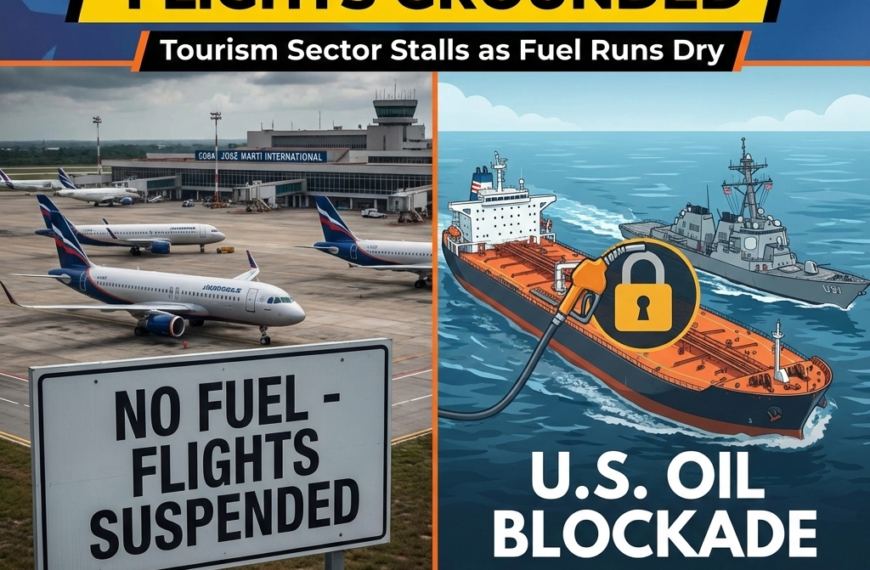
The escalation came as the strategic Strait of Hormuz — through which roughly one-fifth of the world’s oil supply passes daily — remains effectively blockaded by Iranian naval and missile forces. Ship traffic through the waterway has plummeted from an average of 150 vessels per day to just 10-20, sending shockwaves through global energy markets and raising fears of a wider regional conflagration. A search-and-rescue operation is underway for a missing American pilot who ejected over Iranian territory, adding a volatile human dimension to an already incendiary standoff.
President Donald Trump responded with a 48-hour ultimatum demanding Iran reopen the strait, warning in characteristically blunt terms that “all hell will rain down” on Iran if it fails to comply. The threat followed a joint US-Israeli airstrike that destroyed a major bridge connecting Tehran to the satellite city of Karaj, killing at least 13 people and drawing fierce international condemnation.
| Parameter | Details |
|---|---|
| Conflict Duration | Six weeks (as of April 4, 2026) |
| US Aircraft Lost | Two — one F-15E downed over Iran, one crashed near Strait of Hormuz |
| Brent Crude Price | ~$109/barrel (up ~8% on the day) |
| Strait of Hormuz Traffic | Down from 150 vessels/day to 10-20 |
| Key Infrastructure Hit | Tehran-Karaj bridge destroyed; Mina Al-Ahmadi refinery (Kuwait) struck by Iranian drones |
| US Ultimatum | 48-hour deadline to reopen Strait of Hormuz |
| Missing Personnel | One US pilot ejected over Iranian territory; search underway |
Situational Breakdown
The downing of the F-15E represents the first confirmed shootdown of a US manned combat aircraft in a state-on-state engagement since the 2003 Iraq War. Iranian air defences, believed to include Russian-supplied S-300 systems and domestically produced Bavar-373 units, have proven more capable than many Western analysts initially projected. The second aircraft crash near the strait — whether caused by mechanical failure, electronic warfare, or a second engagement — remains under investigation, though Iranian state media has claimed credit for both losses. — NPR
Iran simultaneously expanded the geographic scope of its retaliatory strikes, with drone attacks hitting Kuwait’s Mina Al-Ahmadi refinery complex and sparking a major fire at one of the Gulf’s largest oil processing facilities. The strike on a nominally neutral Gulf state represents a significant escalation, potentially dragging Kuwait — and by extension, the broader Gulf Cooperation Council — deeper into the conflict. Kuwait has not yet formally attributed the attack but recalled its ambassador from Tehran within hours. — Al Jazeera
The US-Israeli strike on the Tehran-Karaj bridge, meanwhile, has drawn sharp criticism from humanitarian organisations and several European capitals. The bridge served as a critical civilian artery connecting Iran’s capital to its western suburbs, and the 13 confirmed fatalities included commuters and commercial drivers. Israel has neither confirmed nor denied its participation, though the Jerusalem Post reported that Israeli Air Force assets were involved in the operation. — Jerusalem Post
The Ultimatum and Its Consequences
President Trump’s 48-hour ultimatum — delivered via a Truth Social post and subsequently confirmed by the White House — sets the stage for what could be the most dangerous weekend of the conflict thus far. The demand that Iran unilaterally reopen the Strait of Hormuz or face devastating consequences leaves little room for diplomatic manoeuvre.
“Iran’s biggest bridge comes tumbling down, never to be used again.”
Trump’s warning, reported by NPR, referenced the already-destroyed Tehran-Karaj span as evidence of American willingness to strike critical infrastructure. The implicit threat — that Iran’s remaining bridges, dams, and power plants could follow — has alarmed conflict watchers who note that such targeting would likely violate international humanitarian law and could trigger a catastrophic humanitarian crisis for Iran’s 88 million citizens.
Iran’s Defiant Response
Tehran has shown no signs of capitulation. Iran’s foreign minister delivered a pointed rebuttal that framed the conflict in terms of national survival and historical resistance to foreign coercion.
“Striking civilian infrastructure will never compel Iranians to surrender.”
The statement, carried by Al Jazeera, echoed a long-standing Iranian strategic doctrine: that the country’s geographic depth, population size, and ideological cohesion make it fundamentally unconquerable through airpower alone. Iranian military planners appear to be betting that the economic pain inflicted by the Hormuz blockade — and the political risk of a prolonged, casualty-producing air campaign — will eventually force Washington to negotiate rather than escalate further.
The capture or recovery of the downed American pilot could prove to be a pivotal moment. If Iran secures the pilot, it would gain enormous leverage — both as a bargaining chip and as a propaganda tool. The 1979 hostage crisis remains seared into American political memory, and any perception that a US service member is being held captive could dramatically reshape domestic political calculations.
Global Energy Markets in Crisis
The near-total closure of the Strait of Hormuz has created the most severe energy supply disruption since the 1973 Arab oil embargo. With Brent crude breaching $109 — and analysts at Goldman Sachs reportedly warning of $130 if the blockade persists through April — the economic fallout is spreading far beyond the Middle East. European natural gas futures have spiked in sympathy, Asian spot LNG prices have more than doubled since mid-February, and shipping insurance premiums for Gulf-bound vessels have become effectively prohibitive.
The Iranian drone strike on Kuwait’s Mina Al-Ahmadi refinery adds a new dimension to the supply crisis. Even if the Strait were reopened tomorrow, the damage to Gulf refining infrastructure means that processed fuel exports — not just crude — face weeks of disruption. As entertainment industries worldwide grapple with geopolitical uncertainty in their own ways, from Shaan Shahid’s thriller ‘Psycho’ creating international buzz to Hollywood delaying blockbuster releases, the cascading effects of this conflict are touching every sector of the global economy.
🇵🇰 Pakistan Connection
For Pakistan, the Hormuz blockade is rapidly evolving from a geopolitical concern into a domestic energy emergency. Liquefied natural gas, which powers approximately 21 percent of Pakistan’s electricity grid, arrives almost exclusively through the strait from Qatari suppliers. Of eight LNG cargoes scheduled for delivery in March, only two arrived — a shortfall that energy officials say will translate into two to three additional hours of daily load-shedding across the country this summer, compounding an already fragile power situation.
Oil at $109 per barrel is equally devastating for Pakistan’s import bill. The country imports roughly 85 percent of its crude oil needs, and every $10 increase in Brent crude adds an estimated $1.5 billion annually to the import tab. With foreign exchange reserves already under pressure and the rupee weakening against the dollar, the conflict threatens to undo months of hard-won macroeconomic stabilisation. Islamabad is reportedly exploring emergency fuel swaps with China and accelerating talks with Russia for discounted crude, but neither option can replace the volume that flows through Hormuz.
BolotoSai Assessment
The next 48 hours represent the most dangerous inflection point of this conflict. Three scenarios demand close attention.
First, if Trump’s ultimatum expires without Iranian compliance — the most likely outcome given Tehran’s defiant posture — the United States faces a credibility test. Failure to follow through would undermine deterrence; following through with strikes on major civilian infrastructure could trigger a humanitarian catastrophe and fracture the already-thin international coalition supporting Washington’s campaign. The most probable middle path is an intensified strike campaign targeting Iranian military and naval assets in and around the strait, combined with a naval minesweeping operation — a high-risk, high-casualty proposition.
Second, the fate of the missing American pilot will shape the conflict’s trajectory in ways that no strategic planner can fully predict. A captured pilot becomes a hostage crisis; a recovered pilot becomes a rallying story. Either outcome changes the political calculus in Washington.
Third, the expansion of Iranian strikes to neutral Gulf states like Kuwait suggests Tehran is prepared to widen the conflict rather than absorb punishment passively. If Saudi Arabia or the UAE are hit next, the war’s geographic and economic footprint could expand dramatically, pushing oil past $130 and tipping fragile economies — Pakistan’s among them — into genuine crisis. The world should watch the strait, the skies over Iran, and the diplomatic back-channels between Beijing and Washington, where the only realistic off-ramp may ultimately be negotiated.

 By
By


 By
By