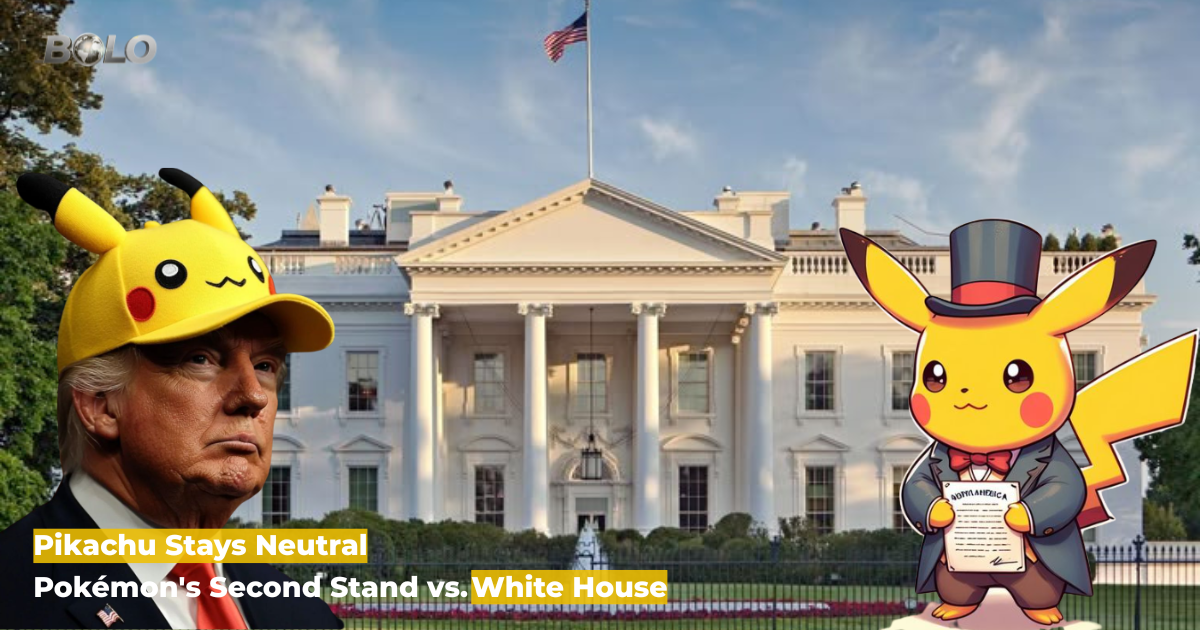

WASHINGTON, D.C. – For the second time in six months, Pokémon has been forced to remind the world that its iconic creatures do not endorse political campaigns—no matter how creatively they’re used.
The latest flashpoint came Thursday when the White House posted an image on X featuring the words “make america great again” styled in the distinctive font of Pokémon Pokopia, the brand’s newly released game celebrating its 30th anniversary. In the background, beloved characters including Pikachu and Magikarp were visible, seemingly lifted directly from the game’s artwork.
Within hours, The Pokémon Company International issued a carefully worded but firm response.
“We were not involved in its creation or distribution, and no permission was granted for the use of our intellectual property,” spokeswoman Sravanthi Dev told media outlets. “Our mission is to bring the world together, and that mission is not affiliated with any political viewpoint or agenda.”
History Repeats: Pokémon’s Déjà Vu Moment with the White House
This marks the second public rebuke from Pokémon directed at the Trump Administration. The first occurred in September 2025, when the Department of Homeland Security posted a recruitment video for Immigration and Customs Enforcement agents that featured:
- Pokémon’s iconic slogan “Gotta catch ’em all”
- Scenes from the Pokémon anime series
- Clips of Border Patrol and ICE agents making arrests
That same day, Customs and Border Protection posted “Border Patrol’s newest recruit” alongside a GIF of Detective Pikachu.
Pokémon’s response then was nearly identical: no involvement, no permission granted, no political affiliation.
More Than Just Memes: What’s at Risk for Pokémon in 2026
The timing is significant. Pokémon is in the midst of celebrating its 30th anniversary—a milestone that includes global events, new game releases like Pokémon Pokopia, and a carefully curated message of unity and nostalgia. Political entanglement threatens that carefully constructed image.
For a brand built on bringing children and families together across cultures and borders, being associated with immigration enforcement—a deeply divisive issue—creates exactly the kind of controversy Pokémon has spent three decades avoiding.
According to TIME’s original reporting on the story, Pokémon’s statement came within hours of the White House post. Read their full coverage here .
The Administration’s Gaming Strategy
The White House’s use of Pokémon imagery is part of a broader pattern. The Trump Administration has frequently borrowed from gaming culture to connect with young male voters:
| Game/Series | Usage |
|---|---|
| Minecraft | Multiple social posts with block-style imagery |
| Halo | References in recruitment messaging |
| Stardew Valley | Farm policy posts with game aesthetics |
| Call of Duty | Recent military policy announcements |
Unlike Pokémon, other gaming companies have remained publicly silent about the administration’s use of their intellectual property.
Fan Reactions Split
Social media response to Pokémon’s statement has been predictably divided:
- Supporters applaud the company for protecting its brand and staying neutral
- Critics argue Pokémon should stay out of politics entirely and ignore the usage
- Legal experts note that while Pokémon likely has grounds for a trademark claim, public statements may be sufficient to protect their rights
“Nowhere in the Constitution does it say we can’t post banger memes,” the White House’s X account posted last July in defense of its social media strategy. But for Pokémon, this isn’t about free speech—it’s about brand control.
The Legal Question
Could Pokémon sue? Possibly. Trademark law protects against unauthorized use that could cause confusion or dilution. But lawsuits against the federal government are complicated, and Pokémon has shown no indication it plans to escalate beyond public statements.
For now, the company’s strategy appears to be: document the distance, protect the brand, and hope the administration moves on to other memes.
What Gaming Companies Usually Do
Historically, video game companies have been reluctant to pick political fights. Unlike musicians who frequently object to politicians using their songs at rallies, gaming companies have largely stayed silent when their IP appears in political contexts.
Pokémon’s decision to speak out—twice—is notable precisely because it breaks from industry norms.
The Road Ahead: Will Pokémon Take Further Action?
With Pokémon’s 30th anniversary celebrations continuing throughout 2026, the company will likely remain vigilant about how its characters are used. The White House, meanwhile, shows no signs of abandoning its meme-driven social media approach.
The question is whether other gaming companies will follow Pokémon’s lead—or continue to stay silent.
The Bottom Line
Pikachu isn’t red or blue. Pikachu is yellow. And Pokémon wants to keep it that way.
Also Read:
‘Boyfriend on Demand’ Ending Explained: Netflix K-Drama Finale
‘Zootopia 2’ Lands Oscar 2026 Nomination After BAFTA Win
Spielberg’s ‘The Dinosaurs’ on Netflix: Trailer & Release 2026
‘Hoppers’ vs ‘Zootopia 2’: The $2B Battle Begins March 6
Oscars 2026: Date, Host, Nominees & How to Watch the 98th Academy Awards
Jim Carrey Clone Rumors Exploded After the César Awards
‘Scream 7’ Ending Demystified: Who Wore the Ghostface Mask?

 By
By


 By
By