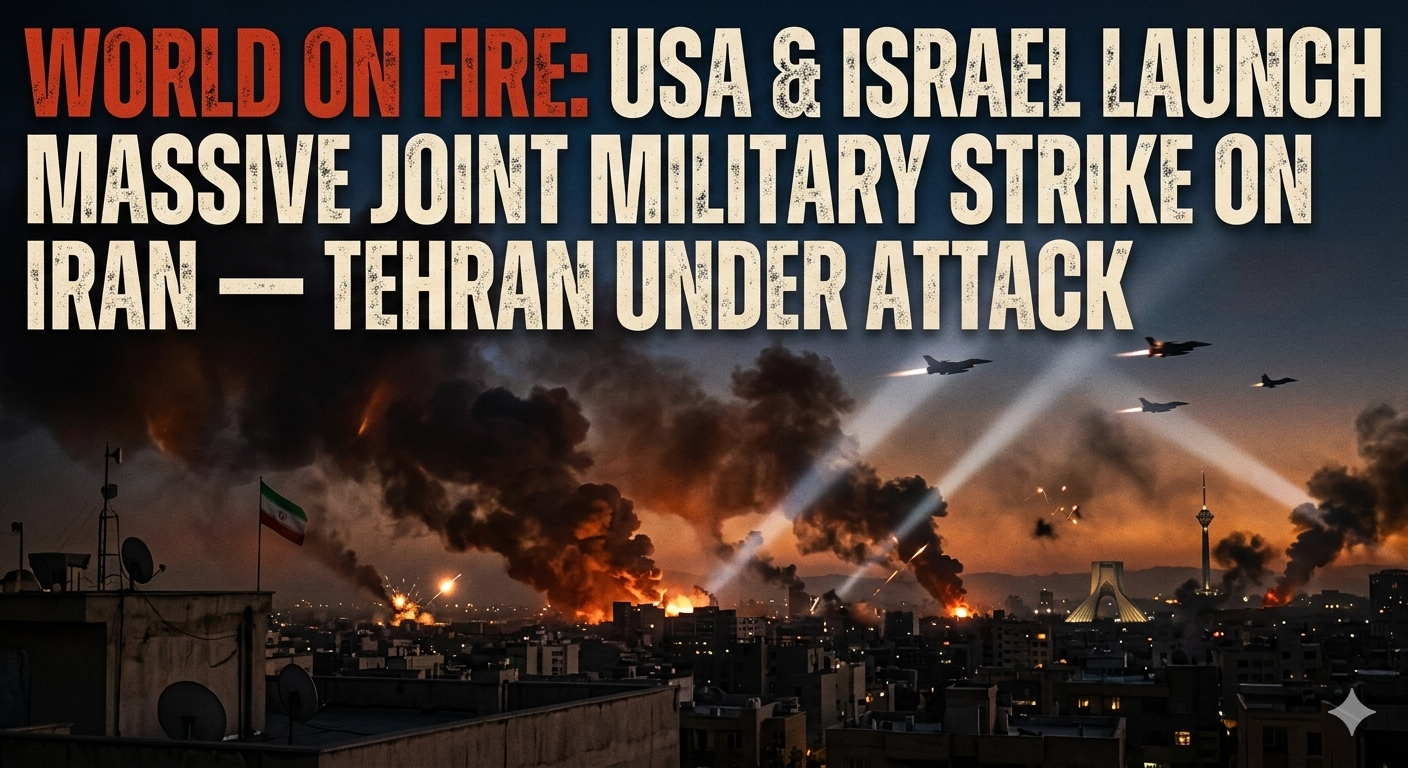

TEHRAN/WASHINGTON/TEL AVIV — In one of the most dramatic military escalations of the 21st century, the United States and Israel have launched a massive coordinated joint military operation against Iran today — Saturday, February 28, 2026. Multiple explosions have rocked the Iranian capital Tehran, with smoke rising over the city skyline. Blasts have also been reported in Isfahan, Qom, Karaj, Kermanshah and the western Ilam province — confirming this is a nationwide, multi-target operation.
ANALYTICAL BRIEF — OPERATION STATUS (28 FEB 2026)
| Parameter | Details |
|---|---|
| Operation Status | ACTIVE & ONGOING |
| Attacking Forces | USA + Israel (Joint Operation) |
| Confirmed Strike Locations | Tehran, Isfahan, Qom, Karaj, Kermanshah, Ilam |
| Strike Method | Air & Sea (confirmed by US officials) |
| Primary Targets | Ballistic missile sites, missile launchers, nuclear infrastructure |
| Iranian Supreme Leader | Moved to secure undisclosed location |
| Israel Status | State of Emergency declared nationwide |
| Israeli Airspace | Closed to all civilian flights |
| Iranian Casualties | Not yet officially confirmed |
| Iranian Retaliation | Expected — Iran vows “devastating war” |
SITUATIONAL BREAKDOWN
Background — Months of Rising Tension: This strike did not come without warning. Since January 2026, the United States had been amassing an unprecedented military armada in the Middle East — including USS Abraham Lincoln and USS Gerald R. Ford carrier strike groups — at a scale not seen since the 2003 Iraq invasion. Diplomatic talks between Washington and Tehran had been held in Oman and Switzerland over Iran’s nuclear program, but collapsed after Iran refused to include its ballistic missile program in negotiations.
The Breaking Point: Trump had warned Iran repeatedly that its refusal to abandon its nuclear program would have consequences. euronews US and European officials had presented Iran with three core demands: permanent end to uranium enrichment, strict limits on ballistic missiles, and complete halt to support for proxy groups including Hamas, Hezbollah and the Houthis. Iran refused.
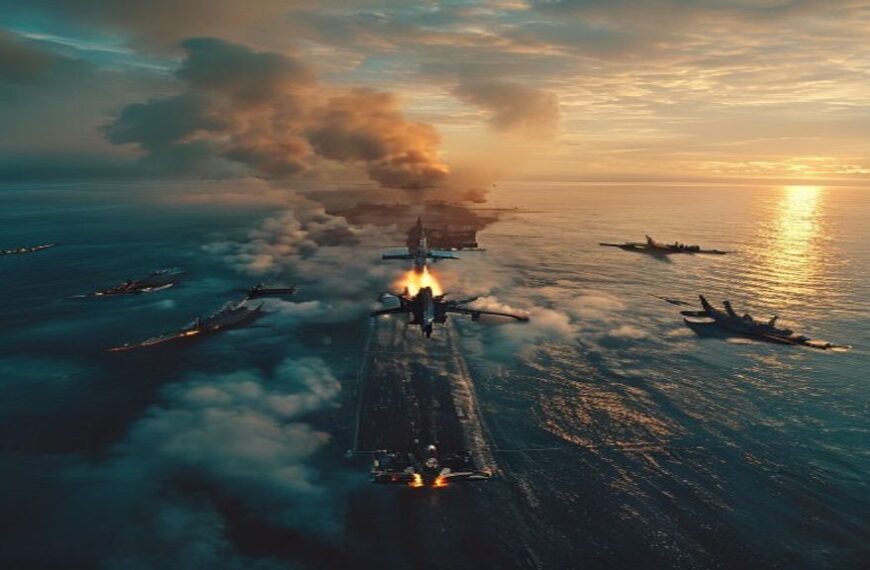
The Strike: A US official confirmed to Al Jazeera that the attacks were carried out as a joint military operation between Israel and the United States, conducted by air and sea. Wikipedia President Trump confirmed in a video that the United States had begun a “massive and ongoing” military campaign in Iran, stating the objective was to prevent the Iranian regime from threatening American national security interests. deccanchronicle
Israel’s Position: Israeli Defence Minister Israel Katz labeled the strikes a “preemptive attack” intended to “remove threats to the State of Israel,” and Israel declared a nationwide state of emergency citing the expectation of Iranian retaliation. Al Jazeera
Targets Hit: The attack targeted Iran’s ballistic missiles and missile launchers. Strikes were also reported in Isfahan, Qom, Karaj and Kermanshah. deccanchronicle Reports indicate one of the first strikes occurred near the offices of Supreme Leader Ayatollah Ali Khamenei, who has since been moved to a secure location.
Trump’s Warning to Iran: Trump declared the US would “destroy their missiles and raze their missile industry to the ground,” adding that Iran’s navy would be “annihilated” and that Iran would “never have a nuclear weapon.” euronews He directly addressed the Iranian people, saying “the hour of your freedom is at hand.”
Iran’s Response: Tehran has vowed to retaliate with what it calls a “devastating war” against American and Israeli bases across the region. An Iranian official told Reuters that Tehran is preparing retaliation described as “crushing.” Wikipedia Communications in several areas of Tehran have been disrupted, with cell phone networks going dark.
REGIONAL IMPLICATIONS — WHAT THIS MEANS FOR PAKISTAN
As this crisis unfolds, Pakistan finds itself navigating an extraordinarily complex strategic environment. With Operation Ghazab Lil Haq actively ongoing on the Afghan front, Pakistan is now sandwiched between two simultaneously erupting theatres of conflict:
- Eastern theatre: India monitoring Pakistan’s military engagement in Afghanistan
- Western theatre: Iran-US-Israel war threatening to spill into the broader region
- Energy threat: Iran controls the Strait of Hormuz — through which 20% of global oil supply passes. A closure would send oil prices soaring, devastating Pakistan’s already fragile economy
- Proxy risk: Iranian-backed networks in Balochistan could be activated as Iran seeks regional pressure points
Pakistan’s foreign policy establishment will need to tread carefully — maintaining its relationships with both the Muslim world’s outrage over the Iran strikes and its strategic partnerships with the West.
BOLOTSAI ASSESSMENT
The world woke up to a fundamentally different Middle East this Saturday morning. What began as nuclear diplomacy has erupted into open warfare. With Iran promising crushing retaliation, Israel on full war alert, and US forces actively engaged across Iranian territory — the next 24 to 72 hours will determine whether this remains a targeted strike campaign or escalates into a full regional war that draws in Hezbollah, the Houthis, Iraqi militias and potentially reshapes the entire geopolitical order of the Middle East.
This is the story of the decade. BoloToSai will update you as it develops.
Sources: Al Jazeera, CNN, NBC News, Reuters, AP, Euronews | All information verified at time of publishing
#USIranWar | #IsraelIranWar | #TehranUnderAttack | #BoloToSai | #BreakingNews | #WorldWar3

 By
By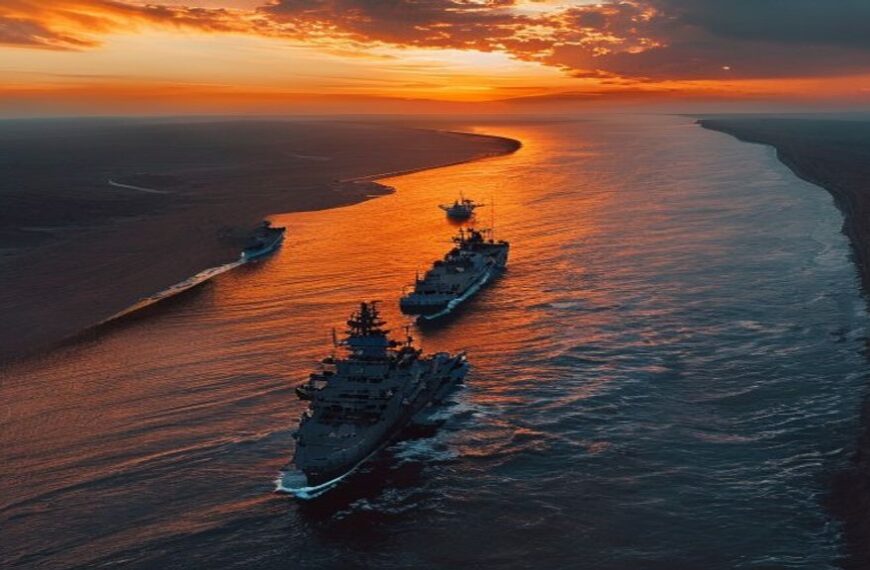

 By
By