
THE PHENOMENON
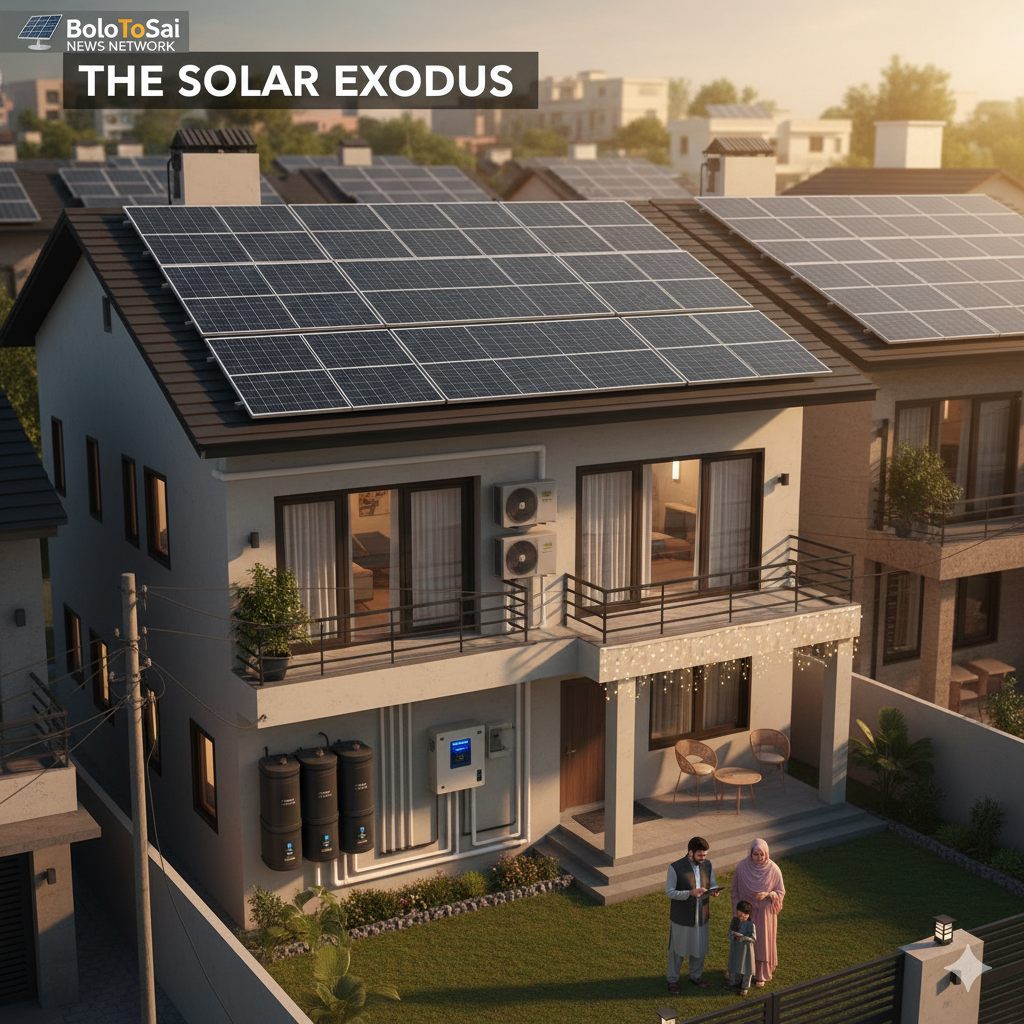
Walking through any neighborhood in Lahore, Karachi, or Islamabad today, the view is the same: a sea of shimmering silicon. Pakistan has undergone a “Solar Revolution” faster than almost any other developing nation. Driven by skyrocketing electricity tariffs in 2024 and 2025, millions of households have effectively “divorced” the national grid during the day.
But this independence has triggered a massive crisis for the state.
THE “IDLE CAPACITY” TRAP
The math is simple but brutal. As more wealthy and middle-class households switch to solar, they stop paying high-tier electricity bills. However, the government is still legally bound to pay Independent Power Producers (IPPs) “Capacity Charges”—essentially paying for electricity even if no one uses it.
- The Burden on the Poor: Since the rich have gone solar, the burden of these multi-billion rupee capacity payments is falling on the poorest citizens who cannot afford solar panels.
- Net Metering Wars: Rumors of a shift from “Net Metering” to “Net Billing” (where the government buys your solar power for cheap but sells it back to you at a premium) have sparked a national debate. Is the government punishing people for being self-reliant?
- The Battery Boom: In 2026, the focus has shifted from panels to Lithium-Ion storage. Households are now looking to go “Off-Grid” entirely, which could lead to a total collapse of the revenue model for DISCOs (Distribution Companies).
THE BOLO TO SAI VERDICT
The government cannot stop the sun. Trying to tax solar or slash net-metering benefits will only accelerate the “exodus.” Instead of fighting its citizens, the state needs to modernize the grid to handle two-way power flow and renegotiate those crushing IPP contracts.
The era of the “Centralized Grid” is dying. The future of Pakistan is decentralized, green, and powered by the people.
Also Read: Pakistan Border Security 2026: Analysis of the Rising Border Conflict – bolotosai.com_EN


 By
By



 By
By