

Written by Wajid | BoloToSai.com
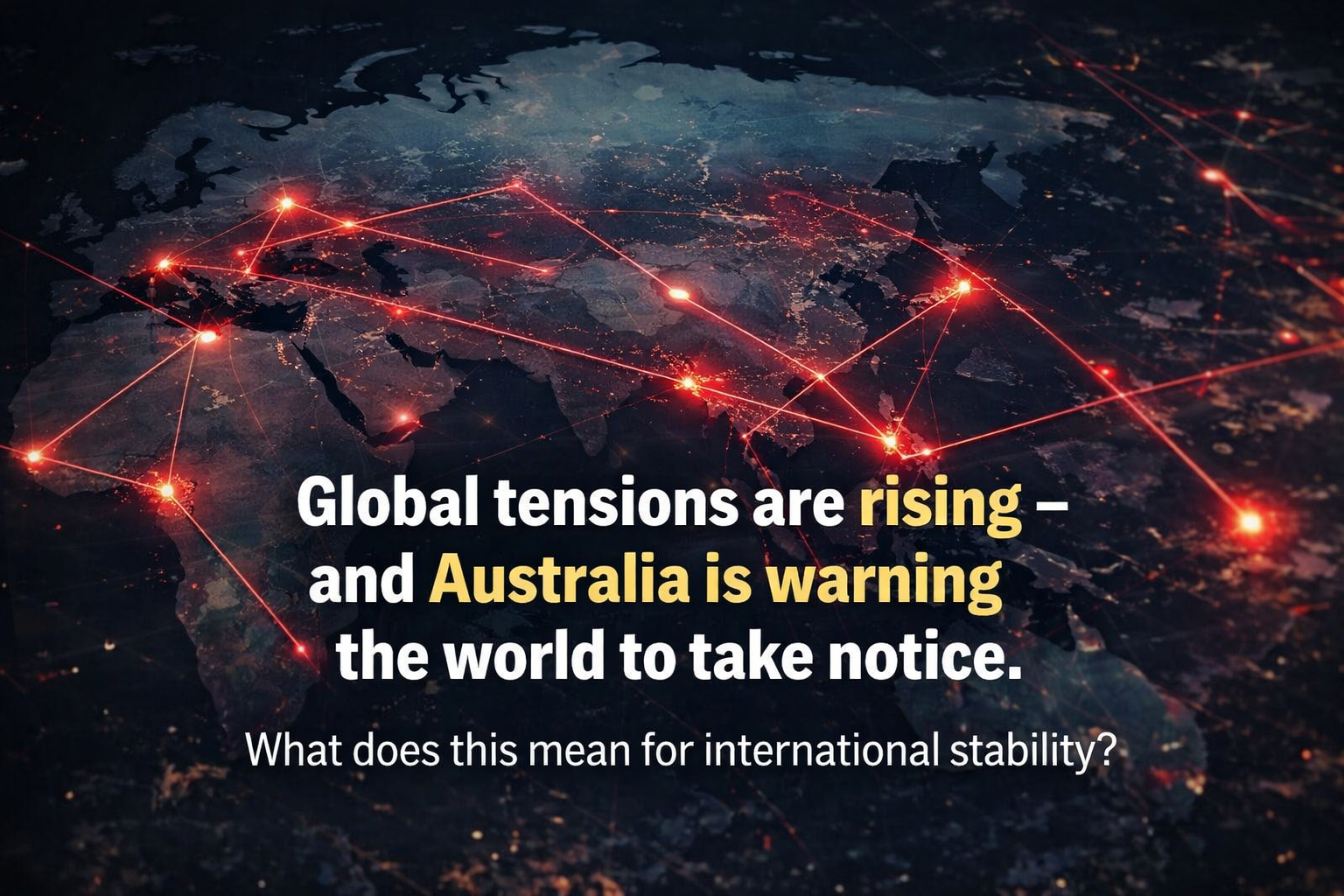
CANBERRA, AUSTRALIA — Australia’s newly appointed Director-General of the Office of National Intelligence, Kathy Klugman, issued a stark warning this week that escalating international conflicts could have far-reaching consequences for global stability and democratic institutions worldwide.
In her first major address to the Australian Parliament since assuming the role, Klugman highlighted a constellation of geopolitical flashpoints — including the war in Ukraine, tensions in the Indo-Pacific, and unrest in the Middle East — saying that the world is facing “a convergence of security threats the likes of which we have not seen in decades.”
A World on Edge: Security Risks Multiply
Klugman emphasized that while many conflicts remain localized, their impacts are increasingly interconnected.
“The lines between regional disputes and global crises are blurring,” she said. “Economic instability, supply chain vulnerabilities, cyberattacks, and ideologically driven violence are all amplifying one another. If left unchecked, these dynamics could weaken democratic resilience and international cooperation.”
Australia’s intelligence chief pointed to several persistent and emerging challenges:
- Prolonged conflict in Ukraine, where battlefield stalemates and diplomatic deadlock continue to strain European security.
- Rising tensions in the South China Sea and Taiwan Strait, magnifying concerns about freedom of navigation and military escalation.
- Persistent extremism and insurgencies in parts of the Middle East and North Africa.
- Cyber threats targeting democratic institutions, from elections to critical infrastructure.
Klugman’s assessment underscores what many global policymakers have been warning: that the world’s security architecture is under significant stress, and that cooperative diplomacy must keep pace with advancing threats.
Implications for Australia and Allies
While Australia is geographically distant from some of these hotspots, Klugman stressed the country’s deep involvement in international security frameworks and alliances.
“Geography no longer insulates any nation from the ripple effects of global conflict,” she said. “Our alliances, trade relationships, and democratic values mean we are deeply invested in stability beyond our borders.”
Australia remains a key partner in the Five Eyes intelligence alliance, alongside the United States, United Kingdom, Canada, and New Zealand. It also participates in regional security dialogues with ASEAN nations and partners across the Asia-Pacific.
Experts believe Klugman’s warning may presage a shift in Australia’s defense and foreign policy posture, potentially prompting increased investment in intelligence capabilities, cyber defense, and diplomatic initiatives.
Global Reactions and Wider Context
Analysts have noted similar concerns in public statements from other democracies. European leaders have expressed alarm over the continued destruction in Ukraine and the geopolitical recalibrations triggered by tensions with Russia. Meanwhile, the United States has prioritized strengthening alliances in the Indo-Pacific to counterbalance China’s expanding influence.
The United Nations has repeatedly called for diplomatic engagement and conflict reduction, citing humanitarian crises and economic disruption caused by prolonged global strife.
Looking Ahead: Diplomacy, Defense, and Cooperation
Klugman concluded her remarks by urging greater coordination among democratic nations and a recommitment to multilateral diplomacy.
“We cannot afford fragmentation in the face of shared threats,” she said. “We must invest strategically in cooperation, adapt to emerging risks, and reaffirm our commitment to peace and security.”
As global power dynamics continue to shift and new challenges arise, leaders around the world will be watching closely to see whether Klugman’s warning galvanizes broader policy responses — or serves as an early indicator of deeper instability ahead.
Also Read: Indonesia Readies 8,000 Peacekeepers for Gaza “Board of Peace” Mission – bolotosai.com_EN


 By
By



 By
By