
By Wajid | BoloToSai.com
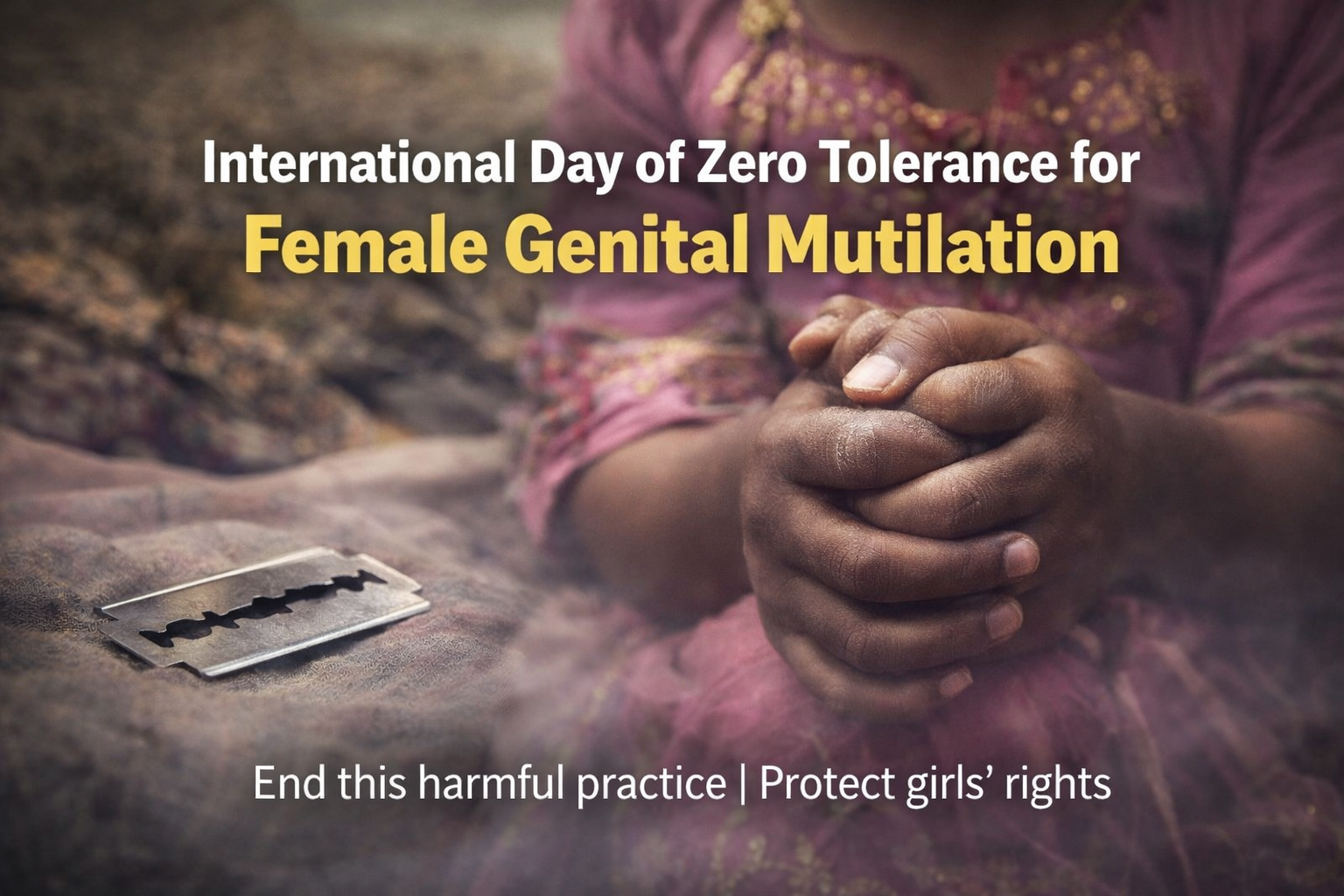
Governments, international organizations, and human rights advocates across the world marked the International Day of Zero Tolerance for Female Genital Mutilation (FGM) on Thursday, renewing urgent calls to eradicate a practice that continues to affect millions of girls and women globally.
Observed annually on February 6, the day—recognized by the United Nations—aims to raise awareness about the physical and psychological harm caused by FGM and to mobilize collective action to protect vulnerable communities.
A Practice Affecting Millions
According to UN agencies, more than 200 million girls and women alive today have undergone some form of FGM, primarily in parts of Africa, the Middle East, and Asia, as well as within migrant communities worldwide. The procedure, which involves altering or injuring female genital organs for non-medical reasons, is internationally recognized as a violation of human rights.
Health experts warn that FGM can lead to severe bleeding, infections, complications in childbirth, long-term psychological trauma, and in extreme cases, death.
“FGM is not a cultural necessity—it is a dangerous practice that denies girls their right to health, safety, and bodily autonomy,” a senior UN official said in a statement released to mark the day.
Global Campaigns and Government Action
Across continents, governments and civil society groups held conferences, school programs, and community dialogues aimed at changing social norms and empowering families to abandon the practice.
Several African nations highlighted progress made through education initiatives and legislation criminalizing FGM, while European countries emphasized protection programs for at-risk girls within diaspora communities.
In the Middle East and South Asia, advocacy organizations used digital campaigns and public forums to engage religious scholars, community elders, and youth leaders—groups seen as critical in shifting long-standing traditions.
The World Health Organization reiterated that ending FGM requires grass-roots engagement, better healthcare training, survivor support services, and stronger enforcement of existing laws.
Focus on Survivors and Prevention
This year’s global messaging also centered on survivor care, with charities urging increased funding for medical treatment, counseling, and legal assistance for women affected by the practice.
“Survivors need long-term support—not just emergency care,” said the director of a women’s rights NGO operating in East Africa. “But prevention remains the most powerful tool. Education changes everything.”
UNICEF stressed that keeping girls in school significantly lowers the risk of FGM, while economic empowerment programs for families and women have also shown promising results.
Challenges Remain
Despite growing international attention, activists warn that conflict, displacement, and poverty continue to place girls at heightened risk. In fragile regions, disrupted schooling and weak healthcare systems make it harder to monitor communities and protect children.
Population growth in countries where FGM is prevalent also means that, without faster progress, the absolute number of affected girls could rise over the coming decades.
A Call for Collective Responsibility
As commemorations concluded, global leaders emphasized that ending FGM is central to achieving broader development and gender-equality goals.
“This is not a problem any one country can solve alone,” the UN statement added. “Ending female genital mutilation requires sustained political will, community leadership, and international cooperation.” For advocates, the annual observance is both a reminder of the work ahead and a testament to the growing global movement determined to ensure that future generations of girls are free from the practice.


 By
By



 By
By