
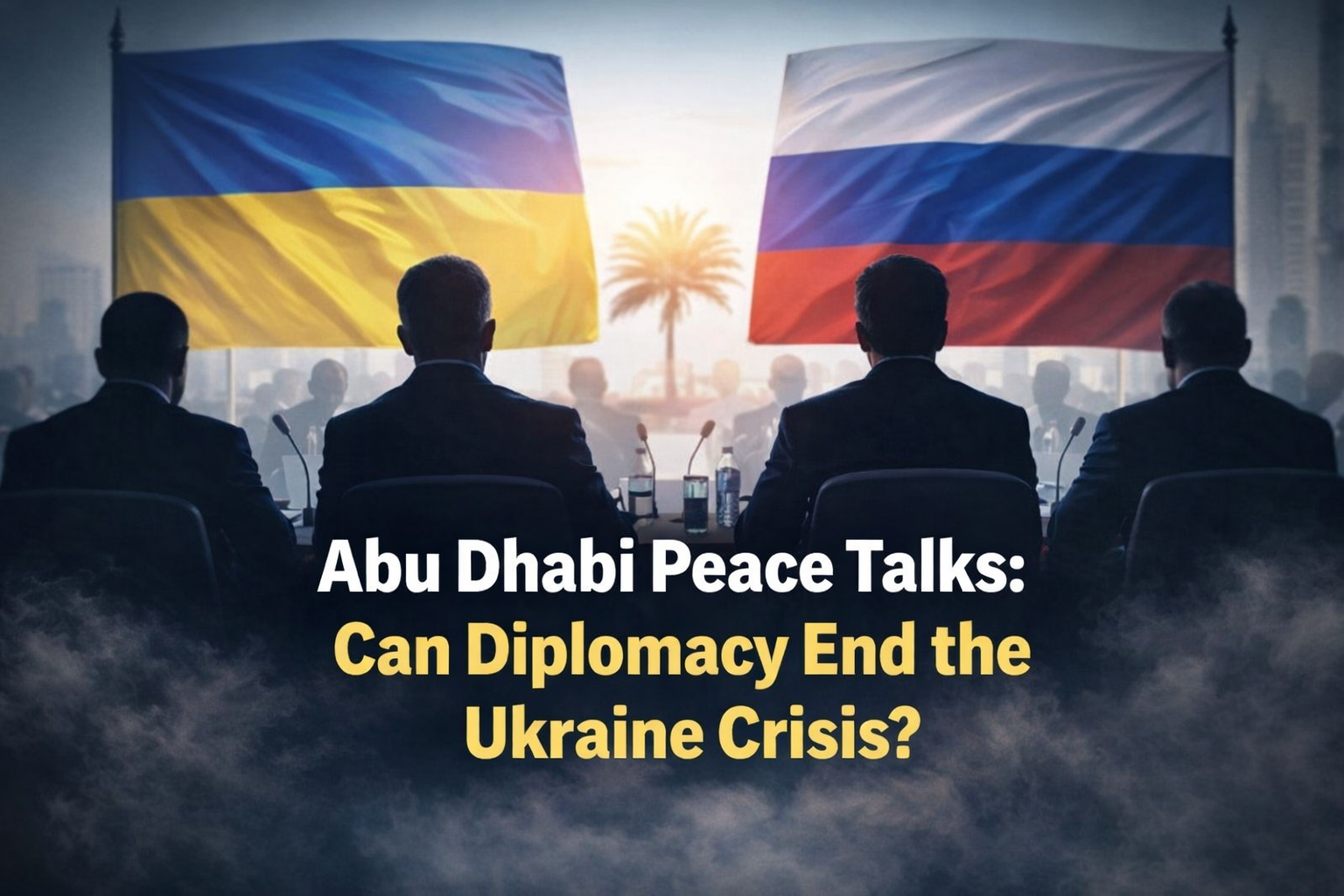

ABU DHABI, UAE — In a renewed effort to end the nearly four-year conflict between Ukraine and Russia, senior diplomats and negotiators from both sides convened in Abu Dhabi this week for a fresh round of peace talks. The discussions, hosted by the United Arab Emirates, mark one of the most significant recent attempts at diplomatic engagement since large-scale fighting resumed last year.
Representatives from Ukraine, Russia, the European Union, and several Western governments took part in the talks — signaling a tentative common interest in exploring potential pathways toward peace, even as disagreements over territory and security guarantees remain deeply entrenched.
Grounds for Diplomacy — and Roadblocks
The negotiations come after weeks of intense military strikes by Russian forces on Kyiv and other Ukrainian cities, prompting international calls for renewed diplomatic momentum. The Abu Dhabi talks focused on technical aspects of ceasefire terms, humanitarian access, prisoner exchanges, and mechanisms for sustained negotiations.
Ukrainian officials characterized the discussions as a “necessary step” toward reducing violence, though they acknowledged significant gaps with Russian counterparts over key issues such as sovereignty and territorial control.
A senior European envoy present at the talks told reporters that while neither side was expected to immediately agree on a comprehensive peace plan, the very act of engaging diplomatically could help lay the groundwork for future compromises.
Stance From Kyiv and Moscow
Ukraine’s delegation emphasized that any peace agreement must respect its internationally recognized borders and security needs. President Volodymyr Zelenskyy has repeatedly stated that Kyiv will not accept territorial concessions in exchange for a ceasefire.
Russia, however, has maintained its insistence on recognizing the status of territories it currently controls, complicating efforts to find common ground. Moscow’s representatives framed the talks as a potential avenue for reducing hostilities — but stopped short of indicating willingness to retreat from previously stated demands.
International Response and Broader Implications
Global reactions to the Abu Dhabi talks have been mixed. Western governments have broadly supported diplomatic engagement while underscoring that peace must be just and respect international law.
“The path to peace requires persistence, patience, and principle,” said a spokesperson for the European Union. “We continue to support efforts that can bring an end to this conflict and safeguard the security and sovereignty of nations.”
International observers note that while peace negotiations are essential, they often proceed slowly and can falter amid battlefield developments. With fighting ongoing in eastern and southern Ukraine, some analysts caution that diplomatic breakthroughs are still a long way off.
Why Abu Dhabi? Neutral Ground and Mediation Role
The United Arab Emirates has increasingly positioned itself as a neutral venue for global diplomatic engagement. By hosting the talks, Abu Dhabi aims to foster dialogue between conflicting parties outside traditional European or Western capitals — a role that could enhance its profile in international peacemaking efforts.
This approach follows similar initiatives in other geopolitical arenas, where third-party states offer neutral ground for discussions that might be politically sensitive or difficult to host within the zones of direct conflict.
Looking Ahead
Though there is no guarantee that the Abu Dhabi negotiations will lead to an immediate end to hostilities, many diplomats believe that continuing dialogue — however incremental — is preferable to stalemate.
As one senior negotiator put it, “A ceasefire without diplomacy is temporary; diplomacy without a ceasefire is impossible.”
For millions of Ukrainians and global observers alike, the world watches and waits — hopeful that sustained talks in neutral capitals like Abu Dhabi may eventually translate into peace on the ground.


 By
By



 By
By