
ABU DHABI — The United Arab Emirates announced on Monday that it will formally withdraw from both OPEC and OPEC+ effective May 1, 2026, bringing an abrupt end to nearly six decades of membership in the oil cartel and sending shockwaves through global energy markets already rattled by the ongoing Iran conflict.
The decision, which the UAE framed as a pivot toward national interest and independent production strategy, lands at a moment of extraordinary volatility. The Iran war has now entered its 60th day with the strategically vital Strait of Hormuz still closed to commercial shipping, choking off one of the world’s most critical oil transit corridors. Brent crude sits at roughly $111 per barrel while West Texas Intermediate hovers near the $100 mark — prices that have squeezed importing nations and enriched Gulf producers in nearly equal measure. The UAE, which accounted for approximately 17 percent of OPEC’s total oil revenue last year, was the cartel’s second-largest producer, and its departure strips the organization of both output capacity and geopolitical credibility at a time when neither can be spared.
| Parameter | Details |
|---|---|
| Country | United Arab Emirates |
| Effective Date | May 1, 2026 |
| OPEC Membership Duration | Nearly 60 years |
| Share of OPEC Revenue | ~17% (second-largest producer) |
| Brent Crude Price | ~$111/barrel |
| WTI Crude Price | ~$100/barrel |
| Iran War Duration | 60 days (Strait of Hormuz closed) |
Situational Breakdown
The UAE’s frustration with OPEC-imposed production quotas has been building for years. Abu Dhabi invested heavily in expanding its production capacity — estimated at over 4 million barrels per day — only to be constrained by cartel agreements that capped output well below that ceiling. With global demand surging and supply disrupted by the Hormuz closure, the economic incentive to break free became irresistible. The UAE said it was leaving to focus on its national interest and pursue an independent output strategy, according to Al Jazeera’s reporting. — Al Jazeera
The timing is no coincidence. With Iranian oil effectively off the market due to the ongoing conflict and the Hormuz blockade disrupting shipments from Iraq, Kuwait, and other Gulf producers, the UAE sees a window to flood willing buyers with crude at premium prices — without having to negotiate output ceilings with Riyadh. Analysts at major investment banks have warned that the move could trigger a domino effect, with other capacity-rich members like Iraq and Nigeria questioning whether OPEC membership still serves their interests. — CNBC
On the diplomatic front, the Iran war continues to cast a long shadow over every energy calculation. US Secretary of State Marco Rubio said Iran’s latest proposal is better than expected but stressed any deal must block Tehran’s path to a nuclear weapon, according to CNN. The prospect of a ceasefire — however remote — could reopen Hormuz and radically alter the supply picture, which makes the UAE’s bet on independence both bold and risky. — CNN
The OPEC Power Vacuum
For the better part of six decades, OPEC’s power rested on a simple premise: collective action by major producers could control global oil prices more effectively than any single nation acting alone. The UAE’s departure fundamentally challenges that premise. Losing 17 percent of the cartel’s revenue base — and one of its most technologically advanced producers — is not a flesh wound. It is a structural blow.
Saudi Arabia, OPEC’s de facto leader, now faces the unenviable task of maintaining production discipline among remaining members while its most capable Gulf ally pursues an every-barrel-for-itself strategy. Riyadh has long used its spare capacity as both a weapon and a stabilizer in oil markets. With the UAE now free to pump at will, that leverage diminishes considerably.
“The UAE said it was leaving to focus on its national interest and pursue an independent output strategy.”
The question now is whether other members follow Abu Dhabi’s lead. Iraq, which has repeatedly clashed with OPEC over quota compliance, could see the UAE’s exit as permission to prioritize its own reconstruction revenue. Nigeria and Angola, both of which have struggled to meet even their reduced quotas due to underinvestment, may calculate that the organizational framework offers them little benefit. OPEC’s ability to act as a unified cartel has never looked more fragile.
The Hormuz Factor
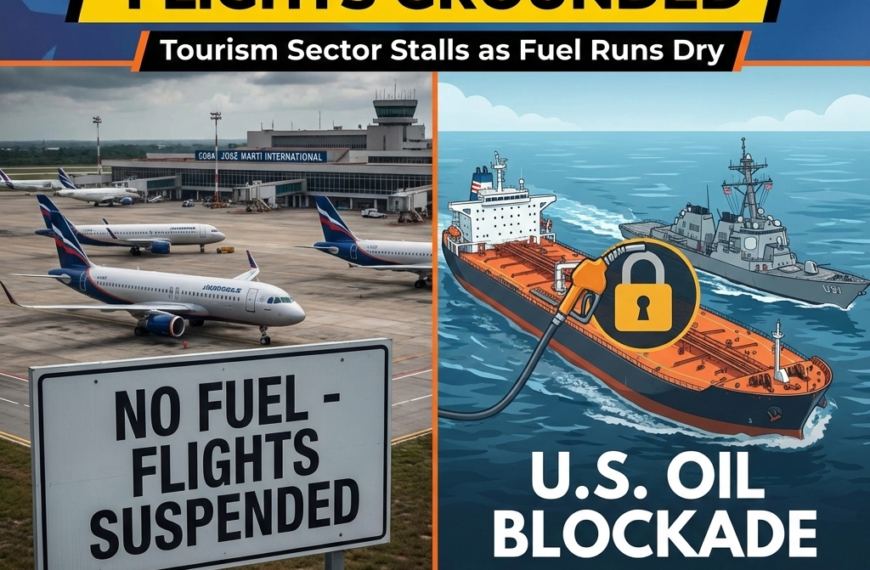
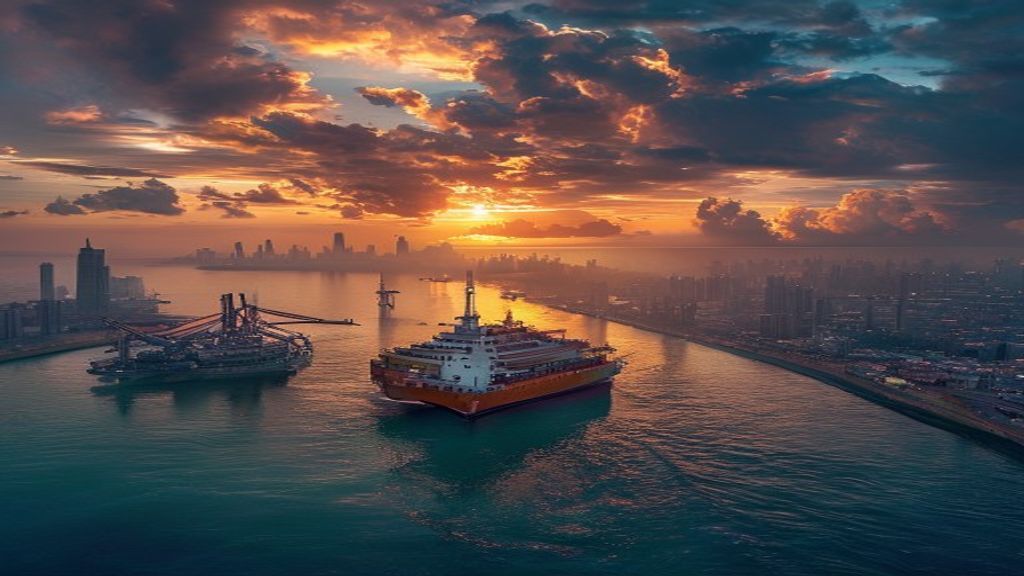
Nothing concentrates the minds of energy traders like a closed strait. The Strait of Hormuz, through which roughly 20 percent of the world’s oil passes daily, has been shuttered since the early days of the Iran conflict. The closure has rerouted tanker traffic, spiked insurance premiums, and created artificial scarcity that has pushed Brent to levels not seen since the 2022 energy crisis. As Reuters has reported, the disruption has affected not just oil but also liquefied natural gas shipments to Asia and Europe.
For the UAE, geography is destiny — and in this case, a competitive advantage. Abu Dhabi has invested in pipeline infrastructure that bypasses Hormuz entirely, routing crude to the port of Fujairah on the Gulf of Oman. This means the UAE can continue exporting even while its neighbors cannot. Outside OPEC, it can now sell every barrel that pipeline can carry without asking anyone’s permission.
The strategic calculus is clear: why share the windfall of a supply crisis with a cartel when you have the infrastructure to capture it alone?
Diplomatic Crosscurrents
The UAE’s exit does not happen in a geopolitical vacuum. Abu Dhabi has been carefully repositioning itself on the world stage — diversifying its economy, deepening ties with China and India, and pursuing a foreign policy that is increasingly independent of both Riyadh and Washington. The OPEC departure is the energy-policy expression of that broader strategic realignment.
“US Secretary of State Marco Rubio said Iran’s latest proposal is better than expected but stressed any deal must block Tehran’s path to a nuclear weapon.”
Washington’s reaction has been measured. The Biden-era policy of pressuring Gulf states to increase production has given way to a more transactional approach under the current administration. If the UAE pumps more oil outside OPEC, American consumers benefit from lower prices — or at least prices that might have been even higher. The diplomatic complication comes if Abu Dhabi’s independence emboldens it to cut deals with buyers that Washington would prefer to sanction. In a global entertainment landscape where even a Michael Jackson biopic can generate international controversy, the geopolitics of oil remain the ultimate blockbuster — one where every player is both protagonist and antagonist.
Market Implications
In the near term, the UAE’s exit injects additional uncertainty into markets that are already operating on frayed nerves. Traders must now model a world in which one of the Gulf’s largest producers operates without output constraints, potentially flooding the market the moment the Hormuz crisis resolves. That prospect could actually cap further price increases, as forward-looking markets begin to price in the supply surge that would follow a ceasefire.
However, if the Iran conflict drags on — and 60 days in, there is no clear end in sight — the UAE’s unfettered production could paradoxically stabilize markets by replacing some of the lost Iranian and Iraqi barrels. The net effect depends on how quickly Abu Dhabi can ramp up and whether other OPEC members retaliate by abandoning their own quotas in a race to the bottom.
🇵🇰 Pakistan Connection
For Pakistan, the UAE’s OPEC exit carries both immediate pain and longer-term promise. As a nation that imports the vast majority of its crude oil, Islamabad is acutely sensitive to the current price environment. With Brent above $111, Pakistan’s fuel import bill has ballooned, exacerbating an already precarious current account deficit and feeding inflation that has eroded purchasing power for millions. Every dollar increase in crude prices translates directly into higher petrol, diesel, and electricity costs across the country.
The silver lining, however distant, lies in the post-crisis scenario. Once the Strait of Hormuz reopens — whether through military resolution or diplomatic settlement — the UAE’s freedom to produce without OPEC constraints could push global oil prices significantly lower. An unconstrained UAE pumping at full capacity into a market where Iranian and Iraqi supply also returns could create a surplus that brings relief to import-dependent economies like Pakistan. For Islamabad’s economic planners, the UAE’s bold gambit may ultimately prove to be one of the more consequential energy developments in years.
BOLOTOSAI Assessment
The UAE’s withdrawal from OPEC is not merely an organizational reshuffle — it is a structural fracture in the architecture of global oil governance. Three outcomes now demand close attention.
First, watch for contagion. If Iraq or Nigeria signals even preliminary interest in leaving OPEC within the next six months, the cartel’s credibility as a price-setting mechanism effectively ends. Saudi Arabia will need to offer significant concessions — larger quotas, investment partnerships, or political cover — to keep wavering members in line.
Second, monitor the Hormuz timeline. The Iran war’s resolution is now the single most important variable in global energy markets. A ceasefire that reopens the strait would flood markets with supply at the exact moment the UAE begins producing without limits. The resulting price correction could be dramatic — potentially pushing Brent below $80 within weeks.
Third, track Abu Dhabi’s buyer diversification. If the UAE begins signing long-term supply contracts with China and India outside the traditional dollar-denominated framework, the implications extend far beyond oil markets into the foundational structures of global trade and finance. The UAE has not just left a cartel. It has declared that the future of energy belongs to the nimble, the independent, and the strategically unencumbered. Whether that bet pays off depends on what happens next in the waters of the Persian Gulf.

 By
By

 By
By