
ISLAMABAD — Historic face-to-face peace talks between the United States and Iran concluded in the Pakistani capital on Saturday without a ceasefire agreement, ending 21 hours of intense trilateral negotiations that had raised hopes of a diplomatic breakthrough in a conflict that has rattled global energy markets and destabilized the broader Middle East.
The Islamabad summit represented the highest-level direct engagement between Washington and Tehran since the 1979 Iranian Revolution — a diplomatic milestone nearly half a century in the making. US Vice President JD Vance led an unusually large American delegation of nearly 300 officials, while Iran’s team of approximately 70 negotiators was headed by Parliament Speaker Mohammad Bagher Ghalibaf and Foreign Minister Abbas Araghchi. Pakistan, serving as mediator, positioned itself at the epicenter of one of the most consequential diplomatic episodes of the decade.
The negotiations collapsed over two fundamental issues: Iran’s refusal to commit to abandoning its nuclear weapons ambitions, and an unresolved stalemate over control of the strategically vital Strait of Hormuz, through which roughly one-fifth of the world’s oil supply passes daily. The failure to reach agreement now raises urgent questions about the durability of an existing two-week ceasefire and the trajectory of the wider conflict.
| Parameter | Details |
|---|---|
| US Lead Negotiator | Vice President JD Vance (~300-member delegation) |
| Iran Lead Negotiators | Parliament Speaker Mohammad Bagher Ghalibaf, FM Abbas Araghchi (~70-member team) |
| Mediator | Pakistan (FM Ishaq Dar as key interlocutor) |
| Duration | 21 hours of continuous negotiations |
| Key Sticking Points | Iran’s nuclear program; Strait of Hormuz control |
| Ceasefire Status | Existing two-week ceasefire remains in effect (no extension guaranteed) |
| Outcome | No deal — Vance departed citing “final and best offer” |
Situational Breakdown
The talks unfolded over a grueling 21-hour marathon session inside a heavily secured diplomatic compound in Islamabad, with negotiators working through the night in what participants described as an atmosphere of cautious but serious engagement. The sheer scale of the American delegation — nearly 300 officials spanning the State Department, Pentagon, intelligence community, and energy sector — signaled that Washington had come prepared to negotiate across the full spectrum of issues dividing the two nations. Iran’s comparatively lean team of 70, however, arrived with what US officials privately characterized as rigid red lines. — Al Jazeera
The nuclear question proved to be the immovable obstacle. Washington demanded an explicit, verifiable commitment from Tehran that it would not pursue nuclear weapons — a demand that echoed the now-defunct 2015 Joint Comprehensive Plan of Action but with significantly tougher verification mechanisms. Iran’s negotiators reportedly refused to provide such assurances, framing their nuclear program as a sovereign right and pointing to what they described as America’s own record of withdrawing from international agreements. The second major impasse involved the Strait of Hormuz, the narrow waterway that connects the Persian Gulf to open ocean and serves as the world’s most important oil transit chokepoint. — CNN
Vice President Vance’s departure from Islamabad carried unmistakable finality. His characterization of the American proposal as a “final and best offer” left little diplomatic ambiguity, suggesting that Washington views the ball as squarely in Tehran’s court. Meanwhile, Pakistan’s Foreign Minister Ishaq Dar struck a markedly different tone, publicly urging both sides to preserve the fragile ceasefire and leave the door open for future engagement — a message calibrated to protect Islamabad’s hard-won role as an honest broker. — NPR
The Nuclear Impasse: A Familiar Wall
The collapse of negotiations over Iran’s nuclear ambitions carries an uncomfortable echo of more than two decades of failed diplomacy. Since Iran’s covert uranium enrichment program was first exposed in 2002, successive rounds of talks, sanctions, and agreements have all ultimately foundered on the same fundamental question: whether Tehran can be trusted to develop civilian nuclear energy without pursuing weapons capability.
Vance stated the US needed a firm commitment from Iran that it would not pursue nuclear weapons, and left saying he had presented a final and best offer.
The American insistence on a nuclear commitment reflects hard lessons from the 2015 nuclear deal, which the Trump administration withdrew from in 2018. That withdrawal — which Vance himself supported as a senator — destroyed whatever trust existed between the two capitals. For Iran’s negotiators, offering nuclear concessions to the same political movement that tore up the last agreement was a bridge too far, regardless of what was offered in return. The result is a paradox: the very history that makes a nuclear commitment essential also makes it nearly impossible to secure.
The Strait of Hormuz: Where Geopolitics Meets Geography
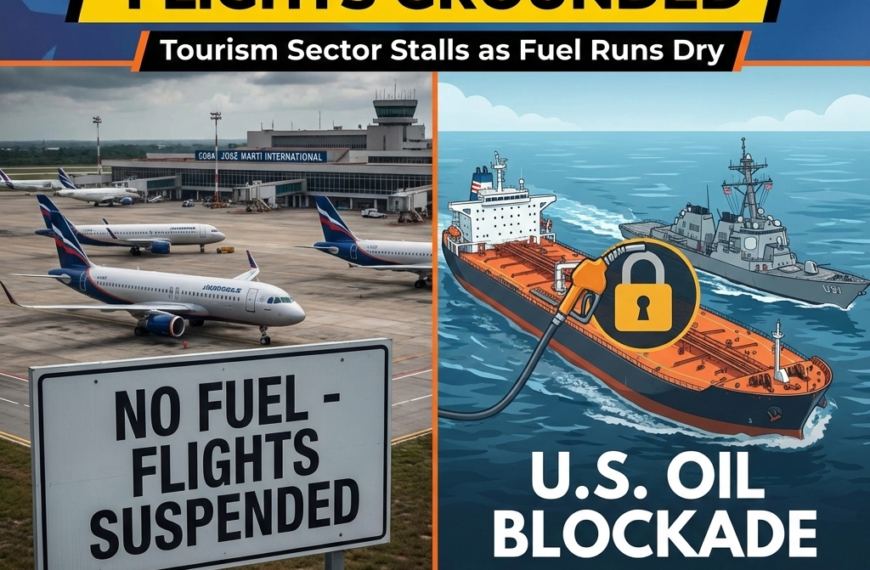
The second dealbreaker — control of the Strait of Hormuz — underscores the degree to which the US-Iran conflict is fundamentally an energy security crisis. The strait, barely 33 kilometers wide at its narrowest point, handles an estimated 20 percent of global petroleum trade. Iran’s geographic position gives it effective leverage over this chokepoint, a reality that Tehran has exploited through periodic threats to close the waterway during past confrontations.
For Washington, ensuring freedom of navigation through the strait is not merely a diplomatic preference but a core national security interest tied to the stability of global energy markets. For Tehran, the strait represents its most powerful asymmetric deterrent — a card it is deeply reluctant to surrender. Finding a formula that satisfies both sides on this issue may require creative security arrangements that neither delegation appeared ready to propose during the Islamabad round. As global events continue to unfold at a rapid pace — from Coachella 2026 kicking off with Bieber headlining Saturday night to high-stakes geopolitical summits — the world watches to see which developments will define the weeks ahead.
Vance’s Gambit: Strategy or Miscalculation?
The decision to frame America’s proposal as a “final and best offer” is a high-risk diplomatic strategy that could either compel Iranian concessions or accelerate the collapse of negotiations entirely. By publicly foreclosing further bargaining room, Vance has placed enormous pressure on Tehran to accept terms that its own domestic politics may make impossible — particularly given that Ghalibaf, as Parliament Speaker, answers to a political constituency deeply hostile to American demands.
Critics of the approach argue that effective diplomacy requires leaving adversaries a face-saving path to agreement, and that ultimatum-style tactics rarely work with the Islamic Republic, whose leadership has historically responded to public pressure by hardening its positions. Supporters counter that decades of patient diplomacy have yielded nothing durable, and that only a credible threat of escalation can change Tehran’s strategic calculus. The coming days will reveal which analysis proves correct.
The Ceasefire’s Fragile Future
Perhaps the most immediate concern following the breakdown is the fate of the existing two-week ceasefire that has provided a tenuous pause in hostilities. Pakistan’s Foreign Minister Dar was explicit in urging both sides to maintain the truce, recognizing that a resumption of fighting would not only devastate the region but also undermine Islamabad’s credibility as a mediating power.
Pakistan’s Foreign Minister Ishaq Dar urged both the US and Iran to maintain their ceasefire despite talks concluding without an agreement.
The ceasefire, however, was always understood to be a confidence-building measure tied to the negotiating process. With talks now stalled and Vance signaling that America has made its final offer, the diplomatic architecture supporting the truce has weakened considerably. Both sides retain the military capability to resume operations quickly, and hardliners in both Washington and Tehran may now argue that the failure of diplomacy validates a return to military options.
🇵🇰 Pakistan Connection
Pakistan’s role as host and mediator of the Islamabad talks represents a remarkable diplomatic achievement for a nation more commonly associated with its own internal security challenges and complex relationship with neighboring Afghanistan. By successfully convening the highest-level US-Iran engagement in nearly half a century, Islamabad has demonstrated strategic diplomatic capital that few observers would have predicted even a year ago. Foreign Minister Ishaq Dar’s performance as chief mediator — maintaining communication channels between two delegations that refused to negotiate directly for portions of the summit — has drawn praise from international commentators.
The implications for Pakistan’s foreign policy positioning are significant. Islamabad has traditionally walked a tightrope between its security partnership with the United States and its cultural, religious, and economic ties with Iran. By serving as an honest broker rather than aligning with either side, Pakistan has carved out a distinctive niche in Middle Eastern diplomacy that could yield long-term strategic dividends — including enhanced leverage in its own negotiations with Washington on trade, defense, and regional security arrangements. Regardless of the summit’s immediate outcome, Islamabad has ensured that future rounds of US-Iran diplomacy — if they occur — will almost certainly route through Pakistan.
BOLOTOSAI Assessment
The failure of the Islamabad talks does not necessarily mean the end of diplomacy, but it does mark the end of the current diplomatic chapter. Three scenarios now present themselves with varying degrees of probability.
First, the ceasefire holds but erodes. Without a formal agreement to anchor it, the truce becomes increasingly fragile, with minor provocations risking escalation. This is the most likely near-term outcome, as neither side benefits from being seen as the party that restarted hostilities. Second, back-channel negotiations resume quietly. Vance’s “final offer” language is designed for public consumption; behind the scenes, intermediaries — possibly including Oman, Qatar, or Pakistan itself — may continue to probe for areas of flexibility. The 21-hour duration of the Islamabad talks suggests that substantive engagement did occur, even if it fell short of an agreement. Third, escalation resumes. If hardliners in either capital interpret the breakdown as proof that diplomacy has been exhausted, military options return to the table — with the Strait of Hormuz and Iran’s nuclear infrastructure as likely flashpoints.
What to watch in the coming week: statements from Iran’s Supreme Leader Khamenei on whether Tehran views the American offer as a genuine basis for negotiation; oil market reactions, which will serve as a real-time barometer of investor confidence in the ceasefire; and any signals from Pakistan about convening a follow-up round. The world got 21 hours closer to a deal in Islamabad. Whether those 21 hours were a foundation or a footnote depends entirely on what happens next.

 By
By

 By
By