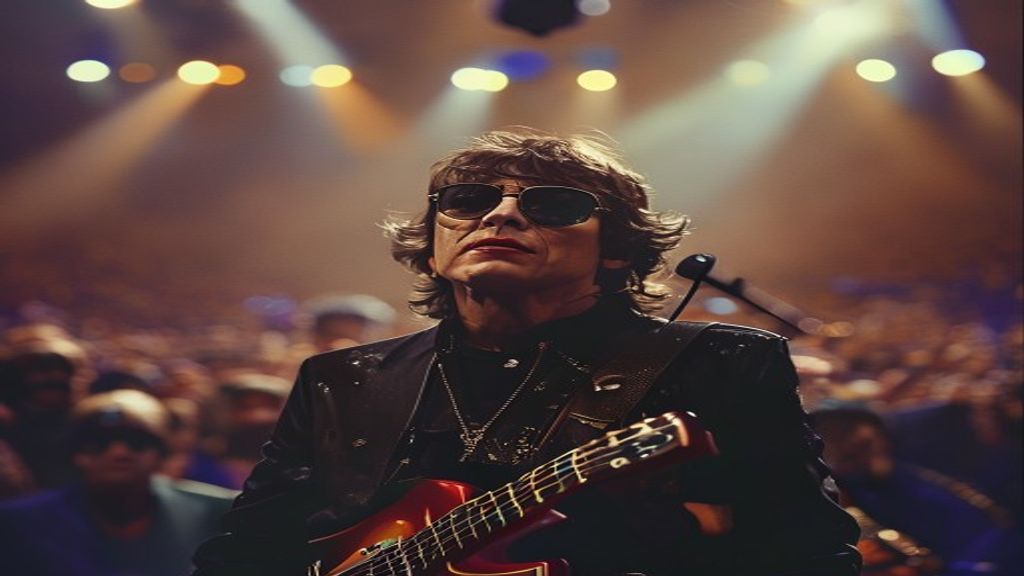

CUPERTINO, CALIFORNIA — Apple marked its golden jubilee with a spectacular Paul McCartney concert at Apple Park on Monday evening, bringing one of rock music’s greatest legends to the tech giant’s iconic campus as the company celebrated fifty years since Steve Jobs, Steve Wozniak, and Ronald Wayne founded it in a Los Altos garage on April 1, 1976.
The exclusive employee-only event at Apple Park’s rainbow stage capped weeks of anniversary celebrations that spanned the globe, from New York City to London. McCartney, now 83, delivered a performance that drew direct lines between Apple’s countercultural roots and the British Invasion that helped define a generation. The concert was the crown jewel of a carefully orchestrated series of events that underscored Apple’s cultural ambitions as much as its technological legacy, a fitting tribute to a company whose co-founder once dreamed of standing at the intersection of technology and the liberal arts.
The choice of McCartney was no accident. The Beatles and Apple have shared a complicated but deeply intertwined history — from the Beatles’ own Apple Records label to the landmark 2010 deal that finally brought the Fab Four’s catalogue to iTunes. For longtime Apple watchers, the symbolism was unmistakable: a living legend from the era that inspired Jobs performing at the campus Jobs designed but never saw completed.
| Parameter | Details |
|---|---|
| Event | Apple 50th Anniversary Concert |
| Headliner | Paul McCartney |
| Venue | Rainbow Stage, Apple Park, Cupertino, CA |
| Date | March 31, 2026 |
| Founding Date | April 1, 1976 (50 years ago) |
| Other Performers | Alicia Keys (NYC), Mumford & Sons (London) |
| Employee Gifts | 50th anniversary t-shirt, limited edition poster, enamel pin |
SITUATIONAL BREAKDOWN
The March 31 concert at Apple Park’s purpose-built rainbow stage — named for the classic six-colour Apple logo — was restricted exclusively to Apple employees, with no guests permitted entry. This decision reflected Apple’s characteristic desire for controlled, intimate experiences and ensured the event remained a genuine internal celebration rather than a public spectacle. Employees who attended described an electric atmosphere, with McCartney performing career-spanning hits that resonated across generations of Apple workers, from veterans who remembered the company’s near-death experience in the 1990s to recent hires who joined during the AI era. — MacRumors
The Cupertino concert was the culmination of a global celebration that had been building for weeks. Apple staged performances by Alicia Keys at its Grand Central Terminal store in New York City and Mumford & Sons at the Battersea Power Station location in London, transforming its retail spaces into concert venues. Each performance was carefully curated to reflect the cultural character of its host city while reinforcing Apple’s brand identity as a patron of the arts. The company also distributed commemorative gifts to employees worldwide — a 50th anniversary t-shirt, a limited edition poster, and an enamel pin — tangible tokens of a half-century of innovation. — 9to5Mac
The scale and ambition of the celebrations stood in marked contrast to Apple’s typically understated corporate culture. While the company has long hosted private events and product launches with musical performances, a multi-city, weeks-long anniversary tour represented a new level of internal festivity, suggesting that CEO Tim Cook wanted this milestone to resonate deeply with the company’s roughly 160,000 employees worldwide. — AppleInsider
The McCartney Connection: Music, Technology, and Legacy
The relationship between Paul McCartney and Apple is layered with decades of history that makes his selection as headliner profoundly fitting. The Beatles founded Apple Records in 1968, and the resulting trademark dispute with Apple Computer stretched across nearly three decades and multiple legal battles before being resolved in 2007. When the Beatles’ catalogue finally arrived on iTunes in November 2010, Steve Jobs personally announced it as a day he had been looking forward to for a long time.
“Let me just say he’s still going strong, was part of the British Invasion and [Steve] Jobs would’ve been ecstatic.” — Mark Gurman, Bloomberg
Gurman’s observation captures the poetic symmetry of the moment. Jobs was a lifelong Beatles devotee who named his company partly in homage to the band’s label, and who once said the Beatles were his model for how business should work — four people who balanced each other’s talents. McCartney performing at the campus Jobs conceived but never lived to see opened is the kind of narrative arc that transcends corporate event planning and enters the realm of cultural mythology.
Apple at 50: From Garage to Global Dominance
When Steve Jobs, Steve Wozniak, and the often-forgotten Ronald Wayne incorporated Apple Computer on April 1, 1976, the personal computer was still a hobbyist curiosity. Wayne famously sold his ten per cent stake for $800 just twelve days later — shares that would be worth roughly $300 billion today. From that inauspicious beginning in the Jobs family garage, Apple grew into the world’s most valuable public company, with a market capitalisation that has at times exceeded $3.5 trillion.
The fifty-year journey has been anything but linear. Apple’s near-bankruptcy in 1997, Jobs’s dramatic return, and the successive revolutions of the iMac, iPod, iPhone, and iPad each represented inflection points that reshaped not just the company but entire industries. Today, under Tim Cook’s stewardship, Apple faces a different set of challenges: antitrust scrutiny across multiple jurisdictions, the still-unfolding integration of artificial intelligence across its product line, and the perpetual question of what the next transformative product will be.
The anniversary celebrations, then, served a dual purpose: honouring where Apple has been while rallying employees around where it needs to go. In an era when Big Tech faces unprecedented public scepticism, cultivating fierce internal loyalty through events like these is not merely ceremonial — it is strategic.
Corporate Culture Wars: Why Internal Events Matter
Apple’s decision to make the McCartney concert employee-only — no guests, no media, no livestream — reflects a deliberate philosophy about corporate culture. In an age when every major tech company is competing for elite engineering and design talent, these exclusive experiences function as both reward and retention tool. Google famously offers lavish perks; Meta emphasises its campus amenities; Apple, characteristically, opts for moments of cultural significance that cannot be replicated or purchased elsewhere.
The commemorative gifts — a t-shirt, poster, and enamel pin — may seem modest by Silicon Valley standards, but they carry outsized symbolic weight. Apple’s internal culture has always prized belonging to something larger than oneself, and physical artefacts from a once-in-a-generation milestone become cherished tokens of identity. As one industry observer noted, the items will likely appear on eBay within weeks, but their true value is in the sense of shared experience they represent for those who were there. In a similar vein of organisations leveraging symbolic moments to reinforce identity, Pope Leo XIV recently used Palm Sunday to deliver a powerful message about institutional values and moral clarity.
The Global Concert Series: A New Playbook
The multi-city performance series — Keys in New York, Mumford & Sons in London, McCartney in Cupertino — suggests Apple may be developing a new playbook for major corporate milestones. By staging concerts at its flagship retail locations, the company blurred the line between store and cultural venue, reinforcing its longstanding positioning as a lifestyle brand rather than merely a technology manufacturer.
This approach carries risks. Exclusive, high-profile events can generate resentment among customers and the public who feel excluded. But Apple has long operated on the principle that aspiration drives desire, and a McCartney concert that ordinary people cannot attend only burnishes the mystique of working at Apple. It is a recruitment tool disguised as a party.
🇵🇰 WHAT THIS MEANS FOR PAKISTAN
Apple’s 50th anniversary carries specific implications for Pakistan’s rapidly growing technology sector. The company’s supply chain diversification strategy, which has accelerated in recent years as it seeks alternatives to over-reliance on Chinese manufacturing, has put South Asian economies including Vietnam, India, and potentially Pakistan on the radar for future production facilities. Pakistan’s young, tech-savvy population — with a median age of 22 and growing smartphone penetration — represents both a consumer market and a potential talent pipeline for Apple’s expanding operations in the region.
More immediately, Apple’s cultural positioning matters for Pakistan’s own burgeoning startup ecosystem. As Pakistani tech companies like Bazaar Technologies and Bykea scale domestically and seek international visibility, Apple’s model of intertwining technology with culture and the arts offers a template for brand-building that transcends pure functionality. The celebration also coincides with growing Pakistani interest in creative technology, digital arts, and AI — all domains where Apple’s next fifty years will be shaped.
Pakistan’s IT exports, which crossed $3.2 billion in the 2024-2025 fiscal year, increasingly depend on the Apple ecosystem. iOS app development, Swift programming, and Apple platform services employ thousands of Pakistani freelancers and agency workers. A thriving Apple means a thriving market for Pakistani tech talent, making the company’s continued innovation and cultural relevance a matter of direct economic interest.
BOLOTOSAI ASSESSMENT
Apple’s 50th anniversary celebration was a masterclass in corporate mythology-making, but the real story lies in what comes next. As the company enters its second half-century, it faces challenges that no amount of nostalgia can solve: the AI arms race with Google, Microsoft, and emerging Chinese competitors; regulatory pressure from the European Union’s Digital Markets Act and potential US antitrust action; and the still-unanswered question of whether Apple Vision Pro represents the next computing paradigm or a spectacular niche product.
Three outcomes to watch in the near term. First, expect Apple to leverage its 50th anniversary momentum to announce significant AI integration across its product line at WWDC in June — the celebration was as much about setting the emotional stage for the next era as honouring the last one. Second, the global concert series format may become a recurring feature of Apple’s cultural strategy, potentially extending to product launches and Apple Music exclusives. Third, watch for Tim Cook to use the anniversary year to make definitive moves on succession planning, a topic that has quietly intensified as he enters his fifteenth year as CEO.
McCartney’s performance at Apple Park was beautiful theatre — a living bridge between the analogue dreams of the 1960s and the digital reality of the 2020s. But theatre, however moving, is ultimately a prelude to action. The question for Apple at fifty is not whether it can honour its past, but whether it can invent a future worthy of it. The next twelve months will begin to answer that question.

 By
By



 By
By