

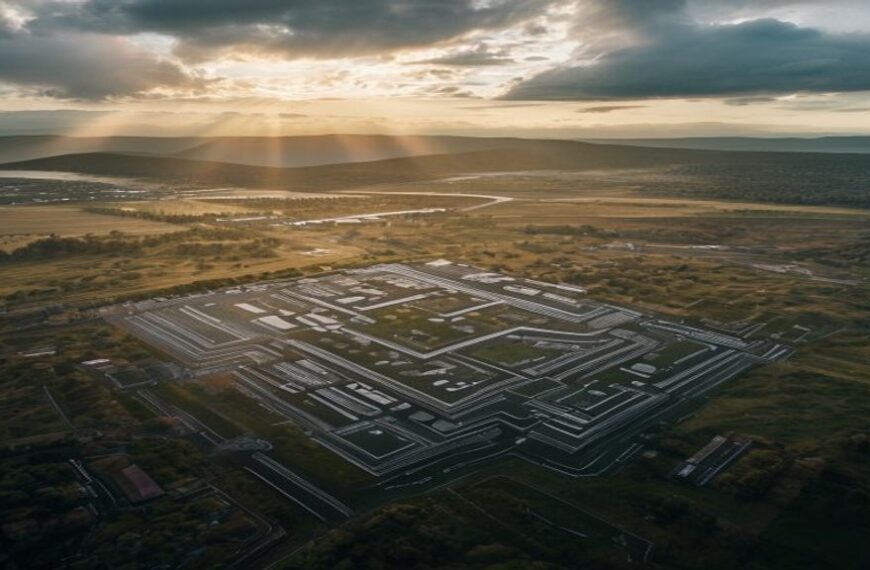
MEMPHIS, TENNESSEE — Anthropic has signed a landmark agreement with SpaceX to lease the entire compute capacity at the Colossus 1 data center in Memphis, Tennessee, gaining access to more than 220,000 Nvidia processors and over 300 megawatts of power in a deal that reshapes the artificial intelligence infrastructure landscape.
The agreement, announced on May 6, arrives at a critical juncture for Anthropic, whose Claude AI platform experienced explosive 80x growth during the first quarter of 2026. That surge overwhelmed existing infrastructure and triggered widespread reliability issues for Claude Pro and Max subscribers — frustrations that became a recurring theme across developer forums and social media. The partnership is made all the more remarkable by the involvement of Elon Musk, who merged SpaceX with his AI venture xAI earlier this year and had previously been one of Anthropic’s most vocal critics. Now, the two companies are not only sharing data center resources but actively exploring the development of gigawatts of orbital compute infrastructure in space.
| Parameter | Details |
|---|---|
| Deal Announced | May 6, 2026 |
| Facility | Colossus 1, Memphis, Tennessee |
| Compute Power | 300+ megawatts, 220,000+ Nvidia processors |
| Key Figures | Elon Musk (SpaceX/xAI), Dario Amodei (Anthropic CEO) |
| Anthropic Q1 2026 Growth | 80x increase in usage |
| Subscriber Impact | Doubled Claude Code rate limits, removed peak-hour caps |
| Future Exploration | Gigawatt-scale orbital compute infrastructure |
Situational Breakdown
The Colossus 1 facility in Memphis represents one of the largest single concentrations of AI compute power on Earth. Originally built to support xAI’s Grok models, the data center’s full lease to Anthropic signals a strategic pivot by Musk’s organization — one that prioritizes revenue generation and cross-industry collaboration over exclusive in-house use. For Anthropic, the deal instantly resolves what had become an existential infrastructure bottleneck, providing the raw computational muscle needed to serve a user base that expanded at a pace few in Silicon Valley anticipated. — CNBC
The timing is particularly significant given the reliability struggles that plagued Anthropic throughout early 2026. Claude Pro and Claude Max subscribers reported frequent outages, degraded response quality during peak hours, and throttled API access — issues that threatened to drive enterprise clients toward competitors like OpenAI and Google DeepMind. As part of the Colossus deal, Anthropic is immediately doubling Claude Code rate limits for paid plans, eliminating peak-hour usage caps, and significantly increasing API request volumes for its flagship Opus models. — Bloomberg
Perhaps most intriguing is the forward-looking component of the partnership: both companies confirmed they are exploring orbital compute infrastructure that could eventually deliver gigawatts of processing power from space. While such ambitions remain firmly in the conceptual stage, the combination of SpaceX’s launch capabilities and Anthropic’s AI expertise makes the prospect less fantastical than it might otherwise sound. — Axios
The Musk Factor: From Critic to Collaborator
No element of this partnership has generated more discussion than the dramatic reversal by Elon Musk. The billionaire entrepreneur had spent much of 2024 and 2025 publicly criticizing Anthropic’s safety claims, questioning the company’s governance structure, and positioning xAI’s Grok as a philosophically superior alternative to Claude. His merger of SpaceX with xAI earlier this year was widely interpreted as a consolidation play designed to challenge Anthropic and OpenAI simultaneously.
Musk said he spent significant time with senior Anthropic team members over the past week and came away impressed, a major shift from his earlier criticism.
Industry observers note that Musk’s pragmatism has historically overridden his public feuds when business logic demands it. The Colossus 1 facility, while powerful, requires a paying tenant to justify its enormous operating costs. Anthropic, flush with demand and desperate for compute, represents an ideal client. The arrangement allows Musk to monetize infrastructure that might otherwise sit underutilized while maintaining xAI’s ability to develop its own models on separate clusters.
What This Means for Claude Users
For the millions of developers, researchers, and professionals who rely on Claude daily, the immediate impact is tangible and welcome. The doubling of Claude Code rate limits addresses one of the most persistent complaints from the developer community, where coding assistants had become essential workflow tools only to be hamstrung by usage caps during critical work sessions.
Anthropic stated the new capacity will directly improve service for paid Claude Pro and Claude Max subscribers who faced disruptions during the company’s rapid growth phase.
The removal of peak-hour usage caps is equally significant. During Q1 2026, many enterprise users reported that Claude’s performance degraded dramatically during North American business hours — precisely when demand was highest. With 300 megawatts of additional capacity now online, Anthropic expects to eliminate these bottlenecks entirely. The increased API request volumes for Opus models will also be closely watched by the developer ecosystem, where Anthropic’s most capable models have been supply-constrained since their launch.
The AI Infrastructure Arms Race Intensifies
This deal underscores a broader truth about the current AI landscape: the companies that win the next phase of the AI race will be those that secure compute, not just those that build the best models. Anthropic’s 80x growth in a single quarter illustrates how quickly demand can outstrip even aggressive infrastructure planning. OpenAI, Google, and Meta have all announced massive data center expansions in recent months, but few have managed to secure operational capacity at the scale Anthropic just obtained in a single transaction.
The entertainment and technology worlds continue to see unprecedented deal-making across sectors — much like how Devil Wears Prada 2 shattered records with a $233M global opening, the Anthropic-SpaceX partnership represents a blockbuster moment that redefines what is possible when industry giants find common ground.
The orbital compute exploration adds another dimension entirely. While space-based data centers face enormous technical challenges — from cooling systems to latency management to launch economics — the potential advantages are compelling. Solar power in orbit is continuous and abundant, physical security is virtually guaranteed, and the scalability constraints of terrestrial real estate simply do not apply. If SpaceX can reduce launch costs further, the economics of orbital compute could become viable within a decade.
Competitive Implications and Industry Response
The deal sends a clear signal to Anthropic’s competitors. By locking up one of the world’s largest GPU clusters, Anthropic has effectively removed 300 megawatts of compute from the open market — capacity that rivals might have otherwise competed for. Bloomberg analysts noted that the arrangement gives Anthropic roughly 18 to 24 months of infrastructure runway, a significant buffer in an industry where six months of planning can feel like a lifetime.
For xAI and Grok, the implications are more nuanced. While leasing Colossus 1 generates substantial revenue, it also means Musk’s own AI models must rely on other facilities during the lease period. Whether this reflects confidence in xAI’s existing compute reserves or a strategic decision to prioritize cash flow over model training throughput remains an open question that Wall Street will be watching closely.
BolotosAI Assessment
This partnership marks a inflection point not just for Anthropic and SpaceX but for the entire AI infrastructure ecosystem. Three outcomes deserve close attention in the months ahead.
First, the reliability improvements for Claude users should become measurable within weeks. If Anthropic delivers on its promises — doubled rate limits, no peak-hour caps, expanded API access — it will cement Claude’s position as the preferred AI platform for professional developers and enterprise clients. Failure to deliver despite having the compute, however, would suggest deeper architectural issues that hardware alone cannot solve.
Second, the Musk-Anthropic relationship bears watching. Business partnerships between former adversaries are inherently fragile, and the AI industry’s competitive dynamics could easily strain this arrangement. Any deterioration in the relationship could leave Anthropic scrambling for alternative compute sources — a vulnerability that competitors will surely note.
Third, the orbital compute exploration, while speculative, represents exactly the kind of moonshot thinking that has historically defined breakthrough moments in technology. If SpaceX and Anthropic can demonstrate even a proof of concept for space-based AI processing, it would open an entirely new frontier for the industry. Watch for joint technical announcements before year-end as an indicator of whether this ambition is serious or merely aspirational.
For now, the message from Memphis is unmistakable: the AI compute shortage just got one major solution, and the industry’s most unlikely partnership is the one delivering it.


 By
By


 By
By