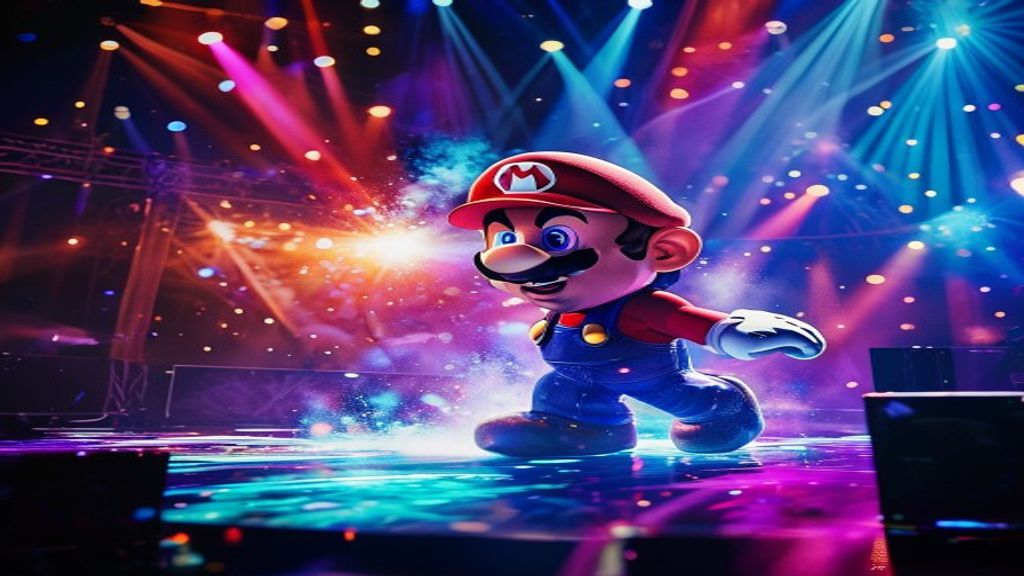

LOS ANGELES — The Super Mario Galaxy Movie has stormed into theaters with a thunderous $188–200 million projected five-day domestic opening, cementing itself as the biggest box office debut of 2026 and putting Universal Pictures and Illumination Entertainment firmly back atop Hollywood’s animation throne.
The animated sequel, which began its theatrical run on April 1, earned a staggering $34.5 million on opening day alone — the largest single-day gross of the year and the biggest opening day in the month of April on record. Globally, the Chris Pratt, Anya Taylor-Joy, and Jack Black-starring spectacle is tracking toward a mammoth $360–375 million in its first extended weekend, nearly matching the original 2023 film’s $375 million worldwide debut. The release has also pushed the 2026 cumulative domestic box office past the $2 billion milestone, a significant marker for an industry still navigating post-pandemic audience habits.
The original The Super Mario Bros. Movie was itself a cultural phenomenon, grossing over $1.36 billion worldwide and becoming the highest-grossing film based on a video game in history. Its sequel arrives with sky-high expectations and, by every early metric, is delivering on them. The franchise has proven that Nintendo’s beloved characters, when paired with Illumination’s animation prowess, are a genuine theatrical juggernaut capable of competing with Disney and Pixar at their peak.
| Parameter | Details |
|---|---|
| Film | The Super Mario Galaxy Movie |
| Studio / Animation | Universal Pictures / Illumination Entertainment |
| Release Date | April 1, 2026 |
| Opening Day Gross | $34.5 million (biggest opening day of 2026) |
| Projected 5-Day Domestic | $188–200 million |
| Projected Global Opening | $360–375 million |
| Lead Cast | Chris Pratt, Anya Taylor-Joy, Jack Black |
Situational Breakdown
The numbers tell a compelling story of a franchise that has not lost momentum between installments. The sequel is tracking neck-and-neck with the original Super Mario Bros. Movie, which opened to $204 million domestic over its first five days in April 2023. While the Galaxy sequel’s projections sit slightly below that benchmark, the margin is razor-thin, and final figures could close the gap as weekend matinees and family audiences fill seats through Sunday. — Deadline
What makes the opening even more impressive is the competitive landscape. The 2026 spring season has seen several high-profile releases, yet none have managed to generate the kind of cultural event status that the Mario franchise commands. The film’s $34.5 million opening day marks not just the year’s largest single-day gross but also the biggest opening day in the traditionally quieter month of April — a slot that Nintendo and Universal have now claimed as their own. — Variety
Perhaps most significantly for the broader industry, the film’s massive debut has pushed the 2026 cumulative domestic box office past the $2 billion threshold. In an era when theatrical exhibition remains under scrutiny from streaming-first strategies, a blockbuster of this magnitude validates the big-screen experience for family audiences and reinforces the theatrical model for animation studios. — Hollywood Reporter
A Franchise Built for Theatrical Dominance
The Super Mario Galaxy Movie’s success is not an accident — it is the product of a carefully cultivated partnership between Nintendo and Illumination that has redefined what video game adaptations can achieve at the box office. The first film shattered the long-standing curse of failed game-to-screen translations, and the sequel doubles down on the formula that worked: vibrant animation, accessible humor, beloved characters, and a runtime that respects family audiences.
“The sequel is tracking neck-and-neck with the original Super Mario Bros. Movie which opened to $204 million domestic over five days.”
The casting choices continue to resonate. Chris Pratt’s Mario, despite initial skepticism from fans, has become synonymous with the character for a generation of younger viewers. Anya Taylor-Joy’s Princess Peach brings a contemporary energy to the role, while Jack Black’s scene-stealing turn as Bowser remains the franchise’s secret weapon — a performance that bridges the gap between children’s entertainment and genuine comedic craft.
The Global Box Office Picture
Internationally, the film’s projected $360–375 million global opening weekend places it among the most successful animated debuts in cinema history. The Mario brand carries enormous recognition across virtually every market — from North America and Europe to East Asia and Latin America — giving the sequel a built-in audience that few animated properties outside of Disney can claim.
The near-parity with the original film’s $375 million global debut is particularly notable given that sequels in the animation space do not always maintain opening-weekend momentum. For every Frozen II that outperforms its predecessor, there are sequels that see significant drops. That the Galaxy installment is holding steady suggests the franchise has genuine staying power and that audiences are treating it as appointment viewing rather than a wait-for-streaming title.
“The film marks the biggest opening day in April and the year’s largest single-day gross.”
What This Means for Universal and Illumination
For Universal Pictures, the Super Mario Galaxy Movie represents more than a box office win — it is a strategic cornerstone. The studio’s partnership with Nintendo extends beyond film into theme parks, merchandise, and an expanding entertainment ecosystem that positions Universal as the primary home for Nintendo’s intellectual property outside of gaming.
Illumination, meanwhile, continues to prove that it can produce films with enormous commercial appeal at relatively modest production budgets compared to its competitors. The studio’s efficiency model — strong IP, lean production, global marketing — has made it one of the most profitable animation houses in the world, and the Mario franchise is its crown jewel alongside the Despicable Me universe.
The success also raises questions about what comes next for the franchise. Nintendo’s deep library of characters and worlds — from The Legend of Zelda to Metroid — represents a vast untapped reservoir of cinematic potential. While the entertainment landscape has been littered with the wreckage of overly ambitious cinematic universes, the considered, one-film-at-a-time approach taken by Nintendo and Illumination suggests a more sustainable path forward.
The Broader 2026 Box Office Landscape
The Super Mario Galaxy Movie’s debut arrives at a pivotal moment for the theatrical exhibition industry. After years of pandemic recovery and streaming disruption, 2026 was already shaping up as a strong year for cinemas, and the Mario sequel has now provided an unmistakable jolt of momentum. Pushing the cumulative domestic gross past $2 billion in early April is ahead of pace compared to recent years and signals robust audience demand for the right theatrical offerings.
The film’s performance also reinforces a growing trend: animation is no longer a secondary box office category. In an era where mid-budget dramas have migrated to streaming and adult-oriented blockbusters face increasingly unpredictable returns, family-friendly animated tentpoles have emerged as some of the most reliable theatrical draws in the business. While sports controversies dominate headlines in other entertainment spheres, the box office conversation in April 2026 belongs entirely to a plumber from the Mushroom Kingdom.
🇵🇰 Pakistan Connection
While the Super Mario Galaxy Movie is primarily a Western box office story, the franchise has a significant and growing following among Pakistani youth and gaming communities. Cinema chains across Pakistan’s major cities — including Cinepax, Nueplex, and Cue Cinema — rely heavily on Hollywood blockbusters to drive footfall, and the original Mario film performed strongly in the market. The sequel is expected to follow suit, particularly in Karachi, Lahore, and Islamabad, where multiplex culture continues to expand.
For Pakistan’s entertainment industry, Hollywood tentpoles like the Mario franchise serve a dual purpose: they fill seats during periods between local releases and expose younger audiences to theatrical moviegoing at a time when streaming penetration is accelerating in the country. The Mario brand’s deep roots in gaming culture give it particular resonance with Pakistan’s large and digitally connected youth demographic.
BolotoSAI Assessment
The Super Mario Galaxy Movie is virtually certain to cross the $1 billion global mark within its theatrical run, with the primary question being whether it can surpass the original’s $1.36 billion lifetime total. Early audience reception scores and the franchise’s built-in replay value among family audiences suggest strong legs through April and into May.
Three outcomes to watch in the coming weeks: First, whether the film can match or exceed the original’s $204 million five-day domestic benchmark once final figures are tallied — a result that would signal franchise growth rather than mere maintenance. Second, how international markets respond beyond the opening weekend, particularly in Japan, where Nintendo’s home audience will render its own verdict on the Hollywood interpretation of a beloved property. Third, how quickly Universal and Nintendo move to formalize the next phase of their partnership, whether that means a third Mario film, a Zelda adaptation, or an even more ambitious expansion of the Nintendo Cinematic Universe.
What is already beyond debate is this: the Super Mario franchise has fundamentally rewritten the rules for video game adaptations. Where Hollywood once treated gaming IP as a risky gamble, Nintendo and Illumination have built a model that rivals the Marvel playbook in its commercial reliability. The Galaxy sequel is not just a hit — it is confirmation that the Mario franchise is a permanent fixture atop the global entertainment hierarchy.

 By
By


 By
By