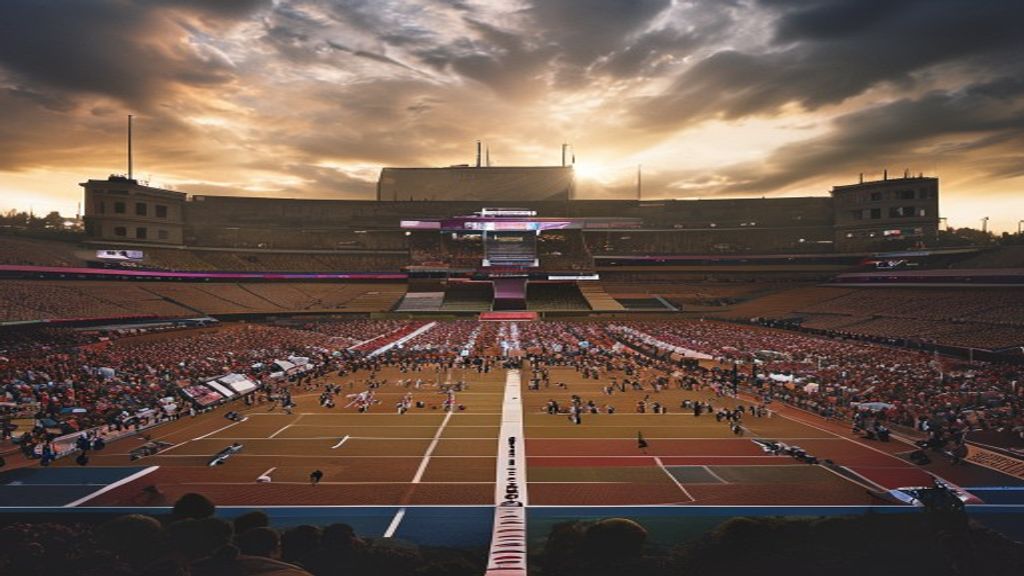

INDIANAPOLIS — The 2026 NCAA Men’s Basketball Final Four is set, with four powerhouse programs converging on Lucas Oil Stadium this Saturday for a pair of semifinal matchups that promise to deliver one of the most compelling championship weekends in recent tournament history.
No. 2 seed UConn will face No. 3 seed Illinois in the first semifinal at 6:09 PM ET, followed by a clash between No. 1 seeds Michigan and Arizona at 8:49 PM ET. The winners will meet Monday, April 6 for the national championship. For UConn, the stakes could not be higher — a victory would put head coach Dan Hurley’s squad one win away from a third national title in four years, a dynastic achievement not seen since John Wooden’s UCLA Bruins dominated the sport in the 1960s and early 1970s. For the other three programs, the Final Four itself represents a long-awaited return to college basketball’s grandest stage.
Both semifinal games will air on TBS and truTV, with millions of viewers expected to tune in for what has already been one of the most unpredictable March Madness tournaments in years. The bracket has delivered upsets, buzzer-beaters, and Cinderella runs, but the Final Four features four programs with deep championship pedigrees and passionate fan bases ready to descend on Indianapolis.
| Parameter | Details |
|---|---|
| Venue | Lucas Oil Stadium, Indianapolis, Indiana |
| Semifinal 1 | No. 2 UConn vs No. 3 Illinois — 6:09 PM ET, Saturday April 4 |
| Semifinal 2 | No. 1 Michigan vs No. 1 Arizona — 8:49 PM ET, Saturday April 4 |
| Championship Game | Monday, April 6, 2026 |
| Key Coach | Dan Hurley (UConn) — seeking third title in four years |
| Broadcast | TBS and truTV |
| Historic Returns | Arizona (first since 2001), Illinois (2005), Michigan (2018) |
Situational Breakdown
The first semifinal pits UConn’s championship machine against an Illinois program that has clawed its way back to national relevance under Brad Underwood. The Huskies, back-to-back champions in 2023 and 2024, have established themselves as the sport’s modern dynasty, and their tournament run this year has only reinforced the perception that Dan Hurley has built something truly special in Storrs. Illinois, meanwhile, arrives in Indianapolis with the hunger of a program that has waited more than two decades to return to this moment — their last Final Four appearance came in 2005, when the Fighting Illini lost to North Carolina in the championship game. — CBS Sports
The nightcap features a meeting of No. 1 seeds that many analysts predicted would be the de facto championship game when the bracket was revealed. Michigan, back in the Final Four for the first time since their 2018 run to the title game, brings a balanced roster and one of the deepest benches in the tournament. Arizona’s return is even more dramatic — a quarter-century absence from the Final Four that stretches back to the Lute Olson era and the program’s 2001 championship game loss to Duke. Both programs have navigated brutal paths through their respective regions. — ESPN
Indianapolis itself is no stranger to hosting college basketball’s biggest weekend. Lucas Oil Stadium, with its retractable roof and capacity exceeding 70,000, has become the sport’s unofficial home for marquee events. The city’s infrastructure, honed by years of hosting the Big Ten Tournament, the NFL Combine, and previous Final Fours, ensures a seamless experience for the tens of thousands of fans expected to fill downtown. — NCAA.com
UConn’s Dynasty Bid: History Within Reach
There is no way to discuss this Final Four without beginning with UConn and the weight of what Dan Hurley’s program is attempting. Three national championships in four years would place the Huskies alongside UCLA’s legendary run under Wooden as one of the greatest sustained stretches of dominance in college basketball history. No program since has managed to win three titles in a four-year window, and the pressure of that pursuit has followed UConn all season.
“We don’t hang banners for Final Fours at UConn. We hang National Championship banners.” — Dan Hurley, UConn Head Coach
Hurley’s quote captures the mentality that has defined this program’s culture. There is no celebration for merely arriving in Indianapolis. The standard at UConn is championships, and anything less is treated as unfinished business. That singular focus has proven to be both their greatest weapon and the source of immense pressure — every opponent knows they are playing against a program that expects to win it all, and that confidence can be both intimidating and galvanizing for the opposition.
Illinois and Michigan: Long Roads Back
For Illinois and Michigan, the Final Four represents the culmination of extensive rebuilding projects. Brad Underwood took over the Fighting Illini in 2017 and has methodically transformed the program from a Big Ten also-ran into a legitimate national contender. The path has not been linear — there were early-round exits, transfers that did not pan out, and seasons that ended in disappointment. But Underwood never wavered in his belief that Illinois belonged on this stage.
“I don’t want to sound arrogant. I’ve never doubted us getting to a Final Four would happen. I have thought we have had other teams capable. But I also know how doggone hard it is to do it.” — Brad Underwood, Illinois Head Coach
Michigan’s journey back to the Final Four comes eight years after their 2018 run under John Beilein, a period that included coaching changes and the turbulence of roster reconstruction in the transfer portal era. The Wolverines have leaned on a stifling defensive identity and an experienced backcourt that has proven capable of winning games in multiple ways — through half-court execution, transition offense, and suffocating pressure defense. Much like the great moments that unite a nation in collective anticipation — not unlike the excitement surrounding NASA’s Artemis II moon mission — Michigan’s return has energized a fan base that considers basketball excellence a birthright.
Arizona’s Quarter-Century Wait
Perhaps no team in this Final Four carries a longer burden of expectation than Arizona. The Wildcats last reached the Final Four in 2001, when they fell to Duke in a classic championship game. In the 25 years since, Arizona has produced NBA talent at an extraordinary rate but has consistently fallen short in March, undone by upsets, injuries, and the sheer difficulty of navigating a six-game tournament gauntlet. According to ESPN’s tournament coverage, Arizona’s path through this year’s bracket included victories over three teams seeded fifth or higher, a testament to the difficulty of their draw.
Head coach Tommy Lloyd, who built his reputation as Mark Few’s right hand at Gonzaga before taking over in Tucson, has brought a style of play that is both aesthetically pleasing and ruthlessly efficient. Arizona’s offense ranks among the nation’s best in points per possession, and their ability to stretch the floor with shooting while maintaining interior toughness has made them a nightmare matchup for opponents throughout the tournament. As NCAA.com’s official bracket tracker shows, both No. 1 seeds surviving to the Final Four is a rarity that underscores the quality of this year’s field.
🇵🇰 What This Means for Pakistan
While basketball remains a niche sport in Pakistan compared to cricket, the NCAA Tournament’s global reach continues to expand, and this Final Four carries particular relevance for the growing Pakistani-American diaspora. Universities like Michigan and Illinois are home to significant South Asian student populations, and Pakistani-American alumni networks have become increasingly vocal in their support during March Madness. The tournament serves as a cultural bridge for many Pakistani-American families, blending the communal sports-watching traditions familiar from cricket culture with the intensity of American college athletics.
From a broader sports development perspective, Pakistan’s basketball federation has been working to grow the sport domestically, and high-profile events like the Final Four provide valuable exposure. The NCAA’s international broadcasting deals now reach over 200 countries, including Pakistan, where streaming platforms have made it easier than ever for fans to follow the tournament. Young Pakistani athletes who might once have focused exclusively on cricket are increasingly drawn to basketball, inspired by the global spectacle of March Madness and the scholarship opportunities that American universities offer to international players.
Additionally, the economic model of American college athletics — with its massive television deals, sponsorship revenue, and Name, Image, and Likeness (NIL) frameworks — offers lessons for Pakistan’s own evolving sports economy, particularly as the Pakistan Super League and other domestic competitions seek to modernize their commercial structures.
BolotosAI Assessment
This Final Four is poised to deliver one of the most compelling championship weekends in recent memory, and the outcomes will reverberate well beyond Monday night’s title game. Three scenarios bear watching closely.
First, if UConn wins the championship, the conversation shifts from dynasty to all-time greatness. Dan Hurley would enter a coaching pantheon occupied by a handful of names, and the implications for recruiting, NIL, and the future balance of power in college basketball would be profound. Programs already struggling to compete with the Huskies would face an even steeper climb. Second, a championship by any of the other three teams would represent a dramatic narrative — Illinois breaking a 21-year drought, Michigan reclaiming its place among the sport’s elite, or Arizona ending a quarter-century of Final Four frustration. Each outcome would reshape the coaching landscape and influence transfer portal decisions for years to come.
Third, regardless of who wins, this Final Four reinforces that the current era of college basketball — defined by the transfer portal, NIL money, and conference realignment — has not diminished the tournament’s ability to produce transcendent moments. The four programs in Indianapolis represent a blend of traditional powers and resurgent programs, a reminder that March Madness remains the most democratic and unpredictable championship in American sports. Watch for the coaching chess match between Hurley and Underwood in the early game, and for Arizona’s offensive firepower to be tested by Michigan’s defensive identity in the nightcap. By Monday night, one program will have completed a journey that began with preseason workouts last September and ended with confetti falling in Indianapolis.

 By
By

 By
By