


PARIS — French artificial intelligence startup Mistral AI has secured $830 million in its first-ever debt financing round, earmarking the capital to construct a massive data center near Paris that will house 13,800 Nvidia GB300 GPUs and signal Europe’s most aggressive bid yet to compete with American AI giants on compute infrastructure.
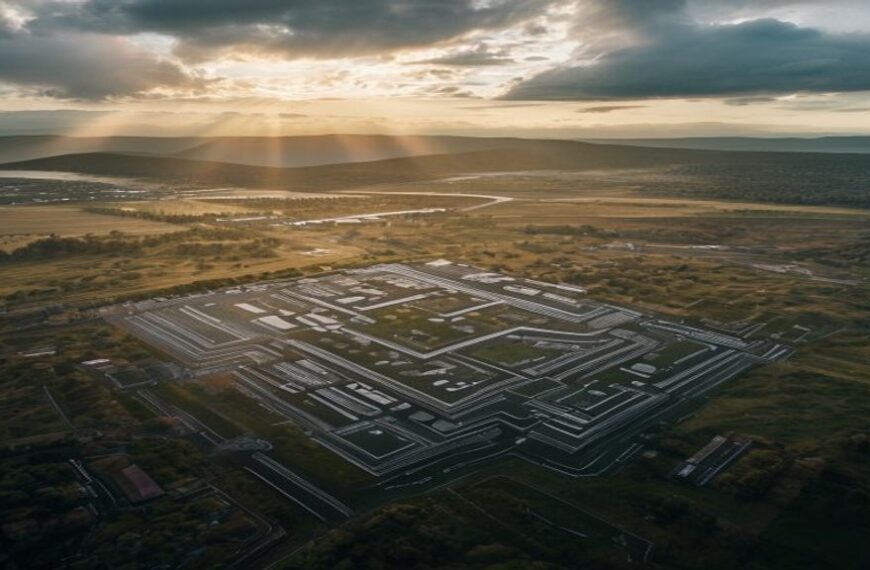
The deal, backed by seven major financial institutions including BNP Paribas, HSBC, and France’s public investment bank Bpifrance, represents a pivotal moment for the European AI ecosystem. While American firms like OpenAI, Google, and Meta have poured tens of billions into data center buildouts across the United States, Mistral’s financing marks the largest single debt-funded AI infrastructure commitment by a European startup. The facility, to be located in Bruyères-le-Châtel on the southern outskirts of Paris, is expected to come online during the second quarter of 2026 with an initial capacity of 44 megawatts. The move comes as governments across Europe scramble to ensure the continent does not fall irreversibly behind in the global AI compute race.
| Parameter | Details |
|---|---|
| Financing Amount | $830 million (debt financing) |
| Lead Banks | BNP Paribas, HSBC, Bpifrance (7 total) |
| Facility Location | Bruyères-le-Châtel, near Paris, France |
| GPU Hardware | 13,800 Nvidia GB300 GPUs |
| Power Capacity | 44 MW (Paris); 200 MW target across Europe by end of 2027 |
| Expected Go-Live | Q2 2026 |
| Sweden Expansion | 1.2 billion euro data center announced February 2026 |
SITUATIONAL BREAKDOWN
Mistral AI, founded in 2023 by former researchers from Google DeepMind and Meta, has rapidly positioned itself as Europe’s leading challenger in the foundation model space. The company’s decision to pursue debt financing rather than additional equity rounds reflects both its maturing financial profile and a strategic desire to avoid further dilution of ownership at a time when its valuation has soared past $6 billion. By structuring the data center investment as debt, Mistral retains full control over the asset while leveraging favorable interest rate environments to fund physical infrastructure that will underpin its model training and inference capabilities for years. — CNBC
The choice of Bruyères-le-Châtel is no accident. The commune, located approximately 30 kilometers south of central Paris, sits within a zone that French authorities have been quietly developing as a technology corridor, with access to high-capacity power grid connections and fiber-optic trunk lines. The 44-megawatt initial capacity of the facility places it among the largest single-site AI compute installations in Europe, though still modest compared to the multi-hundred-megawatt campuses being constructed by hyperscalers in the United States and the Gulf states. Mistral’s broader ambition to reach 200 MW of total European compute capacity by the end of 2027 suggests the Paris site is merely the first node in a continent-spanning infrastructure network. — TechCrunch
The involvement of Bpifrance, the French state’s investment arm, signals that the Macron government views Mistral’s infrastructure buildout as a matter of national strategic interest. France has increasingly positioned itself as the EU’s AI champion, with President Emmanuel Macron hosting multiple AI summits and lobbying for regulatory frameworks that protect European competitiveness. Bpifrance’s participation in the lending syndicate effectively provides a sovereign backstop to the deal, reducing risk for the private banks involved and underscoring the extent to which AI infrastructure has become a matter of industrial policy rather than mere venture capital speculation. — Bloomberg
Europe’s Compute Deficit and the Race to Close It
The scale of Mistral’s investment must be understood against the backdrop of a yawning compute gap between Europe and the United States. American AI companies collectively control an estimated 80 percent of the world’s advanced AI training capacity, with facilities concentrated in Virginia, Texas, Iowa, and the Pacific Northwest. OpenAI’s Stargate project alone represents a multi-billion-dollar investment in compute infrastructure, and the company’s leadership has publicly discussed the strategic calculus behind site selection.
“Our flagship Stargate site is one of the largest AI data center campuses in the United States. We considered expanding it further, but ultimately chose to put that additional capacity in other locations.”
— Sachin Katti, OpenAI Head of Compute Infrastructure
Katti’s remarks highlight a critical dynamic: even American AI leaders are diversifying their geographic footprint, driven by power grid constraints, regulatory diversity, and geopolitical hedging. For Mistral, building sovereign compute capacity in France and Sweden is not merely a business decision — it is an existential one. Without domestic infrastructure, European AI companies remain dependent on American cloud providers for training runs, exposing them to pricing power, export controls, and the strategic priorities of foreign firms. As major defense and technology investments surge globally — much like Saronic’s recent $1.75 billion raise to scale AI-powered autonomous naval systems — the message is clear: nations and companies that control their own AI infrastructure hold decisive advantages.
The Nvidia Dependency Question
Mistral’s decision to equip the Paris facility with 13,800 Nvidia GB300 GPUs places it squarely within Nvidia’s ecosystem — a position shared by virtually every serious AI player globally. The GB300, part of Nvidia’s Blackwell Ultra architecture, represents the cutting edge of AI accelerator technology, offering significant improvements in training throughput and energy efficiency over previous generations. However, the concentration of the entire AI industry on a single hardware vendor has raised concerns among analysts tracking AI supply chain risks.
For Mistral, the Nvidia dependency creates both opportunity and vulnerability. On the opportunity side, the GB300’s performance characteristics will allow Mistral to train larger and more capable models than its current infrastructure permits, potentially closing the gap with American frontier labs. On the vulnerability side, any disruption to Nvidia’s supply chain — whether from geopolitical tensions affecting TSMC’s fabrication facilities in Taiwan or from U.S. export control escalations — could delay or compromise Mistral’s buildout timeline. The company has not publicly discussed contingency plans for alternative hardware suppliers, though European efforts to develop domestic AI chip capabilities, including projects backed by the EU Chips Act, remain years from producing competitive alternatives.
The Debt Financing Model: A New Playbook for AI Startups
Mistral’s use of debt rather than equity to fund its data center represents an emerging trend in AI company financing. Traditionally, startups in the AI space have relied on venture capital and strategic investment rounds to fund both research and infrastructure. However, as the cost of AI compute infrastructure has escalated into the billions, equity financing alone has become insufficient — or at least, undesirable from a founder’s perspective due to the dilutive impact on ownership stakes.
Debt financing for data centers is well-established among hyperscalers like Amazon, Microsoft, and Google, which routinely issue bonds and secure credit facilities to fund infrastructure expansion. For a startup like Mistral to access similar instruments signals that the financial markets have begun to view frontier AI companies as creditworthy infrastructure operators rather than speculative technology bets. The participation of blue-chip banks like BNP Paribas and HSBC in the syndicate reinforces this perception. If Mistral’s model proves successful, it could open the door for other European AI companies to fund infrastructure buildouts without surrendering equity to American or Gulf sovereign investors.
Sweden, Sovereignty, and the 200 MW Vision
The Paris data center does not exist in isolation. In February 2026, Mistral announced a 1.2-billion-euro plan to build a data center in Sweden, drawn by the Scandinavian nation’s abundant hydroelectric power, cool climate, and favorable regulatory environment. Together, the Paris and Sweden facilities form the backbone of Mistral’s ambition to command 200 megawatts of compute capacity across Europe by the end of 2027 — a figure that, while still dwarfed by American hyperscalers, would represent a transformative increase in Europe’s sovereign AI compute capability.
The geographic diversification also serves a risk management function. By distributing compute across France and Sweden, Mistral reduces its exposure to any single power grid, regulatory jurisdiction, or natural disaster scenario. This mirrors the approach taken by global cloud providers, which distribute workloads across multiple availability zones to ensure resilience. For a company whose models are increasingly being adopted by European enterprises and government agencies, the ability to guarantee data residency within the EU — a key requirement under GDPR and emerging AI regulations — is a significant competitive differentiator against American cloud-hosted alternatives.
🇵🇰 WHAT THIS MEANS FOR PAKISTAN
Pakistan’s nascent artificial intelligence ecosystem should pay close attention to Mistral’s infrastructure strategy. Islamabad has repeatedly articulated ambitions to develop domestic AI capabilities, yet the country lacks any significant GPU compute infrastructure. Pakistani AI researchers and startups currently rely almost entirely on American cloud providers — primarily AWS, Google Cloud, and Azure — for training and inference workloads, exposing them to dollar-denominated pricing, latency penalties, and the strategic priorities of foreign corporations. Mistral’s demonstration that a non-American entity can build sovereign compute infrastructure through creative financing should serve as both inspiration and a wake-up call.
The debt financing model pioneered by Mistral could be particularly instructive for Pakistan. With international development banks, Gulf sovereign wealth funds, and Chinese technology investors all active in the region, Pakistan could theoretically structure similar debt-backed infrastructure deals to build modest but strategically significant AI compute facilities. The key constraint is not capital alone but power availability — Pakistan’s chronic energy shortfalls make the 44 MW required for Mistral’s Paris facility a non-trivial challenge. However, special economic zones with dedicated power infrastructure, such as those being developed under CPEC, could provide viable sites.
Furthermore, Mistral’s emphasis on data sovereignty resonates with Pakistan’s own regulatory trajectory. The country’s draft data protection legislation, modeled in part on GDPR, will eventually require certain categories of sensitive data to be processed domestically. Without local AI compute infrastructure, compliance with such requirements will be impossible for Pakistani organizations seeking to deploy advanced AI systems. The lesson from Mistral is unambiguous: sovereign AI requires sovereign compute, and the time to begin building is now.
BOLOTOSAI ASSESSMENT
Mistral’s $830 million debt deal is more than a financing event — it is a structural inflection point for European AI. Three outcomes bear watching in the months ahead.
First, execution risk on the Paris facility is real but manageable. Q2 2026 is an aggressive timeline, and any delays in Nvidia GPU delivery, power grid connection, or construction could push the go-live date into the second half of the year. Investors and competitors will be watching closely for on-time delivery as a signal of Mistral’s operational maturity. Second, the success or failure of the debt model will shape how the next generation of European AI companies finances growth. If Mistral demonstrates that infrastructure debt can be serviced through model licensing and enterprise API revenue, expect a wave of similar deals across the continent. If not, it will reinforce the narrative that only equity-rich American and Gulf-backed companies can play the infrastructure game. Third, the geopolitical implications of European sovereign compute are profound. As AI becomes embedded in defense, healthcare, finance, and government services, the question of who controls the physical infrastructure underpinning these systems becomes a matter of national security.
Mistral is betting that Europe’s AI future cannot be rented from American hyperscalers — it must be built on European soil, with European capital, under European control. The next twelve months will determine whether that bet pays off.


 By
By


 By
By