
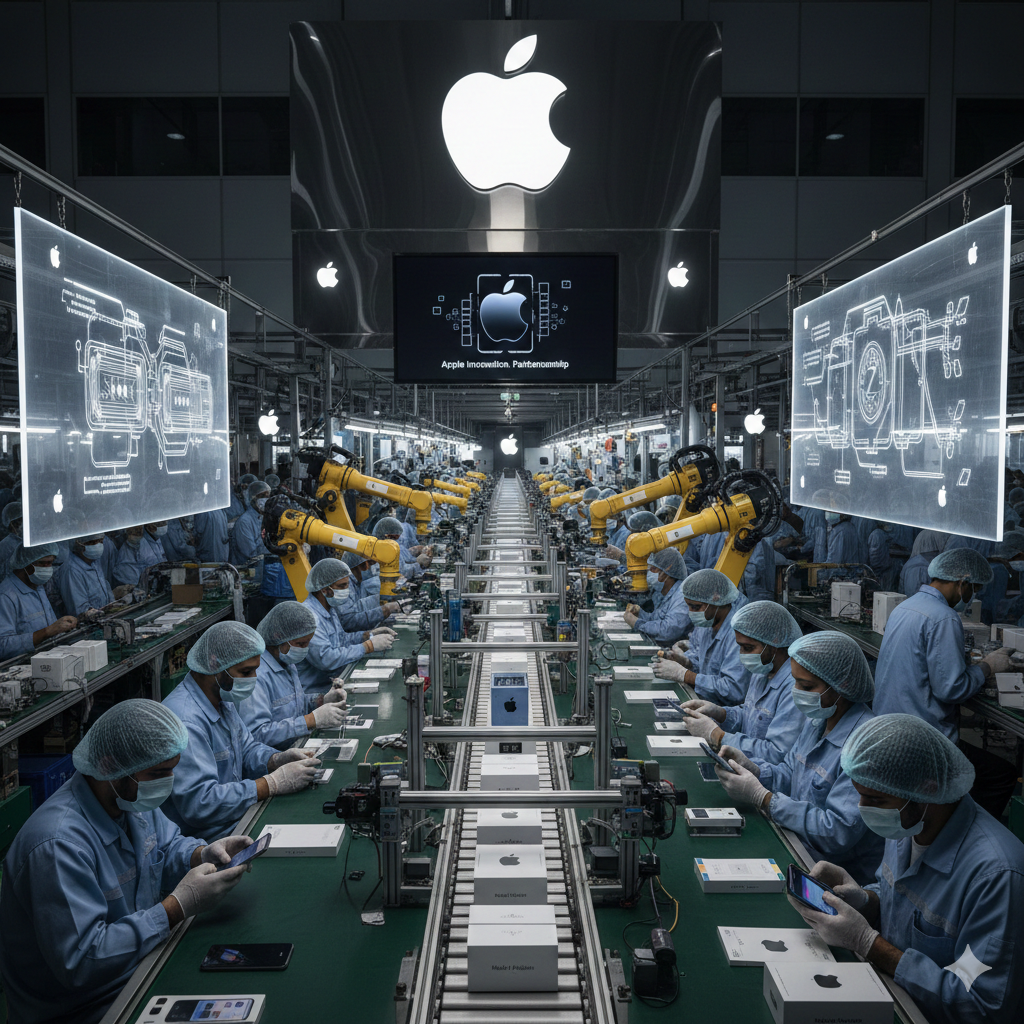

ISLAMABAD– Over the past 48 hours, Pakistani social media and news channels have been buzzing with a singular, electrifying headline: Apple is coming to Pakistan. The news, which sent ripples of excitement through the tech community and the stock market, suggests that the world’s most valuable company is finally ready to establish manufacturing facilities in the country.
But as the dust settles on the initial euphoria, a critical question emerges: Is this a done deal, a memorandum of understanding (MoU), or simply a speculative bubble? Furthermore, if Apple is indeed interested, what concessions has the Pakistani government been asked to make, and what does the roadmap for actual production look like?
The Status: Planning, Not Production
Contrary to the viral headlines suggesting that Apple plants are about to break ground immediately, sources within the Ministry of Information Technology and the Pakistan Telecommunication Authority (PTA) indicate that the situation is currently in the very early stages of exploratory talks.
“There has been no official signing ceremony. There is no press release from Apple’s Cupertino headquarters,” a senior official at the Ministry of Industries and Production told reporters, speaking on condition of anonymity. “What we have is a feasibility study and a series of high-level meetings facilitated by the Special Investment Facilitation Council (SIFC). The interest is real, but the factory is not.”
The current status is best described as a “courtship phase.” Apple, through its global manufacturing partners (primarily based in China and Vietnam), has expressed a willingness to assess Pakistan’s viability as a potential assembly hub. However, the company is known for its meticulous supply chain management and rarely jumps into new territories without stringent conditions being met.
The Quid Pro Quo: What Apple is Asking For
If Pakistan wants the iconic iPhone to be assembled—and eventually manufactured—within its borders, the price of admission is steep. According to documents reviewed by this correspondent and briefings given to the Economic Coordination Committee (ECC), Apple’s representatives (via vendor partners) have reportedly sought the following assurances from Islamabad:
- A Dedicated Economic Zone: Demand for a specialized, high-security industrial zone with “plug-and-play” infrastructure, ensuring uninterrupted power supply and high-speed data connectivity, specifically tailored for electronics manufacturing.
- Tax Holidays and Duty Exemptions: Requests for a 10-to-15-year tax holiday on corporate income and complete exemption from customs duties on the import of machinery and raw materials required for assembly.
- Labor Policy Flexibility: Assurance of flexibility in local labor laws to allow for shift management and production timelines that match Apple’s global just-in-time manufacturing model.
- Currency Stability Guarantees: Perhaps the most critical demand—a mechanism to ensure the repatriation of profits without the delays and dollar liquidity crunches that have plagued other foreign investors in Pakistan recently.
When asked if these demands are being met, an official at the Board of Investment (BoI) stated, “We are working on a customised package. The SIFC is committed to removing all hurdles. But these things take time; we have to protect our own revenue stream as well.”
The Roadmap: Refurbished First, Manufacturing Later
Even if the talks succeed tomorrow, Pakistanis should not expect brand-new iPhone 16 models rolling off a local assembly line this year.
Industry experts and historical precedent suggest a phased approach, similar to Apple’s entry strategy in India nearly seven years ago.
Phase 1: Refurbished and Assembly (The Immediate Future)
The most likely immediate outcome is the establishment of a facility for refurbishing old phones or assembling older generation models.
“Apple will never start with a brand-new plant for the latest model in a new market,” explained tech analyst Kamal Ahmed. “The risk is too high. Initially, they will likely partner with a vendor to set up a plant that takes semi-knocked down (SKD) kits—essentially, pre-assembled components—and screws them together. This tests the logistics, the labor, and the regulatory environment.”
In this phase, “assembled in Pakistan” would be more accurate than “made in Pakistan,” and it would likely apply to older, more affordable SE models or previous generations to test market appetite.
Phase 2: Full-Scale Manufacturing (The Long Game)
Full-fledged manufacturing—where components are actually sourced and fabricated locally—is a distant dream contingent on the success of Phase 1.
“If the feasibility works, if the vendor ecosystem develops (battery suppliers, charger suppliers, casing manufacturers), and if the government maintains the policy consistency for 5-7 years, then Apple might consider a full manufacturing plant,” Ahmed added. “We are looking at the end of this decade, at the very earliest, for that.”
The Official Silence
Despite the frenzy, the most telling sign is the silence from Apple’s global communications team. As of this publication, there is no official statement on Apple’s investor relations page or newsroom confirming the Pakistan development.
The Pakistani government, while enthusiastic, has been careful not to overpromise. Information Minister Attaullah Tarar, when questioned, stated, “The government is facilitating the best investment environment. We welcome Apple, and talks are progressing positively.” He stopped short of confirming an immediate setup.
Conclusion
The news of Apple’s arrival in Pakistan is a significant vote of confidence in the country’s investment climate. However, it is a story of potential, not yet reality. It is a delicate dance of diplomacy, economics, and corporate strategy.
For now, the iPhone in Pakistan remains an imported luxury. Whether it becomes a locally assembled commodity depends on whether the government can meet Apple’s stringent demands and whether the company finds the feasibility as attractive as the headlines suggest.
Also Read: The Great Pakistani Firewall Shutdown: Millions in Taxpayer Funds Vanish into the Digital Ether


 By
By



 By
By