
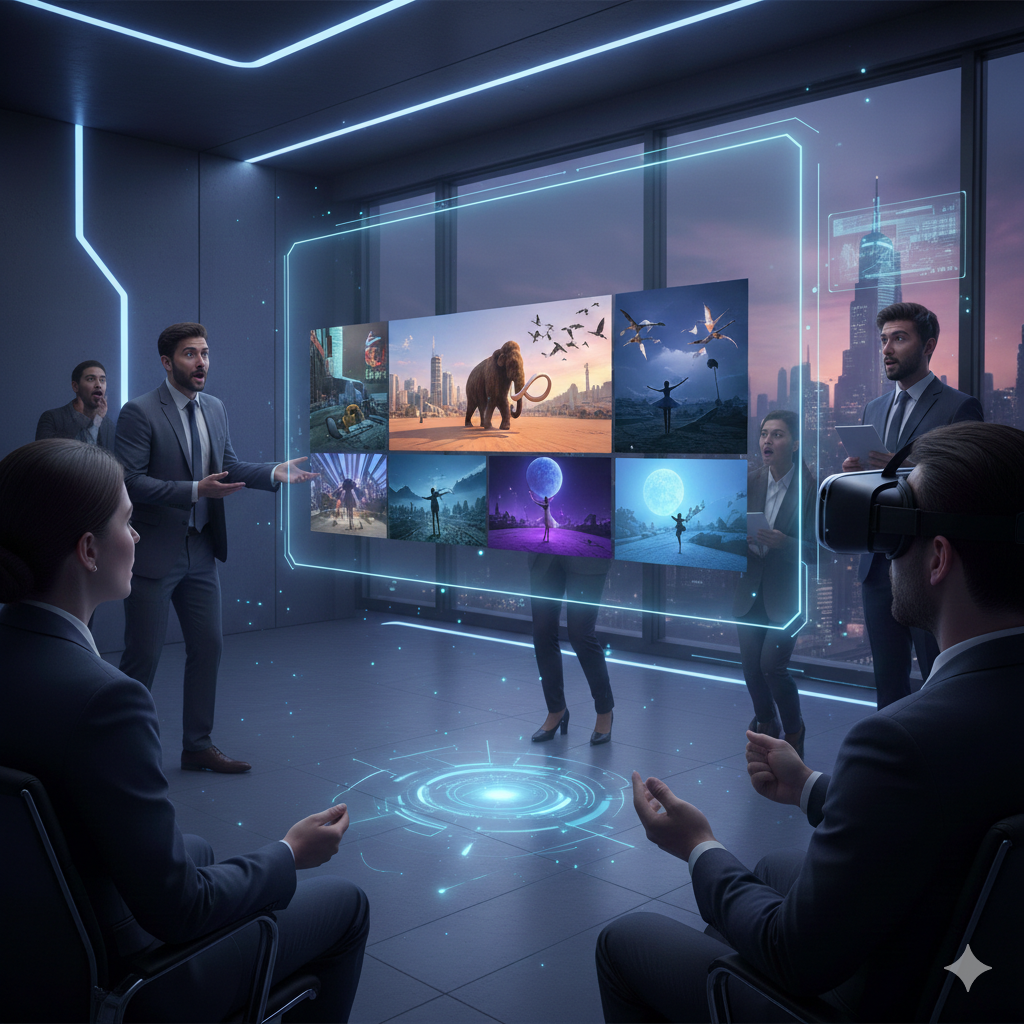

SAN FRANCISCO, USA – The artificial intelligence landscape has undergone a seismic shift with OpenAI’s unveiling of Sora, a revolutionary text-to-video model capable of generating highly realistic and coherent video sequences up to a minute long from simple written prompts.
While not yet released to the public, a series of meticulously crafted demonstration videos has sent waves through the tech and creative industries. Sora’s outputs showcase a dramatic leap in fidelity, temporal consistency, and narrative understanding, far surpassing the short, often glitchy clips that have defined the field until now.
What does it do?
The model demonstrates an unprecedented grasp of physics, object permanence, and cinematic styles. Prompts like “a stylish woman walks down a neon-lit Tokyo street” or “historical footage of California during the gold rush” result in dynamic, minute-long videos with detailed environments, believable motion, and emotional resonance.
“This isn’t just an incremental upgrade; it’s a paradigm shift,” said Dr. Anya Chen, a professor of digital media at Stanford. “Sora shows an emergent understanding of how the world exists in time and space. The implications for filmmaking, game design, marketing, and even education are staggering.”
The announcement has triggered intense speculation and strategic reassessment across the competitive AI sector. Rival firms are now racing to close what appears to be a significant gap in generative video capabilities. Concurrently, a wave of excitement, mixed with apprehension, has swept through creative professions, sparking debates about the future of content creation, copyright, and the nature of storytelling.
OpenAI has emphasized a cautious, safety-first approach to any future release, acknowledging the profound potential for misuse. The company is currently red-teaming the model with experts to assess critical risks and is developing tools to help detect Sora-generated content.
For now, Sora remains a dazzling proof-of-concept, a benchmark that redefines what is possible. Its mere existence announces that the era of accessible, high-fidelity AI video generation is not on the distant horizon; it is knocking at the door. The question for industries worldwide is no longer if, but how and when they will adapt.
Also Read: https://bolotosai.com/predicts-ai-will-surpass-human-intelligence/


 By
By



 By
By