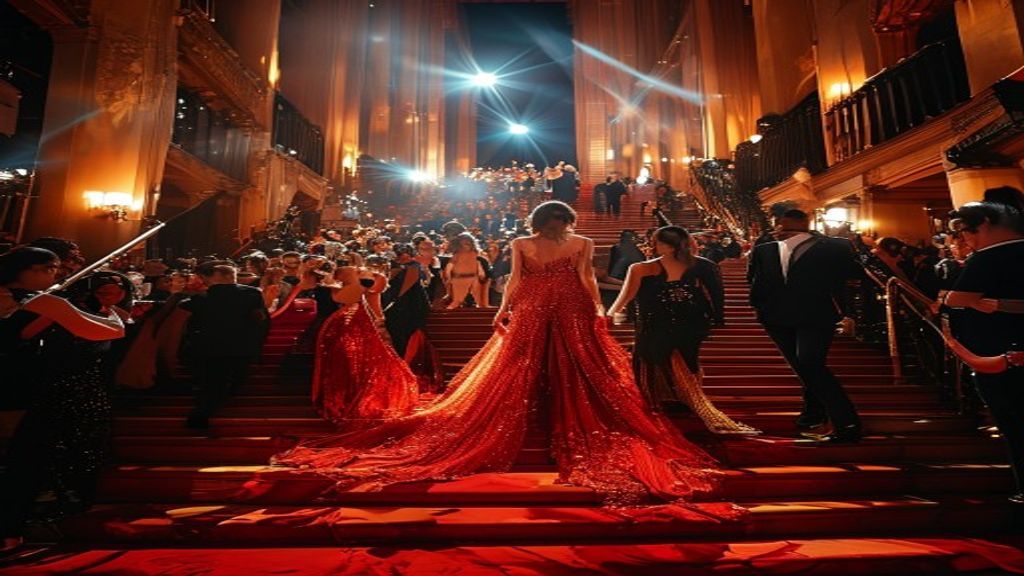

NEW YORK — The Metropolitan Museum of Art is preparing to host the Met Gala 2026 on Sunday, May 4, with a striking new theme that positions fashion squarely within the realm of fine art, bringing together some of the biggest names in entertainment, sports, and global cinema for what promises to be one of the most visually ambitious editions in the event’s storied history.
This year’s exhibition, titled Costume Art, will explore the dressed body through nearly 400 objects spanning an extraordinary 5,000 years of art history. The accompanying dress code — Fashion Is Art — invites attendees to express their own relationship to fashion as an embodied art form, blurring the boundaries between couture craftsmanship and gallery-worthy creation. The event’s co-chairs include Beyoncé, Nicole Kidman, Venus Williams, and the ever-present Anna Wintour, signaling a lineup that bridges music, film, athletics, and fashion authority.
Notable attendees expected on the iconic steps of the Met include pop sensation Sabrina Carpenter, over two dozen A-list celebrities, and — in a headline-making crossover — Bollywood filmmaker Karan Johar, who is reportedly set to make his Met Gala debut. As global entertainment continues to converge on New York’s most exclusive fashion night, the 2026 edition carries heightened anticipation for boundary-pushing looks and cross-cultural statements.
| Parameter | Details |
|---|---|
| Event | Met Gala 2026 |
| Date | May 4, 2026 |
| Venue | Metropolitan Museum of Art, New York City |
| Exhibition Theme | Costume Art — 400 objects across 5,000 years |
| Dress Code | Fashion Is Art |
| Co-Chairs | Beyoncé, Nicole Kidman, Venus Williams, Anna Wintour |
| Notable Debuts | Karan Johar (Bollywood filmmaker) |
Situational Breakdown
The 2026 Met Gala arrives at a moment when fashion’s relationship with art institutions has never been more intertwined. Major museums worldwide have increasingly embraced costume exhibitions as among their highest-grossing and most culturally significant offerings. The Costume Institute’s annual benefit, which serves as the primary fundraiser for the Met’s fashion department, has evolved from a society dinner into a global media spectacle watched by hundreds of millions. This year’s theme pushes that convergence further than ever, asking guests not merely to wear designer clothing but to treat their bodies as living canvases. — E! Online
The co-chair selection itself reads as a deliberate statement about fashion’s democratic reach across disciplines. Beyoncé, who previously served as honorary chair, brings unmatched cultural gravity and a track record of show-stopping Met Gala arrivals. Nicole Kidman returns for her third stint as co-chair, lending Hollywood elegance and institutional continuity. Venus Williams represents the growing intersection of athletics and high fashion, while Anna Wintour — the event’s perennial architect — ensures editorial precision. Together, they represent music, cinema, sport, and fashion media in a single leadership quartet. — Hello Magazine
The guest list further underscores the event’s expanding global footprint. With Karan Johar’s expected debut, the Met Gala signals a deeper embrace of Bollywood’s cultural influence on the world stage. Pop star Sabrina Carpenter’s attendance reflects the younger generation’s growing presence at what was once an exclusively old-guard affair. The event continues to function as a barometer of who holds cultural capital in any given year. — ANI News
The Exhibition: 5,000 Years of the Dressed Body
At the heart of this year’s Met Gala lies the Costume Art exhibition, an ambitious curatorial undertaking that assembles nearly 400 objects to trace how human beings have used clothing as artistic expression across five millennia. From ancient Egyptian ceremonial garments to Renaissance court dress to contemporary haute couture, the exhibition promises to reframe fashion history not as a footnote to art history but as its equal partner.
“The theme celebrates the centrality of the dressed body and invites guests to express their own relationship to fashion as art.” — E! Online
This intellectual framework gives designers and celebrities an unusually broad canvas for their red carpet interpretations. Rather than anchoring looks to a specific era or culture, the Fashion Is Art dress code encourages conceptual thinking — expect wearable sculpture, fabric installations, and references spanning from Baroque painting to digital art. The freedom embedded in this theme could produce some of the most daring and diverse looks in Met Gala history.
Co-Chairs and the Power Dynamics of Fashion’s Biggest Night
The selection of co-chairs for the Met Gala is never accidental. Each name carries strategic weight, and the 2026 quartet — Beyoncé, Nicole Kidman, Venus Williams, and Anna Wintour — represents a carefully constructed coalition of influence. Beyoncé’s involvement alone generates enormous media attention; her past Met Gala appearances have consistently dominated social media and fashion commentary for weeks.
“Beyoncé previously served as honorary chair while Nicole Kidman returns for her third time as co-chair.” — Hello Magazine
Venus Williams’s inclusion is particularly noteworthy. Athletes have increasingly commanded fashion credibility, and Williams — who runs her own fashion brand — embodies the dissolution of boundaries between sport and style. Her presence alongside Wintour, fashion’s most powerful gatekeeper, signals that the Met Gala’s definition of fashion authority continues to expand well beyond traditional industry insiders.
Bollywood Arrives: Karan Johar’s Met Gala Debut
Perhaps the most culturally significant development surrounding this year’s event is the reported debut of Karan Johar, one of Bollywood’s most influential filmmakers and a fashion icon in his own right. Known for his maximalist personal style and his role in shaping Indian cinema’s visual language, Johar’s attendance marks another step in the Met Gala’s gradual but unmistakable pivot toward genuine global representation.
Indian celebrities have appeared at the Met Gala before, but Johar’s presence carries particular weight given his status as a director, producer, and cultural tastemaker who has shaped how an entire generation of South Asians engages with fashion and glamour. In a year when SRH Chase Record 244 to Crush Mumbai Indians at Wankhede reminded the world of India’s sporting spectacle, Johar’s Met Gala debut adds another dimension to the country’s cultural exports making headlines on the global stage.
The Next Generation: Sabrina Carpenter and the Youth Takeover
The inclusion of Sabrina Carpenter among the notable attendees reflects a broader generational shift at the Met Gala. Once dominated by established Hollywood royalty and European fashion houses, the event has increasingly welcomed musicians, social media figures, and younger stars whose cultural influence operates through digital channels rather than traditional media.
Carpenter, whose meteoric rise in pop music has made her one of the most-watched young artists in the world, represents the kind of attendee who can generate millions of social media impressions within minutes of stepping onto the carpet. For the Costume Institute, this translates directly into visibility, relevance, and — critically — fundraising power. The Met Gala’s evolution into a social media phenomenon has made youth representation not just desirable but essential to the event’s continued cultural dominance.
BolotoSai Assessment
The 2026 Met Gala is positioned to be a defining moment in the ongoing conversation about fashion’s place within the broader art world. The Fashion Is Art dress code, backed by a 5,000-year exhibition, gives this year’s event an intellectual depth that could elevate it beyond the spectacle-driven coverage that typically dominates the news cycle.
Three developments bear watching. First, the co-chair chemistry — Beyoncé and Kidman bring star power, but Venus Williams’s involvement could catalyze a new wave of athlete-fashion crossovers that reshape red carpet dynamics for years to come. Second, Karan Johar’s debut will be scrutinized not just for his outfit but for what it signals about the Met Gala’s willingness to embrace non-Western fashion narratives in meaningful rather than tokenistic ways. Third, the sheer ambition of the exhibition itself — 400 objects across 5,000 years — sets a scholarly standard that will be judged by critics and curators long after the last flashbulb fades.
Whatever unfolds on May 4, one thing is certain: the Met Gala remains the singular event where fashion, celebrity, art, and cultural politics collide with maximum force. This year, the stakes — and the hemlines — have never been higher.

 By
By

 By
By