
Written by Wajid | BoloToSai.com
HAVANA – The deepening diplomatic standoff between the United States and Cuba has escalated into a full-blown energy crisis this week, leaving the island nation without aviation fuel and forcing major international carriers to ground flights. As of February 10, 2026, the Trump administration’s tightened blockade on energy shipments has effectively severed Cuba’s supply lines from key allies Venezuela and Mexico, stranding tourists and threatening to collapse the country’s vital $3 billion tourism industry.
Aviation Standstill
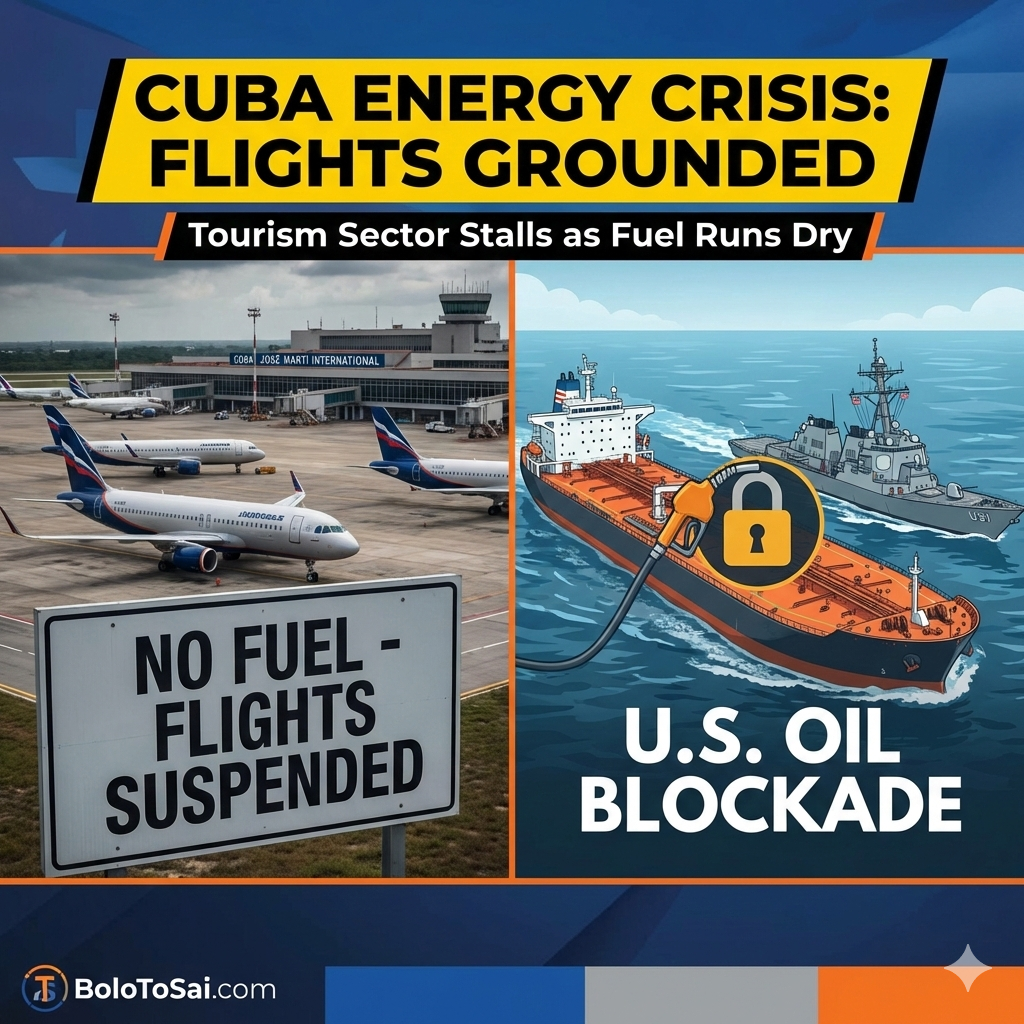
The crisis reached a breaking point on Monday when Cuban aviation authorities issued a Notice to Air Missions (NOTAM), declaring that Jet A1 fuel is unavailable at all major airports, including José Martí International in Havana, until at least March 11.
In response, Air Canada—the largest foreign carrier serving the island—announced an immediate suspension of regular service. The airline has initiated emergency “rescue flights,” sending empty aircraft to repatriate approximately 3,000 Canadian citizens currently stranded at various resorts. Other international carriers are scrambling to adjust logistics, with some opting for technical refueling stops in the Bahamas or the Dominican Republic to avoid becoming stranded on the tarmac in Havana.
The “Double Squeeze” Blockade
The fuel shortage is the direct result of a new “maximum pressure” campaign by the White House. Following the detention of Venezuelan President Nicolás Maduro in January, the U.S. administration turned its sights on Cuba, threatening severe tariffs on any nation that supplies oil to the island.
This diplomatic strong-arming forced Mexico—previously Cuba’s last reliable energy lifeline—to halt oil exports abruptly. Mexican President Claudia Sheinbaum confirmed the suspension, citing the need to protect Mexico’s own economy from threatened U.S. trade penalties, though she decried the move as “unjust.”
Economic Impact: Tourism in Peril
The timing of the blockade is devastating for Cuba’s economy, striking during the peak winter tourism season.
- Resort Closures: Reports indicate that hotels in the popular Cayo Coco region are beginning to consolidate guests into fewer buildings to conserve diesel for generators.
- Power Outages: Beyond the airports, the general population is facing blackouts lasting up to 20 hours a day, disrupting everything from water pumps to food refrigeration.
- Financial Strain: With tourism revenue serving as the primary source of hard currency, economists warn that a prolonged flight ban could push the island into a depression worse than the “Special Period” of the 1990s.
Outlook
The immediate outlook for Cuba remains bleak. With no domestic oil production capacity to meet demand and its strategic allies neutralized by U.S. sanctions, Havana has limited options.
“This is not just about airplanes; it is a siege designed to force political collapse,” remarked a Caribbean policy expert. Unless a diplomatic corridor is opened for humanitarian fuel aid, the grounding of flights may only be the precursor to a total economic shutdown in the coming weeks.

 By
By


 By
By