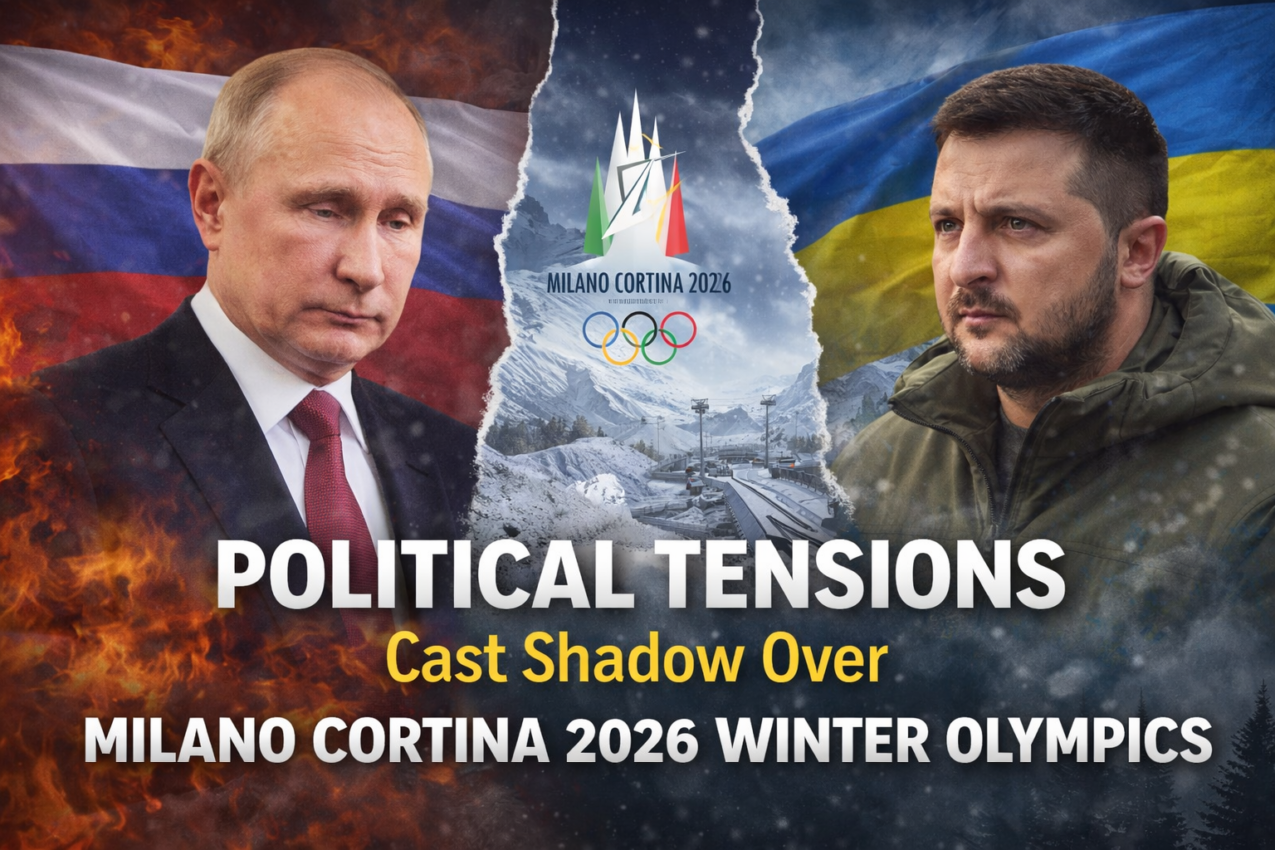

The 2026 Winter Olympics in Milano Cortina have been overshadowed by political controversy, as debates around athlete expression and global tensions take centre stage alongside the sporting action. A recent incident involving a Ukrainian skeleton racer has intensified discussions about the role of politics in international competition.
The athlete was reportedly barred from wearing a helmet featuring imagery honoring victims of the ongoing war in Ukraine, with officials citing Olympic regulations that prohibit political messaging during competition. The International Olympic Committee (IOC) later permitted a compromise, allowing the athlete to wear a black armband instead. The decision has sparked widespread debate about freedom of expression, neutrality in sport, and the limits placed on athletes competing on the world stage.
Beyond the individual incident, the Winter Games are unfolding against a backdrop of heightened geopolitical strain. Some observers have described the atmosphere as reflective of a “new cold war,” with diplomatic tensions, protests, and concerns over potential cyber threats adding complexity to the event’s organization. While the IOC has reiterated its commitment to keeping the focus on sport and unity, the Milano Cortina Olympics demonstrate how global politics continue to intersect with international competition in powerful and sometimes controversial ways.
#MilanoCortina2026 #WinterOlympics #PoliticalTensions #Olympics2026 #InternationalSports #GlobalSportsNews #WinterGames2026 #OlympicsUpdates #SportsPolitics #OlympicNews

 By
By


 By
By