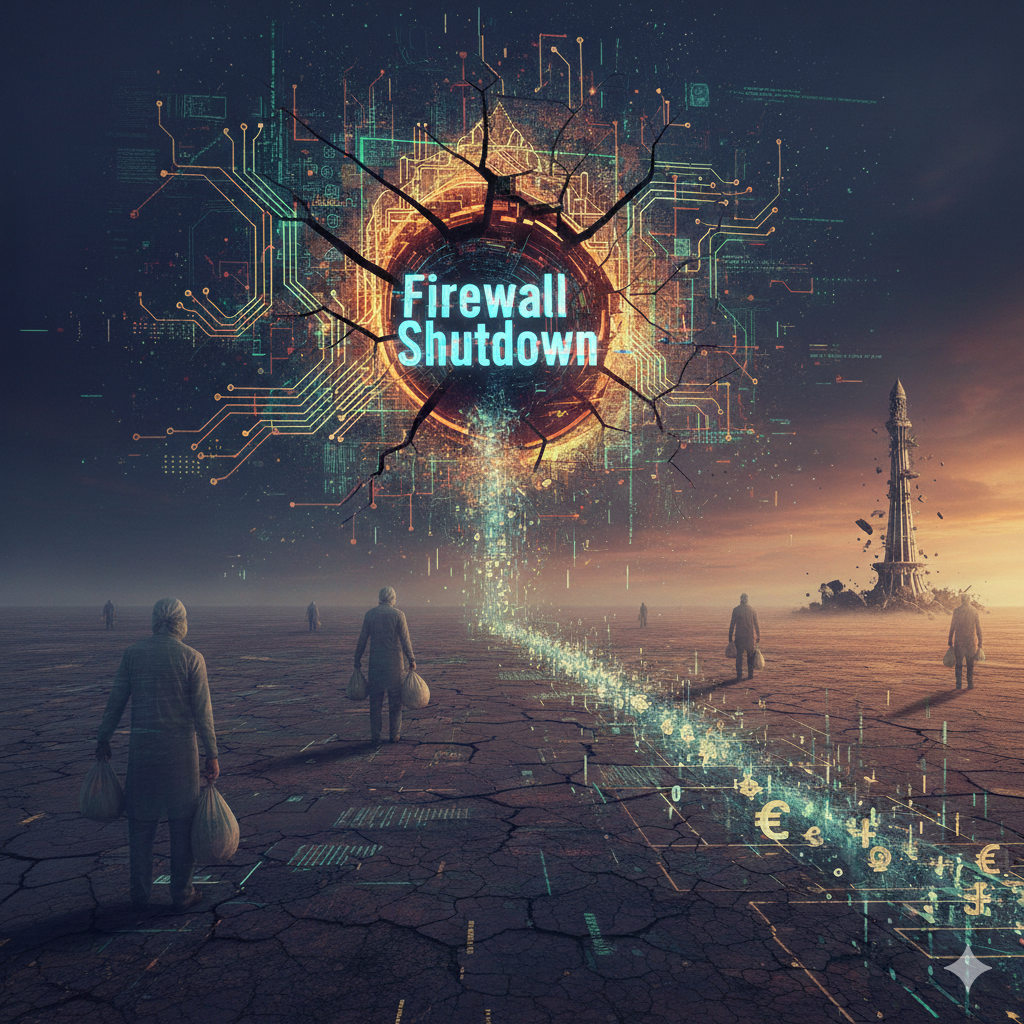

ISLAMABAD – The Great Pakistani Firewall Shutdown. According to internal documents and telecom industry sources speaking on condition of anonymity, the “Next-Generation Firewall” system, the sophisticated internet management and censorship system deployed to regulate content comes with a staggering price tag. While the exact figures are classified, analysts estimate the project, bolstered by foreign consultancy fees, hardware procurement, and maintenance contracts, has cost the national exchequer well over $50 million (approximately Rs. 14 billion) since its inception.
For the umpteenth time in as many months, the digital landscape of Pakistan ground to a halt this week. Social media platforms X (formerly Twitter), Facebook, Instagram, and YouTube were rendered inaccessible or painfully slow, leaving 130 million internet users staring at loading wheels and error messages. While the government cites national security and “blasphemous content” as the justification, a growing chorus of economists, tech experts, and opposition leaders is asking a pointed question: Who is paying for this, and where is the return on investment?
Yet, for the average citizen, the only tangible result of this massive expenditure is disruption.
The Digital Toll
“This isn’t just about being unable to post memes,” said Ayesha Khan, a freelance graphic designer in Karachi who relies on Instagram to secure international clients. “Every time they flip the switch, I lose money. My clients think I’ve gone offline. My business is held hostage to a firewall that doesn’t seem to stop anything except my income.”
The economic bleed extends beyond freelancers. The Pakistan Software Export Board estimates that the IT sector, a rare bright spot in Pakistan’s economy with exports nearing $3 billion, loses approximately $2-3 million in revenue for every day of significant social media disruption.
Who is Accountable?
The question of responsibility is a tangled web of denial and vague official statements.
On one hand, the Pakistan Telecommunication Authority (PTA) insists it is merely following directives. “We are the implementers, not the decision-makers,” a PTA official stated, speaking on condition of anonymity. “We are told to manage the traffic; we manage the traffic. The equipment was approved and purchased to do a job.”
On the other hand, the Ministry of Interior, which issues the formal directives for shutdowns under Section 54 of the Pakistan Telecommunication (Re-organization) Act, cites threats to national security that they claim cannot be disclosed to the public. When pressed on the economic cost of these shutdowns, Interior Ministry spokespersons have consistently deflected, stating that “national security is priceless.”
Meanwhile, the Ministry of Finance and Revenue, which ultimately signs the checks, remains silent. Critics argue that the failure lies in a complete lack of inter-departmental communication regarding the economic consequences of security measures.
“Taxpayer money has been used to build a digital guillotine, and we keep paying to drop the blade on our own economy,” said Senator Sherry Rehman during a heated session in the Upper House. “The executive branch issues orders, the PTA flips the switches, and the Finance Ministry pays the bills. They are all responsible for this hemorrhage of public funds. We are paying millions for a system that provides zero service during outages and actively destroys the digital economy during ‘operations.'”
The ‘Digital Dams’ Analogy
Analysts have begun likening the firewall to building massive, expensive dams that hold back water for only a few hours a year, while simultaneously flooding the surrounding villages. The “water” in this case is content that tech-savvy users easily bypass using Virtual Private Networks (VPNs)—a thriving business that is ironically fueled by the very firewall meant to control information.
“The firewall is a spectacular failure of value for money,” said tech journalist Saad Hamid. “It is expensive to install, expensive to maintain, easy to circumvent, and devastatingly effective at harming the economy. If a private company ran a project with this kind of negative ROI, the board would be fired. But in the public sector, there is no accountability. The taxpayer is the silent investor in a failing monopoly.”
As the latest “slowdown” enters its fourth day, the digital divide in Pakistan is no longer just about urban versus rural connectivity. It is now about the vast chasm between the government’s security spending and the public’s economic reality. The question remains: when the internet finally returns to full speed, will anyone in the halls of power be held accountable for the cost of turning it off?
Also Read: End of an Era: Telenor Pakistan to Cease Operations, Merge with Ufone


 By
By

 By
By