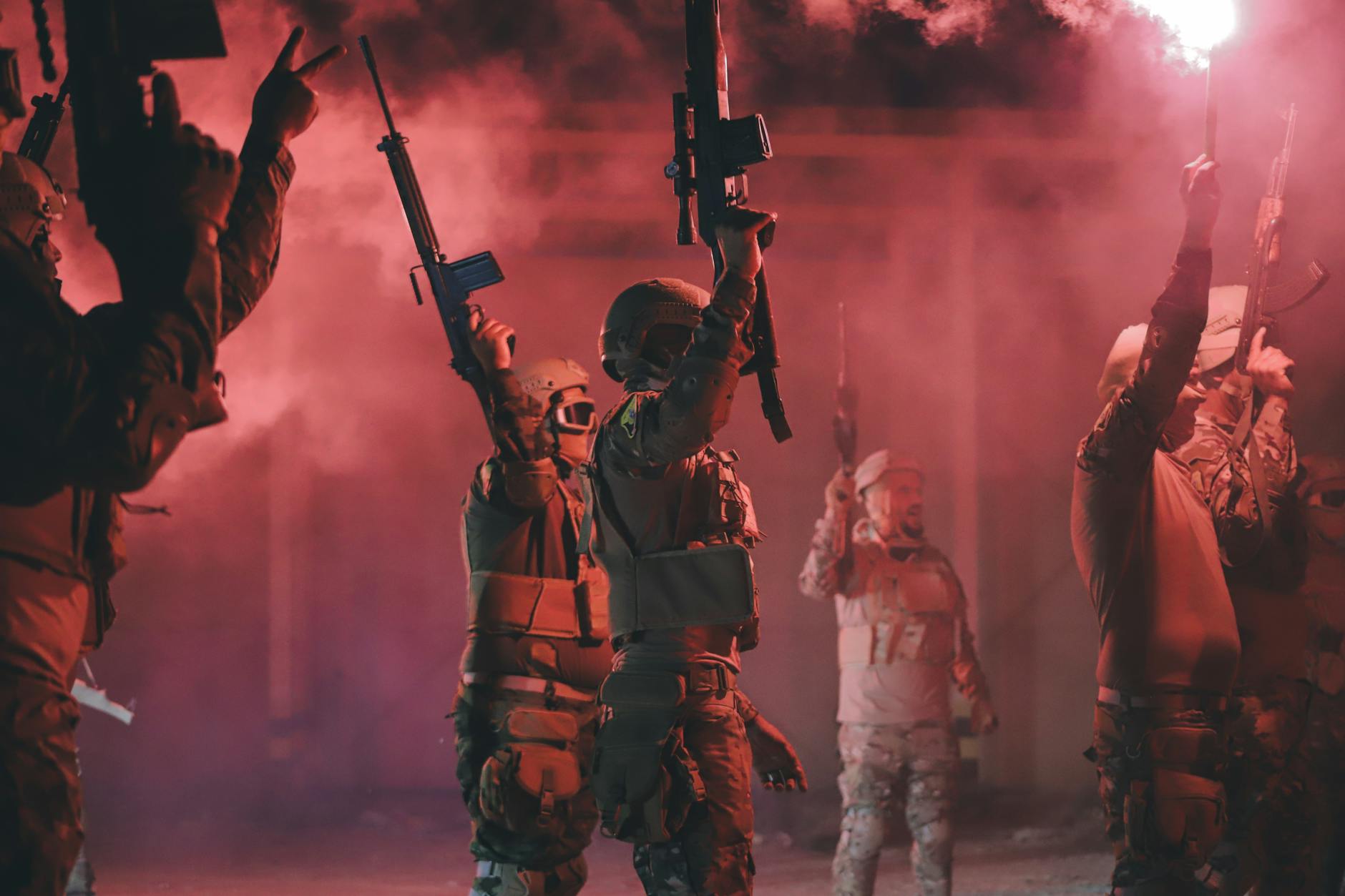

ISLAMABAD — The United States-Israel military campaign against Iran has entered its 30th day with no signs of abating, as Yemen’s Houthi rebels opened a dangerous new front by launching ballistic missiles and cruise missiles at Israel, while powerful explosions rocked residential neighborhoods in Tehran early Sunday morning.
What began as a targeted military operation has metastasized into the most significant armed conflict in the Middle East since the 2003 invasion of Iraq. With 3,500 additional American troops arriving in the region aboard the USS Tripoli, Iran’s selective blockade of the Strait of Hormuz disrupting global energy supplies, and foreign ministers from four major Muslim-majority nations convening emergency talks in Islamabad, the conflict now threatens to redraw the geopolitical map of the entire region. Thousands have already been killed, commodity markets are in turmoil, and the specter of a ground invasion looms over diplomatic efforts that have so far produced little more than rhetoric.
| Parameter | Details |
|---|---|
| Conflict Duration | 30 days (began March 1, 2026) |
| US Troop Reinforcement | 3,500 additional troops via USS Tripoli |
| Oil Disruption | Up to 20 million barrels/day via Strait of Hormuz blockade |
| Diplomatic Effort | Pakistan, Turkey, Egypt, Saudi Arabia — Islamabad summit |
| New Front | Houthi missile and drone strikes targeting Israel |
| Key Iranian Figure | Mohammad Bagher Ghalibaf, Parliament Speaker |
| Houthi Spokesperson | Brigadier-General Yahya Saree |
SITUATIONAL BREAKDOWN
The early hours of Sunday, March 30, brought fresh devastation to the Iranian capital as powerful explosions struck the affluent Saadat Abad neighborhood in northern Tehran. Residential buildings bore the brunt of the strikes, with rescue workers sifting through rubble as dawn broke over the city. The targeting of civilian areas has drawn sharp condemnation from international observers and further hardened Iranian resolve against what Tehran characterizes as an American-Israeli war of aggression. The cumulative toll of 30 days of sustained bombardment has stretched Iran’s civil defense infrastructure to its limits, with hospitals in the capital reporting critical shortages of medical supplies. — Al Jazeera
Simultaneously, the conflict’s geographic scope expanded dramatically as Yemen’s Houthi movement — Iran’s most battle-hardened regional ally — escalated its involvement from sporadic attacks to a coordinated missile and drone offensive against Israel. The Houthis, who have demonstrated sophisticated missile capabilities throughout their decade-long war with the Saudi-led coalition, now represent a genuine multi-front threat that stretches Israeli and American air defense systems across thousands of kilometers. The arrival of 3,500 additional US troops aboard the amphibious assault ship USS Tripoli signals that Washington is preparing for a protracted engagement rather than a swift resolution. — CNN
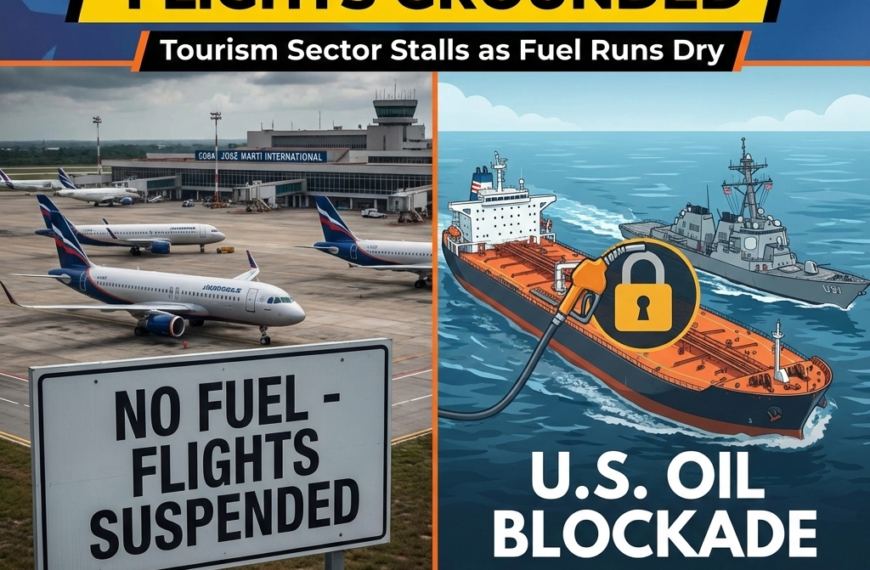
On the economic front, Iran’s selective blockade of the Strait of Hormuz — through which approximately 20 percent of the world’s oil supply transits daily — has sent shockwaves through global commodity markets. Oil prices have surged to levels not seen since the 2022 energy crisis, and shipping insurers have begun refusing coverage for vessels transiting the Persian Gulf. The economic fallout extends far beyond energy markets, with food prices spiking across South Asia and the Middle East as supply chains buckle under the pressure of conflict and disrupted trade routes. — Bloomberg
THE HOUTHI ESCALATION: A CALCULATED GAMBLE
The Houthi decision to launch what they described as a “second military operation” against Israel represents a significant strategic escalation that transforms the conflict from a bilateral US-Israel campaign against Iran into a genuine regional war. Brigadier-General Yahya Saree, the Houthi military spokesperson, left no ambiguity about the group’s intentions.
“The Houthis carried out a ‘second military operation’ against Israel using cruise missiles and drones and would continue carrying out military operations until Israel ‘ceases its attacks and aggression.'” — Brigadier-General Yahya Saree, Houthi military spokesperson
The Houthis have spent the better part of a decade building an arsenal capable of striking deep into Saudi territory, and their pivot toward Israel demonstrates both the range and ambition of their missile program. For Iran, the Houthi intervention serves a dual purpose: it forces Israel to divert air defense resources away from offensive operations against Iranian territory, and it demonstrates that Tehran’s network of regional allies — the so-called “Axis of Resistance” — remains operationally intact despite sustained military pressure. The question now is whether this escalation will draw a direct American or Israeli response against Yemen, opening yet another theater in an already sprawling conflict.
TEHRAN’S DEFIANCE AND THE GROUND INVASION QUESTION
Inside Iran, the political establishment has closed ranks behind a message of unyielding resistance. Parliament Speaker Mohammad Bagher Ghalibaf’s accusation that Washington is using diplomatic overtures as cover for ground invasion planning reflects a deep-seated distrust of American intentions that predates this conflict by decades.
“Iran’s parliament speaker Mohammad Bagher Ghalibaf accused the US of ‘secretly planning a ground invasion’ while floating negotiations, saying Tehran’s forces are ‘waiting for them.'” — Al Jazeera
The ground invasion question is perhaps the most consequential variable in this conflict. A US land campaign in Iran would dwarf the Iraq and Afghanistan operations in scale and complexity, requiring hundreds of thousands of troops to navigate terrain that heavily favors the defender. Iran’s geography — mountainous borders, vast deserts, and a population of 88 million — makes it arguably the most challenging conventional military target on earth. Yet the steady flow of reinforcements to the region, including the USS Tripoli battle group, suggests that planners in Washington are keeping the option open. Whether this is genuine preparation or coercive signaling remains the central intelligence question of the conflict.
THE STRAIT OF HORMUZ: ECONOMIC WARFARE AT GLOBAL SCALE
Iran’s selective blockade of the Strait of Hormuz has proven to be Tehran’s most potent asymmetric weapon. By disrupting up to 20 million barrels of oil per day — roughly one-fifth of global consumption — Iran has ensured that the economic costs of this conflict are felt far beyond the battlefield. The blockade has exposed the fragility of the global energy architecture and the degree to which the world economy remains dependent on the free flow of hydrocarbons through a narrow waterway controlled by a nation under siege.
The ripple effects are staggering. Oil-importing nations across Asia and Europe face spiraling energy costs. Central banks that had been cautiously easing monetary policy are now confronting a stagflationary shock. And the insurance industry’s retreat from Gulf shipping has created a de facto secondary blockade, as vessel operators refuse to transit the strait even when Iranian naval forces are not directly intervening. The longer this disruption persists, the more likely it is to trigger permanent restructuring of global energy supply chains — a prospect that serves neither side’s long-term interests.
DIPLOMACY IN ISLAMABAD: CAN REGIONAL POWERS BROKER PEACE?
Against this backdrop of escalation, the foreign ministers of Pakistan, Turkey, Egypt, and Saudi Arabia have convened in Islamabad for what represents the most significant diplomatic initiative since hostilities began. The selection of Islamabad as the venue is symbolically important — Pakistan maintains relationships with both Iran and Saudi Arabia, and its nuclear-armed status gives it a unique weight in regional security discussions.
However, the challenges facing these diplomats are formidable. None of the four nations at the table have direct leverage over either the United States or Israel, the two powers conducting the military campaign. Saudi Arabia’s relationship with Washington, while strained, offers perhaps the best channel for communicating a ceasefire framework, but Riyadh must balance its desire for regional stability against its own complicated history with Tehran. Turkey, under President Erdogan, has positioned itself as a vocal critic of the campaign but lacks the military or economic tools to alter the conflict’s trajectory. The summit’s best hope may be to establish a unified diplomatic position that can be presented to the UN Security Council, where it would inevitably face an American veto.
WHAT THIS MEANS FOR PAKISTAN
Pakistan finds itself at the epicenter of this diplomatic crisis with both enormous risks and potential opportunities. As the host of the four-nation foreign ministers’ summit, Islamabad is positioning itself as a credible mediator — a role that could yield significant diplomatic capital if the talks produce even a framework for de-escalation. Pakistan shares a 959-kilometer border with Iran, and any prolonged instability in its western neighbor directly threatens Pakistan’s already fragile security environment. The Balochistan border region, long plagued by militant activity, could become a corridor for refugees, weapons, and destabilizing influences if the conflict drags on.
Economically, Pakistan is acutely vulnerable. The Strait of Hormuz disruption has already driven up fuel import costs for a nation that was only beginning to stabilize its economy after years of IMF-supervised austerity. Pakistan imports roughly 85 percent of its crude oil needs, and every dollar increase in the price of a barrel translates directly into pressure on the current account, the rupee, and household budgets. The Iran-Pakistan gas pipeline, long delayed by American sanctions pressure, now exists in an even more uncertain limbo. Additionally, the approximately 1.5 million Pakistani workers in Gulf states face potential displacement if the conflict expands, threatening a vital source of remittance income.
Perhaps most critically, Pakistan must navigate this crisis without alienating any of its key relationships — with the United States, China, Saudi Arabia, or Iran. Islamabad’s decision to host the summit signals a willingness to play an active diplomatic role, but it must be careful not to be perceived as choosing sides in a conflict where all sides have the capacity to impose significant costs on Pakistani interests.
BOLOTOSAI ASSESSMENT
Thirty days into the most consequential Middle Eastern conflict of the 21st century, the trajectory points toward further escalation before any realistic path to de-escalation emerges. The Houthi intervention has fundamentally altered the conflict’s calculus by creating a multi-front war that neither the United States nor Israel had fully planned for, while Iran’s Strait of Hormuz blockade continues to impose costs that the global economy cannot indefinitely absorb.
Three scenarios now present themselves with roughly equal probability. First, the Islamabad diplomatic track gains traction, producing a temporary ceasefire framework that allows all parties to de-escalate without losing face — possible but contingent on Washington’s willingness to pause operations. Second, the conflict enters a grinding attritional phase in which airstrikes continue, the Hormuz blockade persists, and economic damage accumulates until one side’s threshold is reached — the most likely scenario based on current trajectories. Third, an uncontrolled escalation spiral, potentially triggered by a catastrophic strike on civilian infrastructure or the entry of additional state actors, pushes the conflict toward a regional conflagration that none of the parties originally sought.
What to watch in the coming week: the outcome of the Islamabad summit and whether it produces a joint communique with specific ceasefire terms; the US response to Houthi strikes and whether Washington opens a Yemen front; Iran’s ability to sustain the Hormuz blockade under intensifying military pressure; and crucially, any signals from Beijing or Moscow about their willingness to intervene diplomatically at the Security Council level. The next seven days may determine whether this war remains contained or becomes the defining crisis of the decade.
Also Read: ‘One Battle After Another’ Wins Best Picture at Oscars 2026

 By
By

 By
By